Artist based in Brooklyn, NY
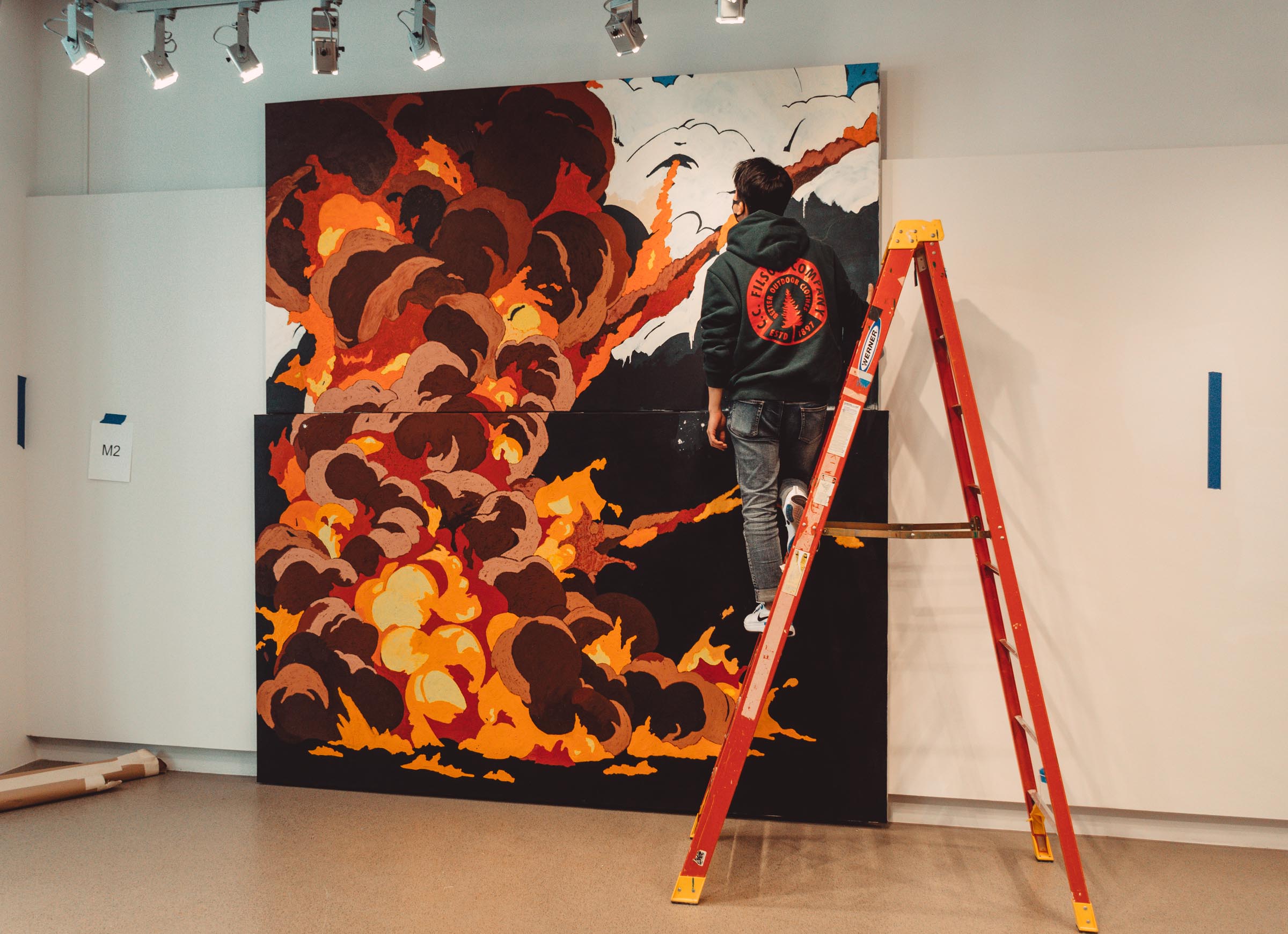
S.H. Kim, Portrait of the Artist
Tell us about yourself, what's your background?
I am a painter based in Brooklyn, New York. I studied painting and art theory at Hongik University in Seoul and later received my MFA in Painting and Drawing from the School of the Art Institute of Chicago. My practice centers on large-scale abstract painting, where I reconstruct graphic motifs from 1980s and 90s cel animation into flat color planes, exploring spatial tension, physical edges, and the exposed underlayers of the canvas.
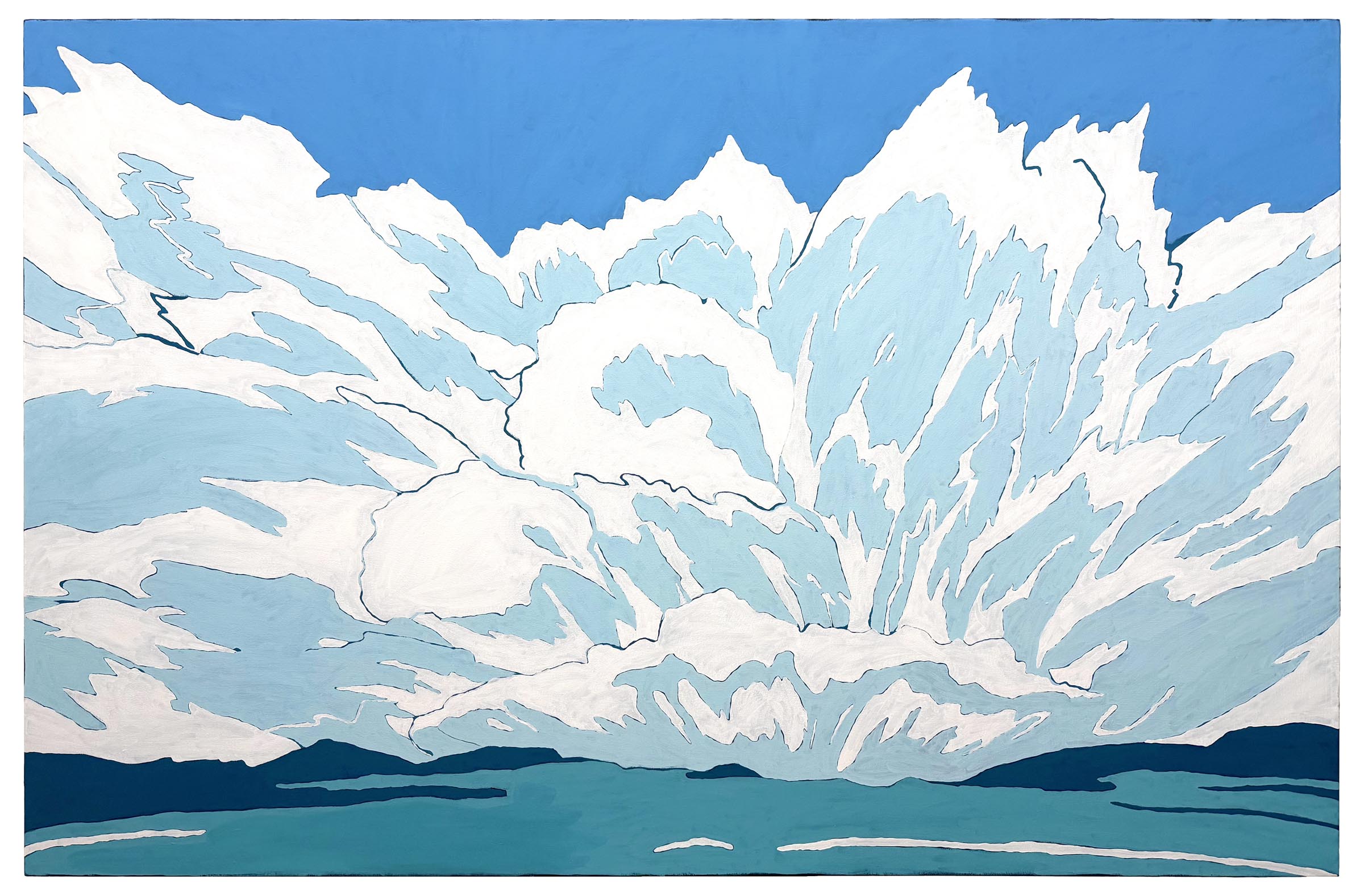
Untitled, 2026, Oil on canvas, 52 x 78 in.
Growing up in a household with a novelist grandfather, storytelling and creative expression were natural parts of my daily atmosphere. However, I truly realized I wanted to commit my life to painting when I discovered how visual language could capture the subtle gaps between perception and reality—things that words alone couldn't fully hold. Ever since, the studio has been where I make sense of the world, navigating memory, structure, and material.
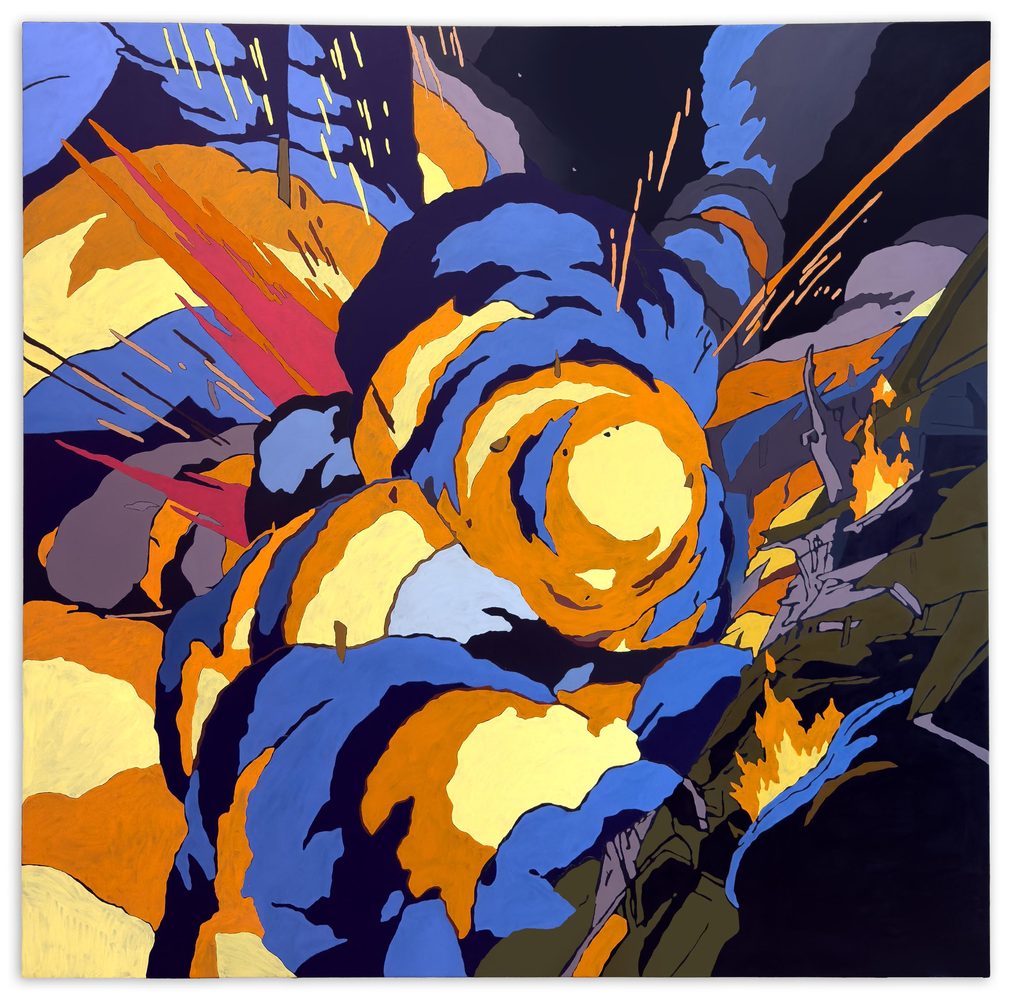
What Survives, 2026, Oil on canvas, 78 x 78 in.
“I dissect those forms [of classic cel animation] to examine the physical surface itself: leaving intentional gaps between taut planes of color to expose the raw underpainting, canvas texture, and colored pencil construction lines.”
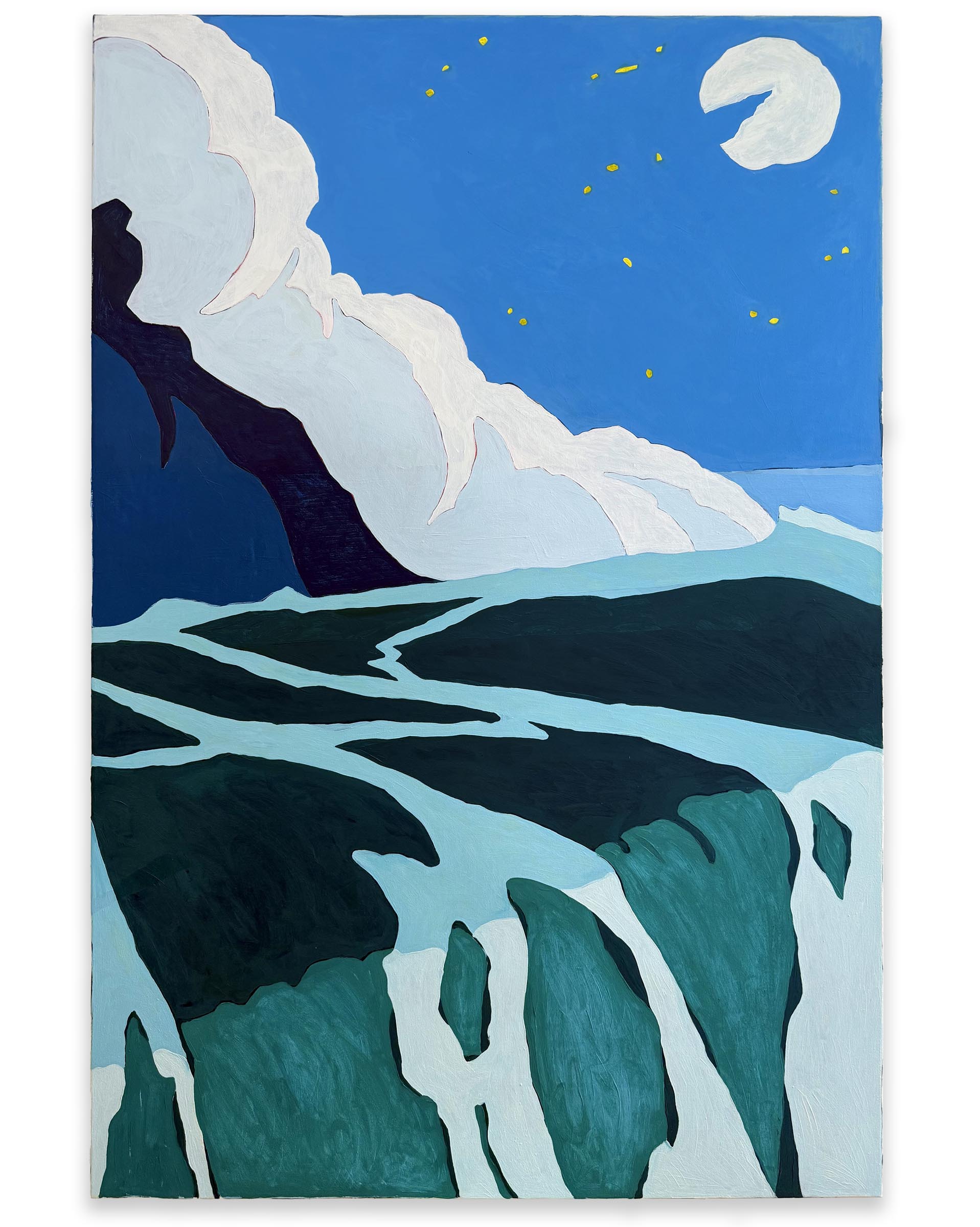
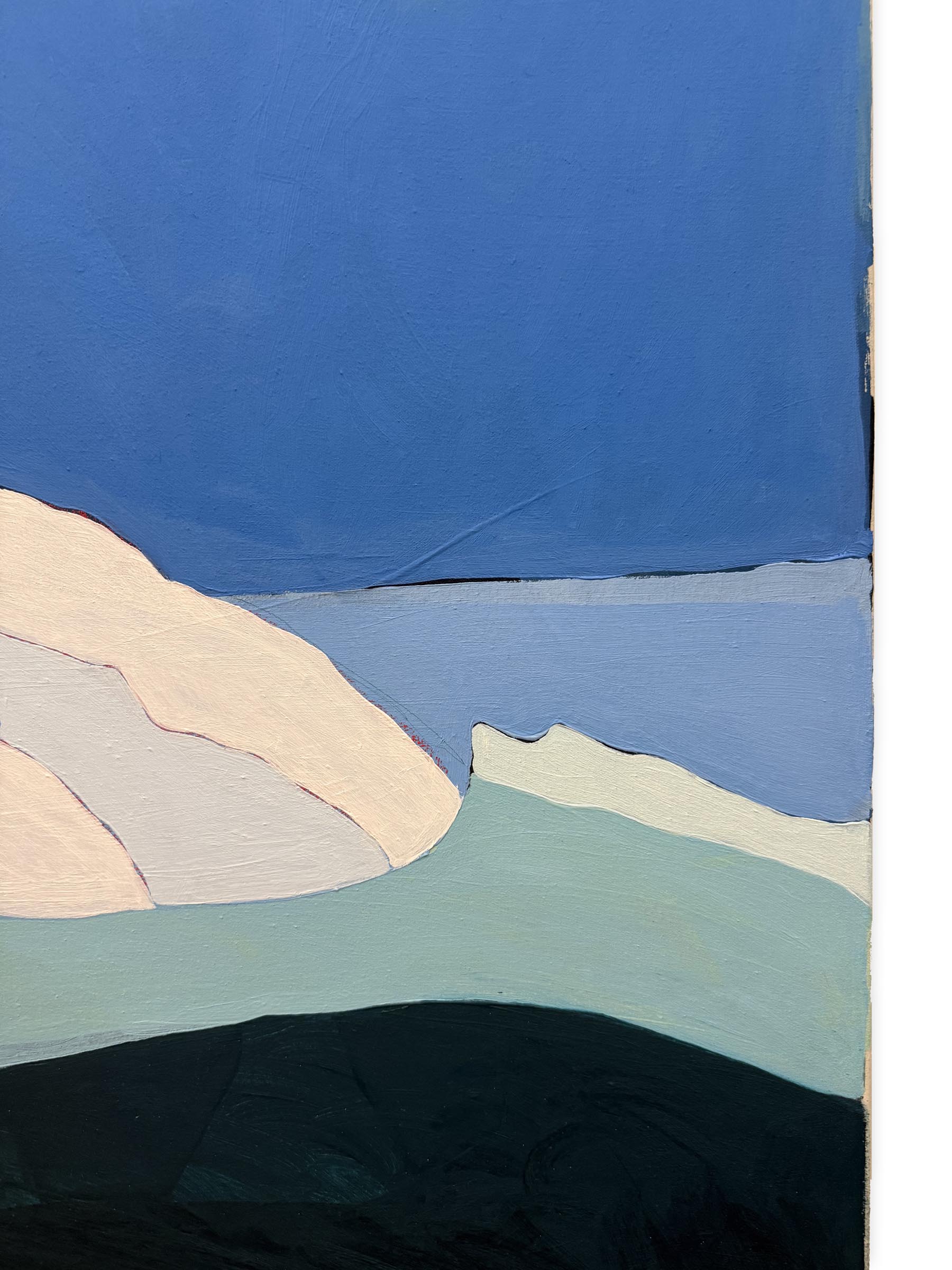
Left: Night Landscape, 2026, Oil on canvas, 78 x 52 in.; Right: Detail
What are you currently working on and where did the inspiration for it come from?
I am currently working on a series of large-scale paintings—primarily 60x78 and 78x78-inch canvases—that interrogate spatial tension, boundaries, and flat color fields. While my work originally stemmed from the explosive graphic imagery of classic cel animation, my focus has shifted entirely away from narrative illustration. Instead, I dissect those forms to examine the physical surface itself: leaving intentional gaps between taut planes of color to expose the raw underpainting, canvas texture, and colored pencil construction lines.
Today, personal and social narratives often serve as a convenient shortcut to understanding art, but I consciously resist painting being consumed merely as a storytelling device. I have a strong faith in the medium itself. My inspiration comes from pushing the limits of the picture plane—asking how much form can be stripped away while the painting still survives, and how contrasting color fields and negative spaces interact to build psychological tension. It may go against current figurative or narrative trends, but building tension purely through form, color, and spacing is my way of proving what painting alone can do.
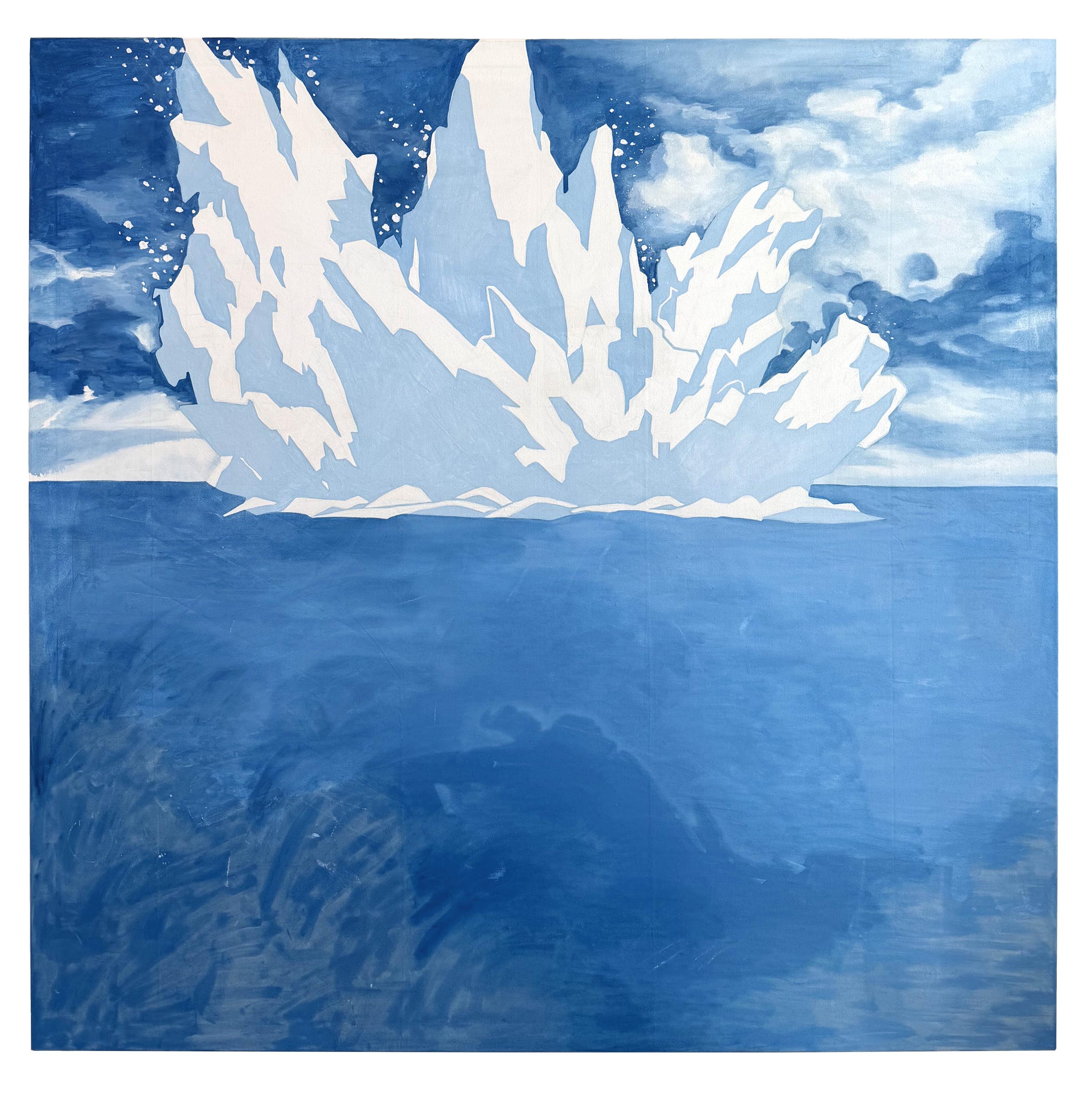
Strike on Target, 2026, Oil on canvas, 78 x 78 in.
Innovation does not only happen in the field of technology — it occurs everyday in a creative practice. What do you do for inspiration?
For me, inspiration is rarely an external epiphany; it is generated through the physical friction of working inside the studio. Innovation in painting does not mean chasing novelty for its own sake, but relentlessly testing the limits of what a flat plane can hold.
To stay sharp, I look closely at structural clarity—whether in historical painting, architectural fragments, or the precise graphic economy of vintage animations stripped of their context. But the real breakthrough always happens on the canvas itself, in the deliberate resistance of the materials: how a sharp oil edge confronts an exposed underlayer, how two saturated colors compress space, or how much information I can remove before an image collapses.
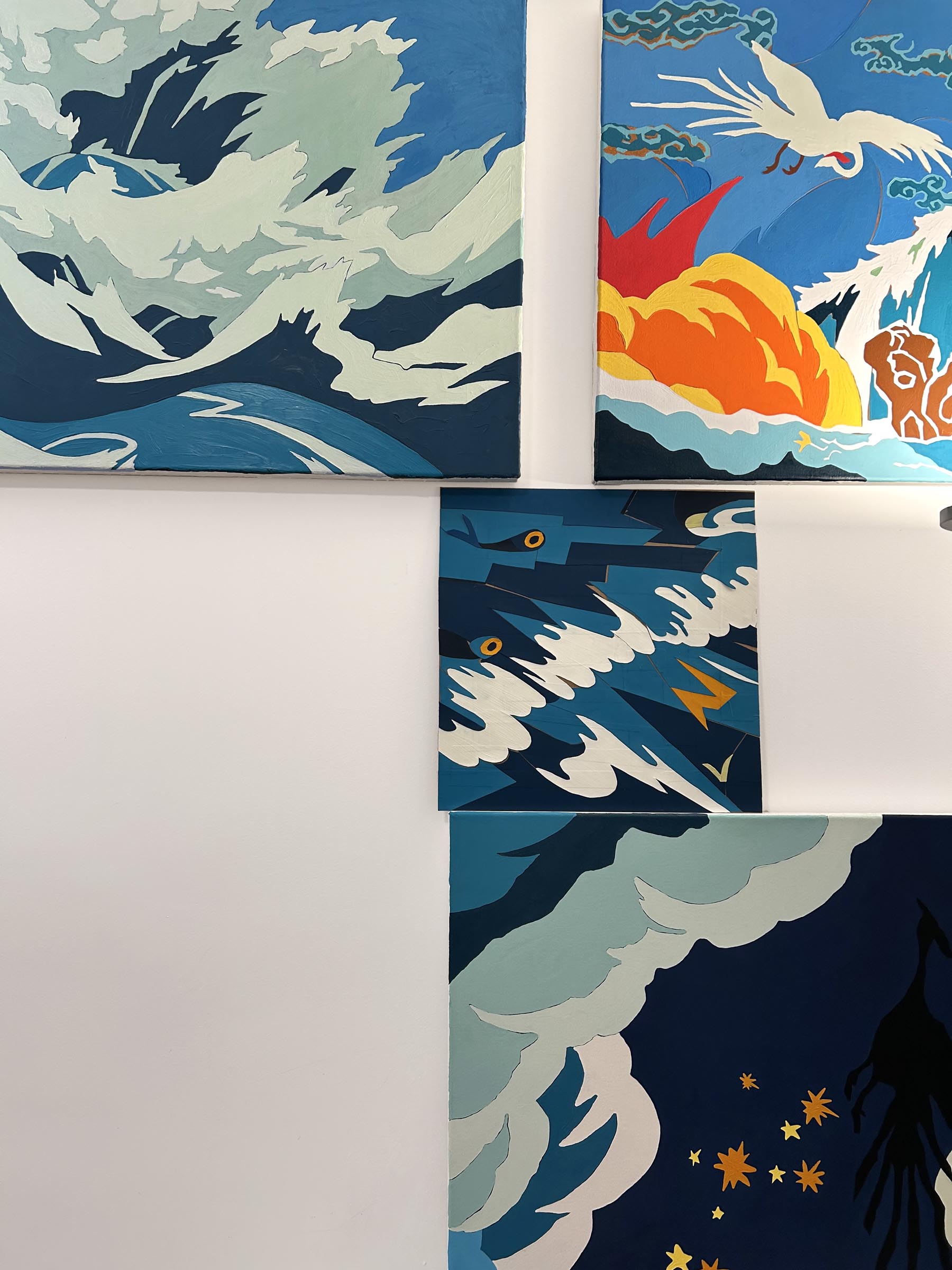
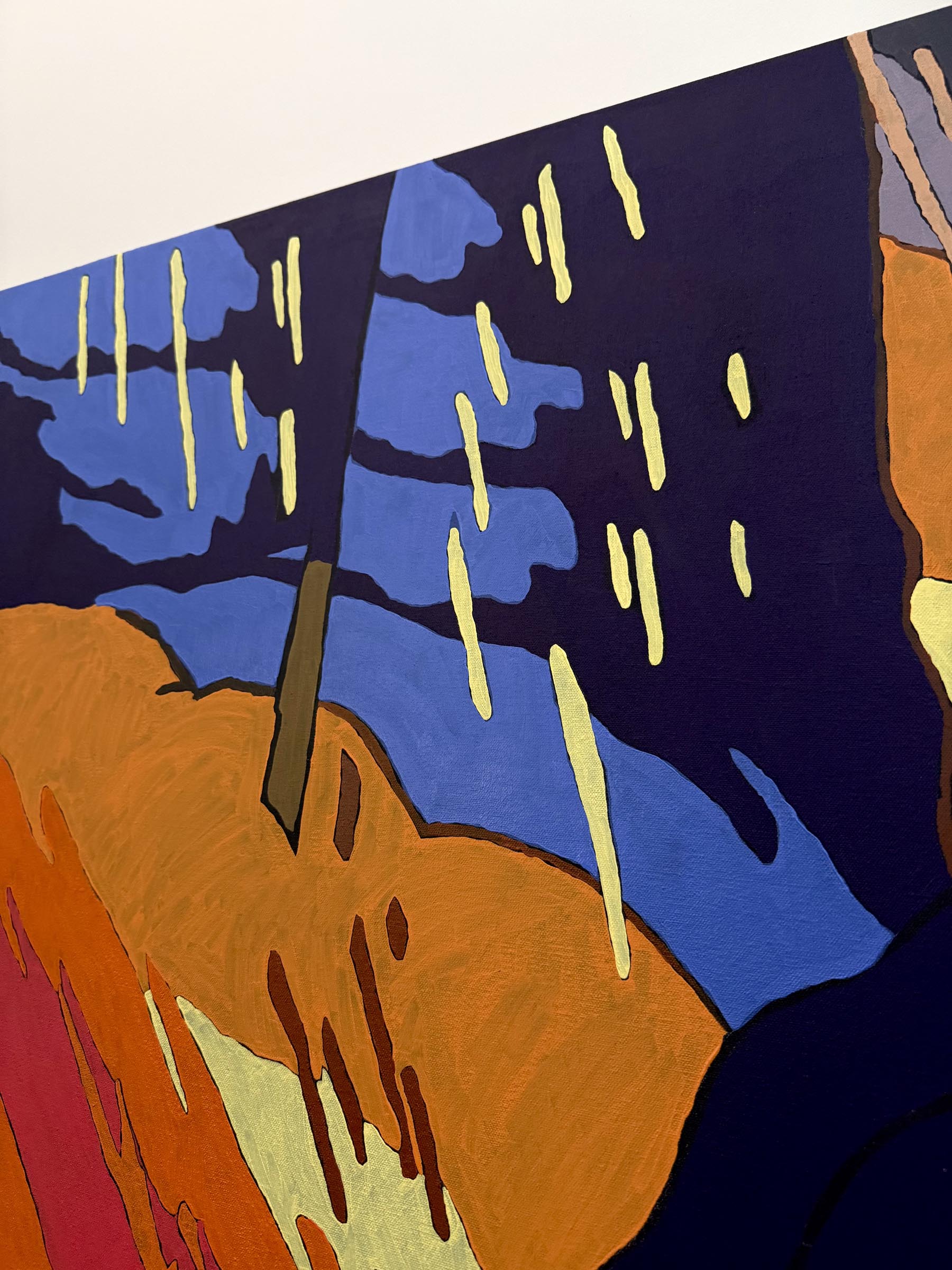
Left: Studio view; Right: Detail of What Survives, 2026, Oil on canvas, 78 x 78 in.
Describe your practice and process. Where do ideas start for you? In the studio or being in the world?
My practice begins and unfolds strictly inside the studio. I am not an artist who searches the outside world for narrative subjects; rather, the studio is a self-contained laboratory where visual logic is tested.
My process starts with spending hours sifting through references—fragmented cells from classic animations, graphic compositions, and archival materials. I look at them obsessively, stripping away their context until they become pure shapes, lines, and color interactions. Paradoxically, the critical ideas often arrive not during intense focus, but in moments of quiet pause: stepping back, taking a break, and letting my peripheral vision catch an unexpected tension between two adjacent studies or an unresolved boundary on the canvas.
Once an idea strikes, the execution is disciplined and deliberate. I build up the ground, apply gesso, and map out the composition with colored pencils, leaving calculated gaps between flat planes of oil paint to expose the raw underlayers. The entire process is a continuous negotiation between rigorous planning and intuitive pauses, all contained within the walls of the studio.
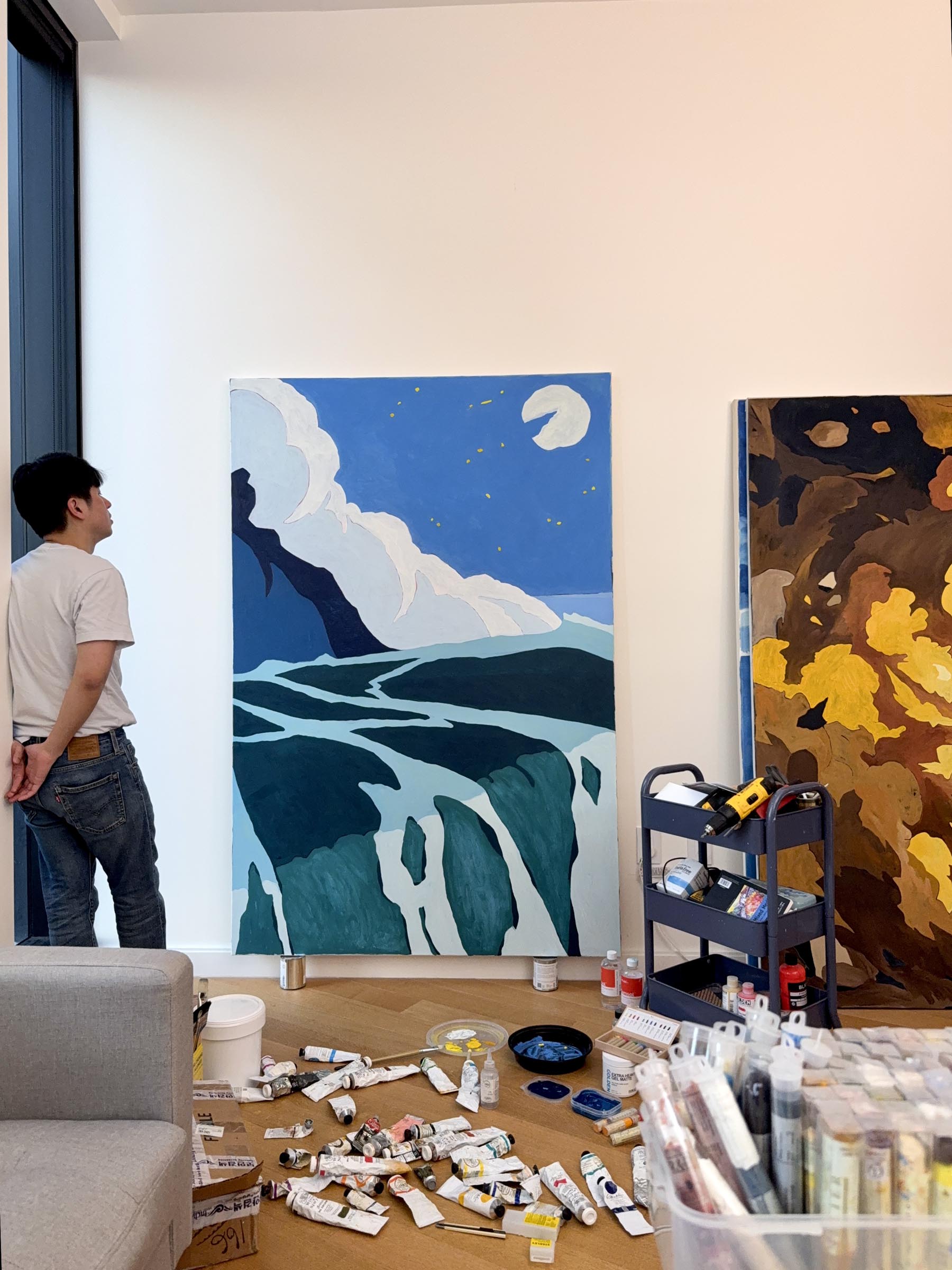
Studio view, work in progress
How do you make your work, does it start with a sketch?
My process begins with building the physical surface: stretching the canvas by hand, preparing the ground, and applying multiple layers of gesso. Once the surface is ready, I map out the preliminary composition directly onto the canvas with colored pencils, establishing the structural framework.
From that point on, the execution demands rigorous physical discipline. While my canvases are large—often measuring 78x78 inches—I deliberately paint them using very small brushes. Navigating a vast surface with such a small brush creates an intense dialogue between control and physical endurance. It forces me to make intentional decisions inch by inch, building flat, unyielding planes of color while defining clear physical gaps and boundaries that demarcate plane from plane.
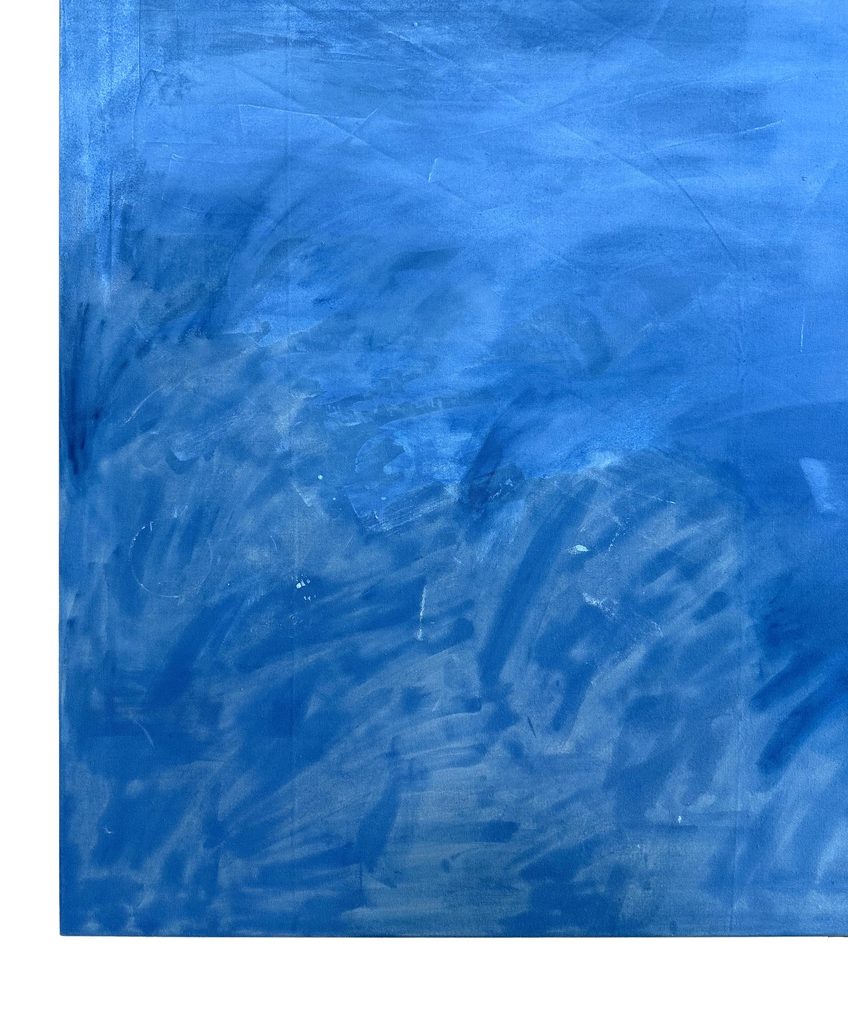
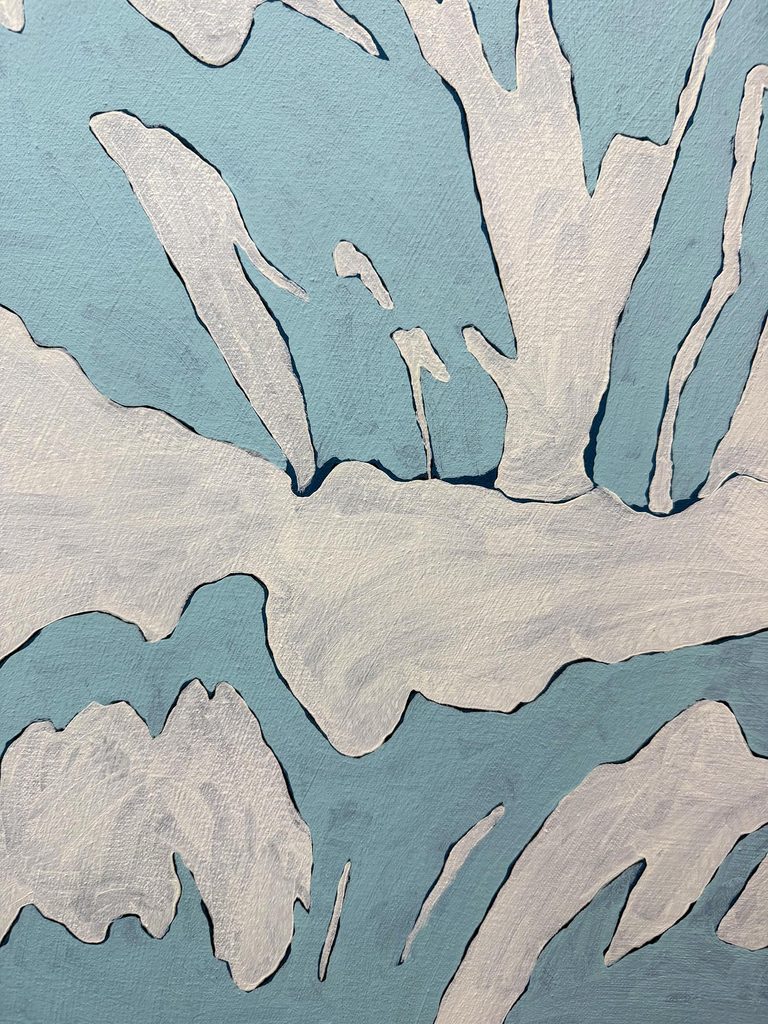
Details
My style is defined by this economy of means, where tension is produced purely through sharp boundaries, color fields, and negative space. Controlling a massive field with minute brushstrokes is how I enforce absolute precision, ensuring that every edge, dividing gap, and plane carries weight.
Many artists live by their routines, what does yours look like?
I don't have elaborate rituals.
When I get to the studio, my routine is simple: I make a coffee, change into my work clothes, and get straight to painting. Working on 78x78-inch canvases with small brushes takes sheer hours of focused physical labor. Once I sit in front of the canvas, I lock in and keep going until the day is done. For me, the ritual is simply showing up and putting in the hours.
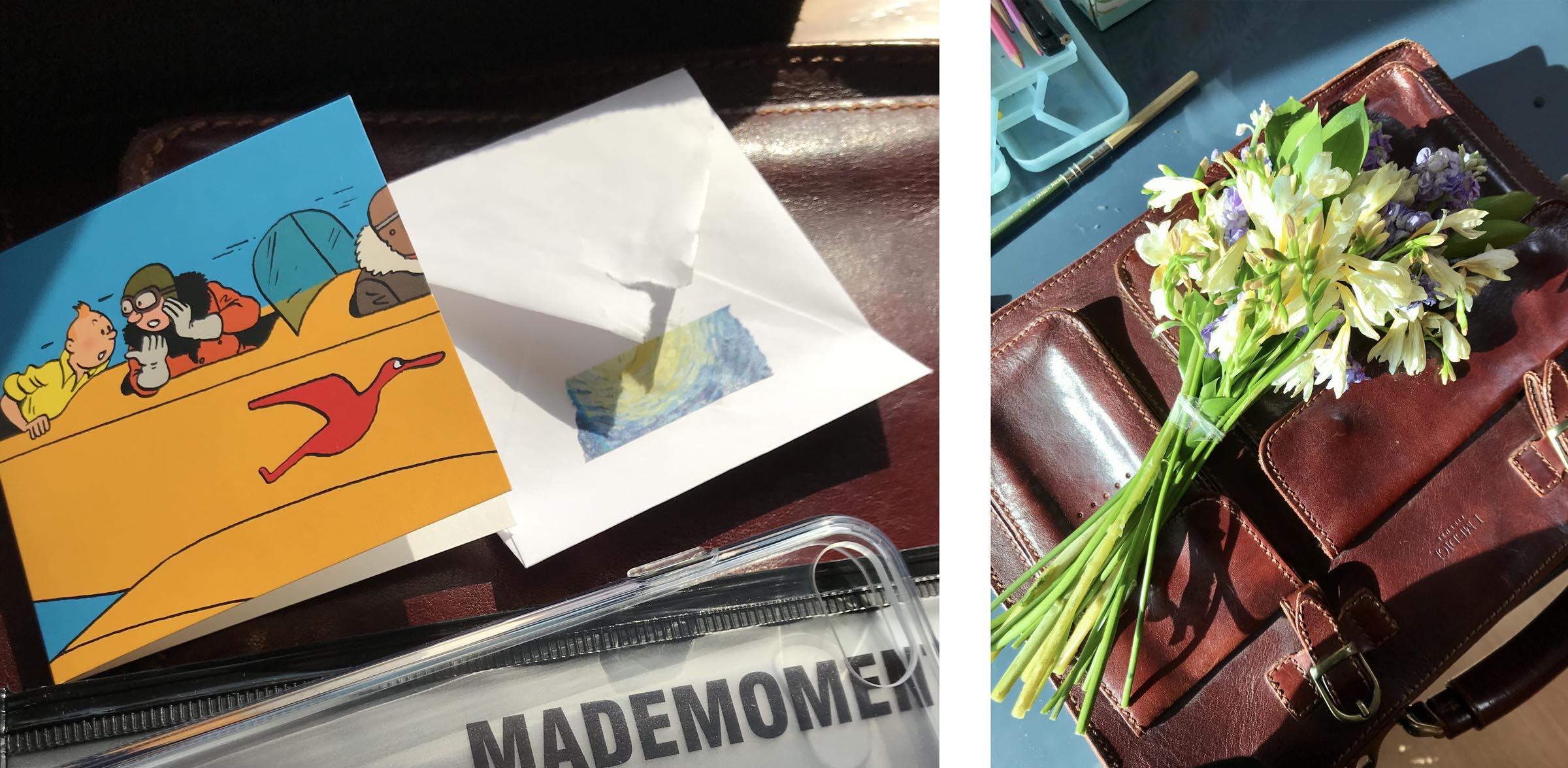
Process images
Who are your biggest influences?
In the past, I was heavily influenced by Milton Avery and Philip Guston. These days, my biggest influences are Ellsworth Kelly, Young-Kuk Yoo, and Henri Matisse.
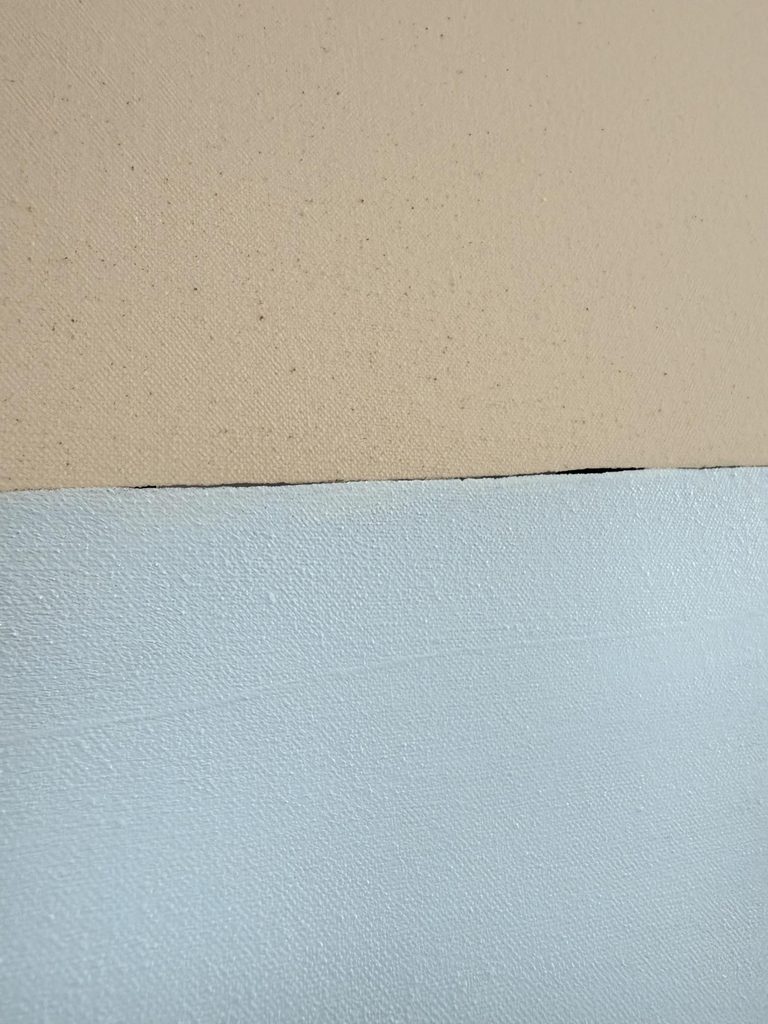
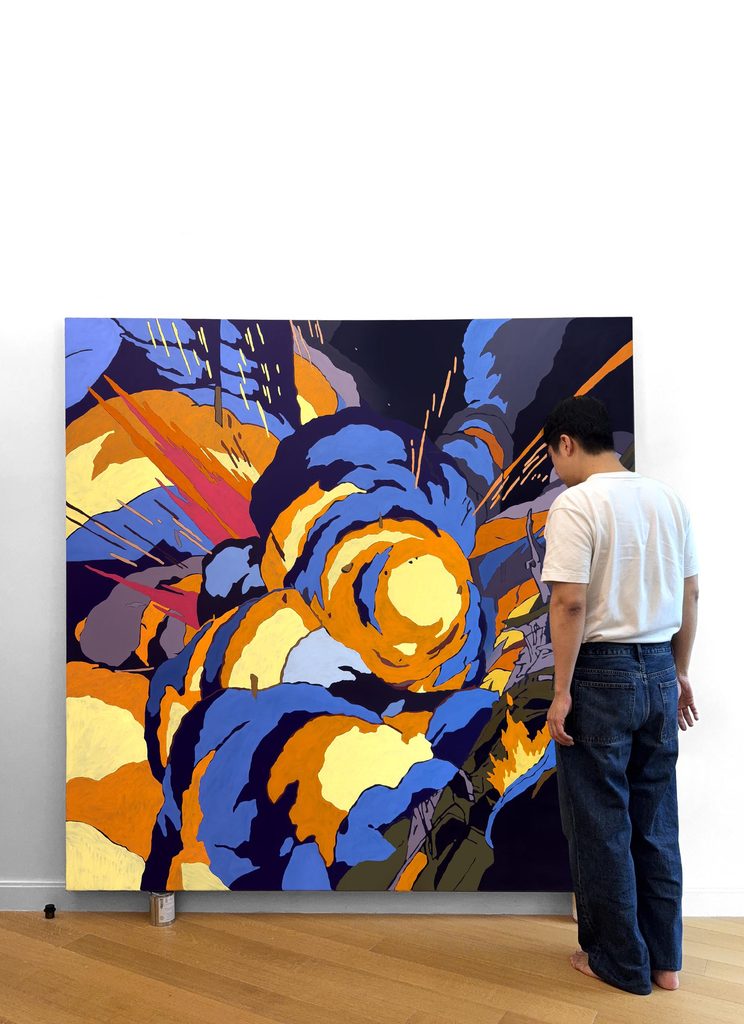
Left: Detail; Right: Studio view
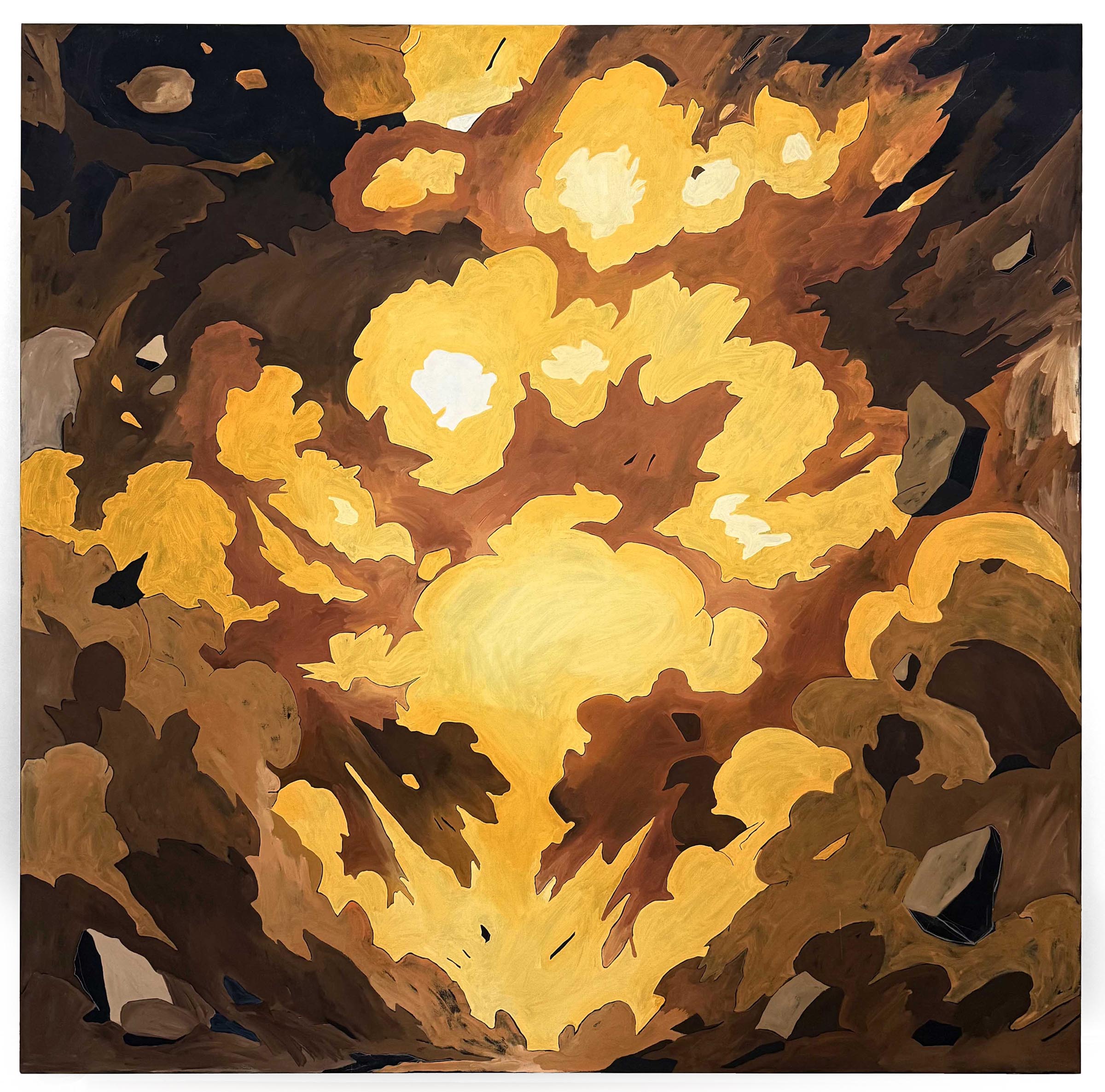
Untitled, 2025, Colored pencil and oil on canvas, 78 x 78 in.
Are there books or films that are an important source of inspiration?
Recently, I have been deeply immersed in Haruki Murakami's novels. I don't draw inspiration directly from the stories or imagery in his books; rather, what resonates with me is his sheer diligence and discipline as a writer. The way he treats the creative act not as a fleeting spark, but as a rigorous, daily physical labor is something I deeply respect and carry into my own painting practice.
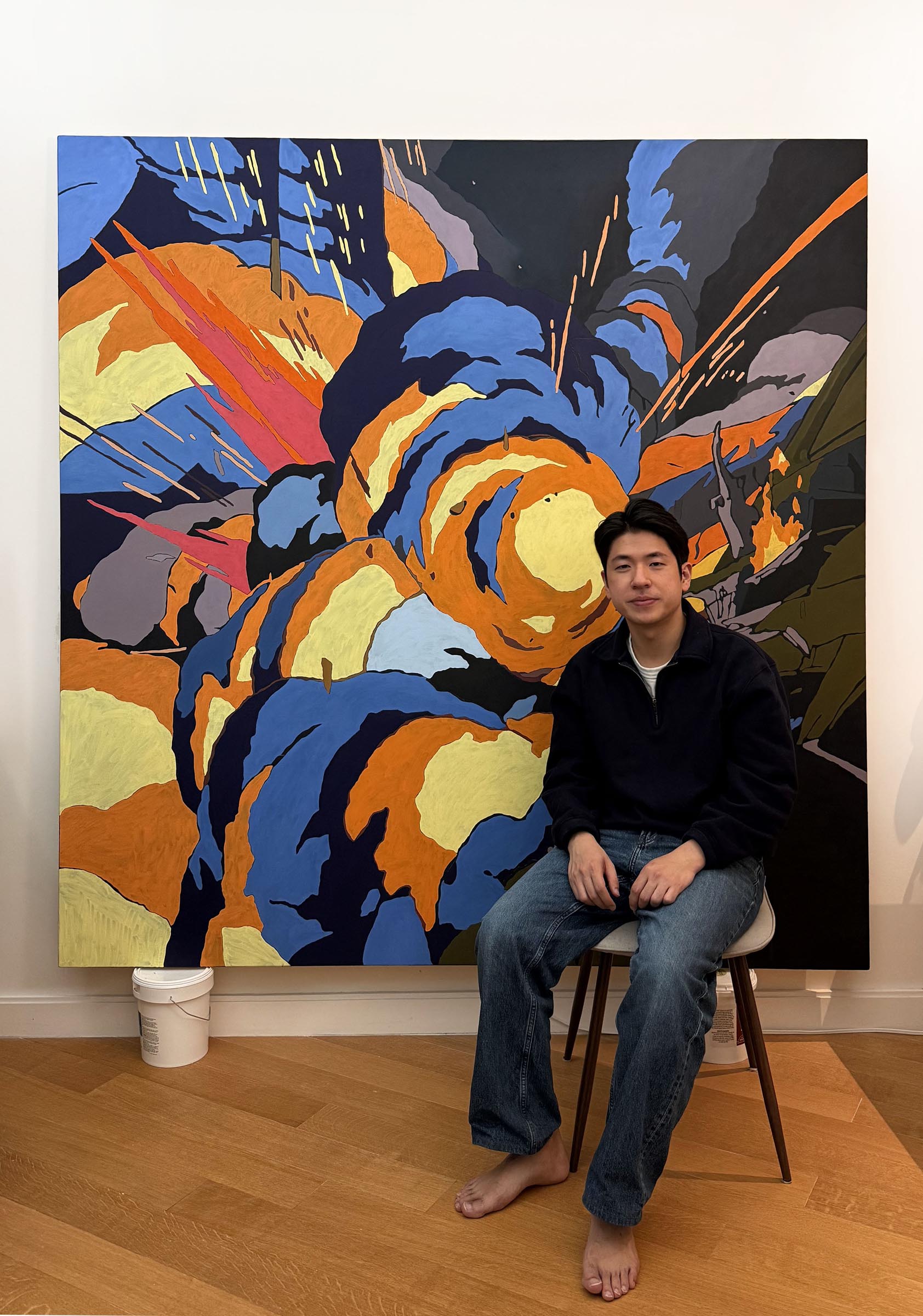
Artist in in the studio, in front of What Survives, 2026, Oil on canvas, 78 x 78 in.
What is the best piece of advice you’ve been given?
I can't recall a grand piece of advice, except simply to stay humble. Stay humble, don't get ahead of yourself, and just focus on doing the work.
What is the best advice you would give to other artists?
Just show up to the studio and put in the hours.
Stay up to date with S.H. Kim
Website hesees92.com
Instagram @skim269