Photographer based in Maynard, MA
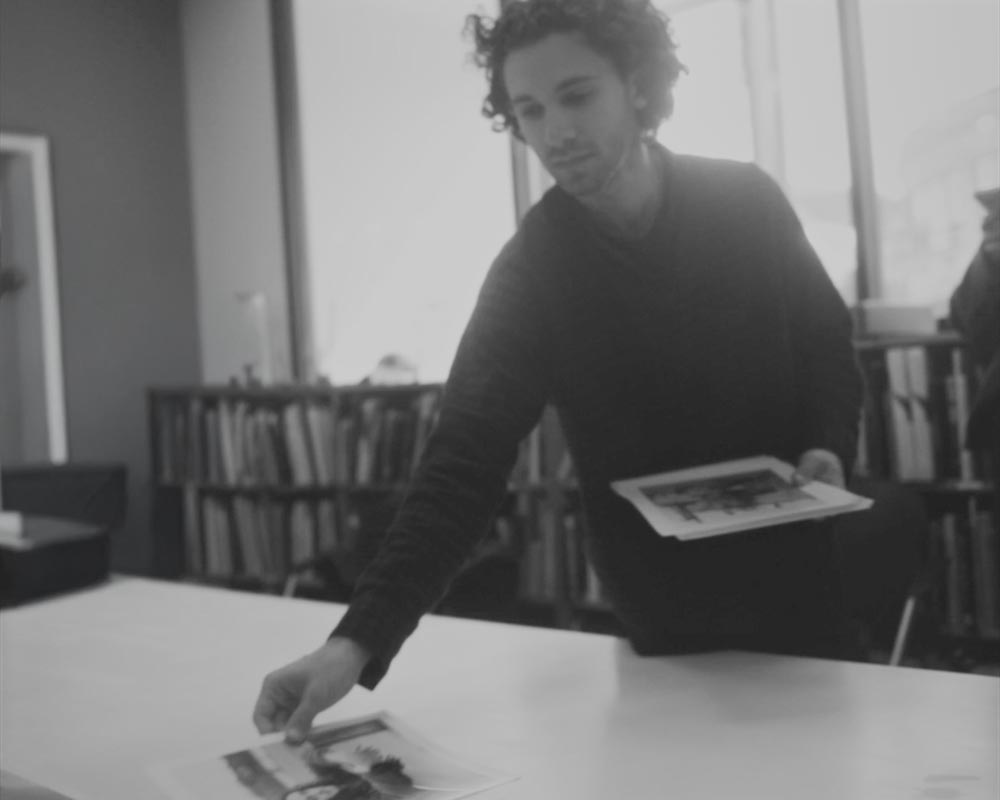
Robin Glass, Portrait of the Photographer in the studio
Tell us about yourself, what's your background?
I first connected to the arts through music and songwriting, which still play a significant role in my life and visual creative process - I’ve found that songwriting unlocks emotions and subtleties that help contribute to making my photographs. I first came to photography through a darkroom class - having the experience of a tactile process, which required slowing down, being present with the physical and delicate, and allowing images to take shape through intentional steps from the exposure of the negative to the final print, was powerfully grounding for me in contrast to growing up in a fast-paced world.
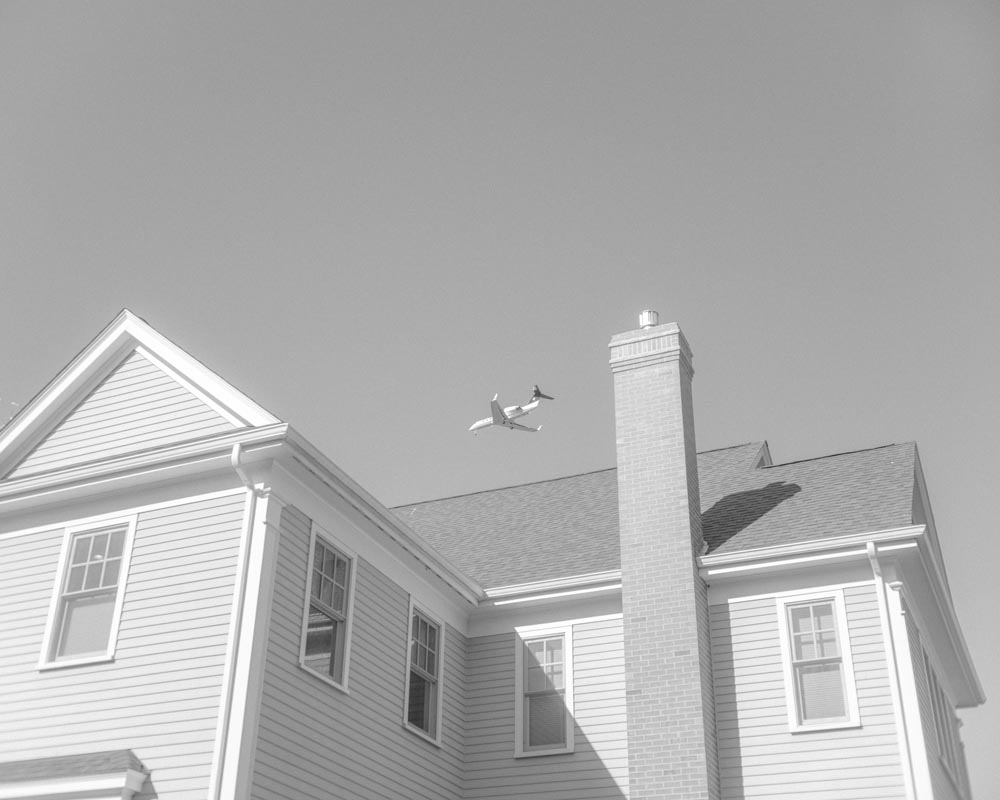
Plane, 2024, Gelatin Silver Print, 8 x 10 inches
Of course that experience was highly influential, but I don’t know if there was an exact specific moment when I knew I wanted to be an artist. I suppose it felt more like a gradual unfolding of realizing that through artistic expression, I was able to access, understand, and accept more parts of myself, and more deeply connect with others and the earth. When it comes to making pictures specifically, being out in the world with the camera seems to help me embrace the collective sorrow, pain, grief, and hope that we all feel. It feels as though the pictures give to me what I give to them, and for that I’m grateful.
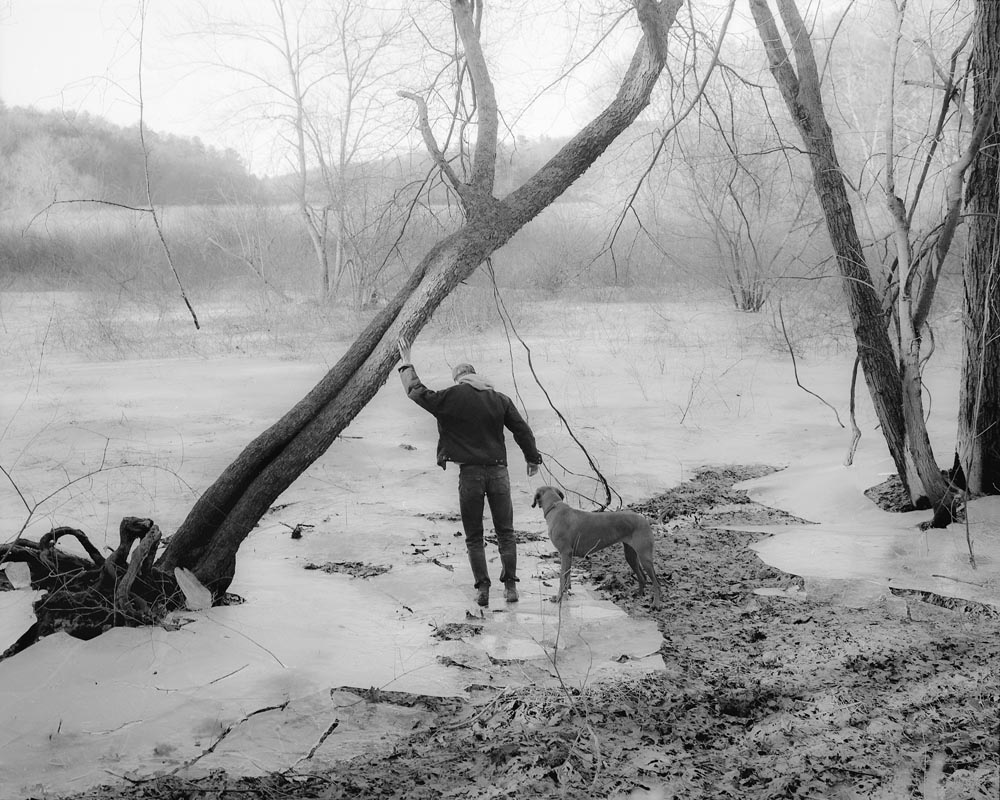
Mount Misery, 2023, Gelatin Silver Print, 8 x 10 inches
“I’ve been exploring how the camera can become a tool for unwinding life in mostly small towns and natural environments—where there seems to be tension between the destructive influence of an ongoing industrialist mental framework and an always—existing prospect of moving toward the spiritual or transcendental.”
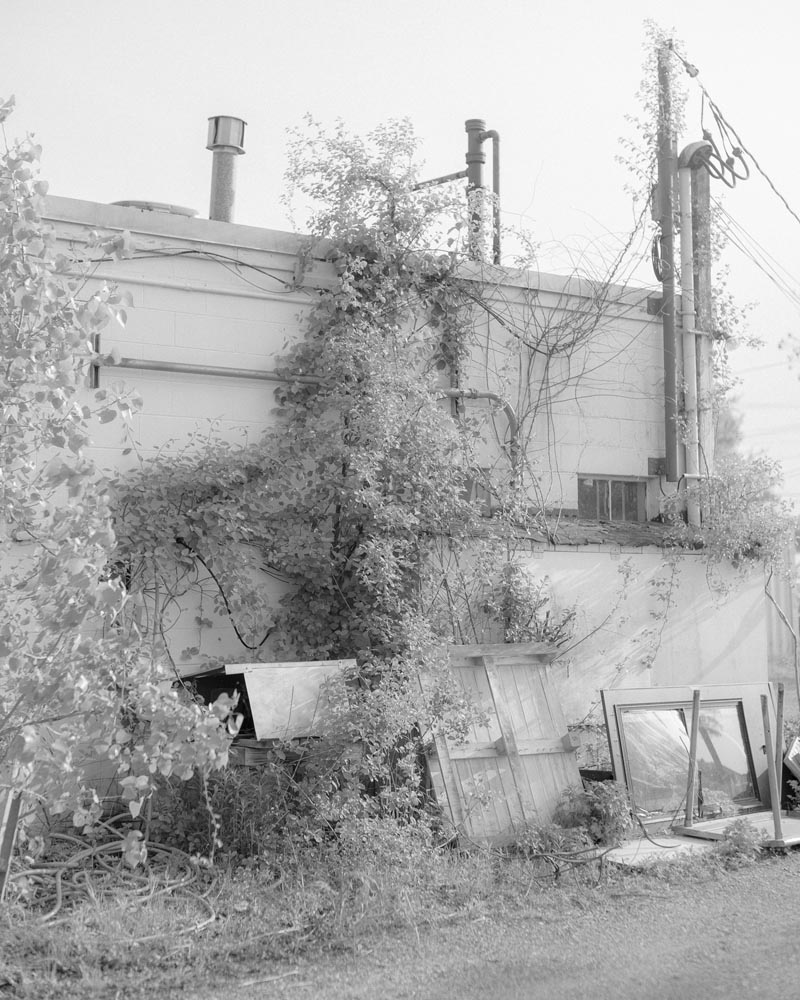
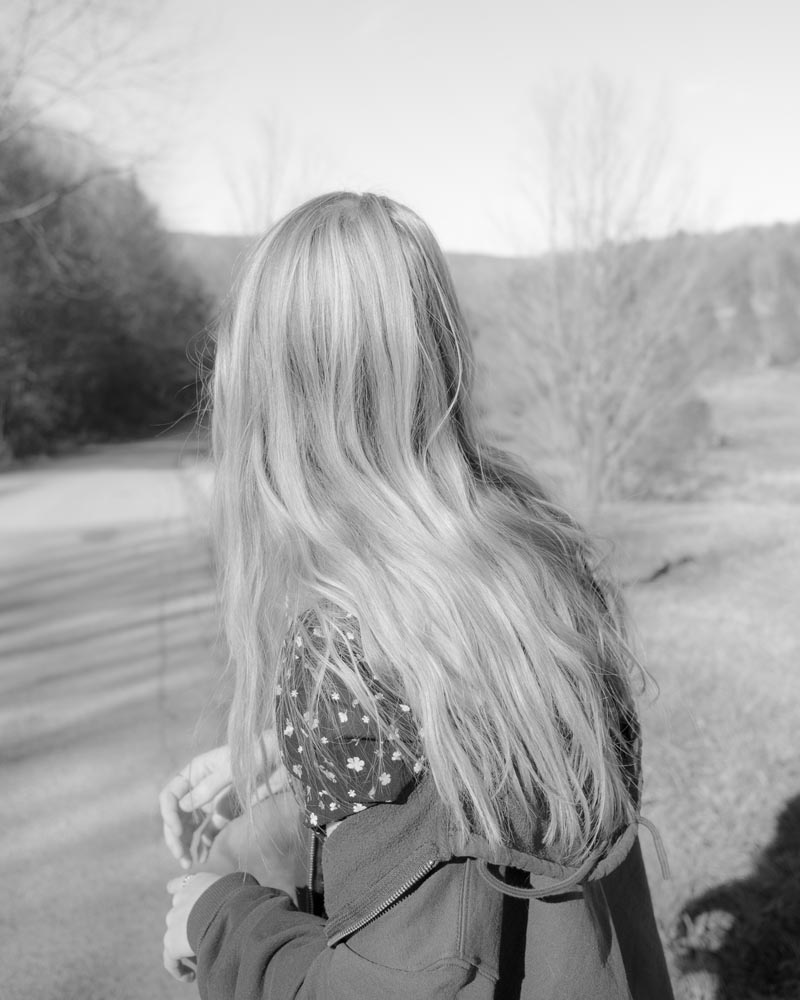
Left: Untitled, 2023, Gelatin Silver Print, 8 x 10 inches. Right: Untitled, 2022, Gelatin Silver Print, 8 x 10 inches
What are you currently working on and where did the inspiration for it come from?
I am currently developing a body of photographs made mostly throughout the Northeast of the United States, where I’m from. As the pictures first began to take form, I found myself questioning how the essence of a place or setting, both physically and energetically, can be felt within them. Through collaboration with the people in my life closest to me, as well as chance encounters, I’ve been exploring how the camera can become a tool for unwinding life in mostly small towns and natural environments—where there seems to be tension between the destructive influence of an ongoing industrialist mental framework and an always—existing prospect of moving toward the spiritual or transcendental.
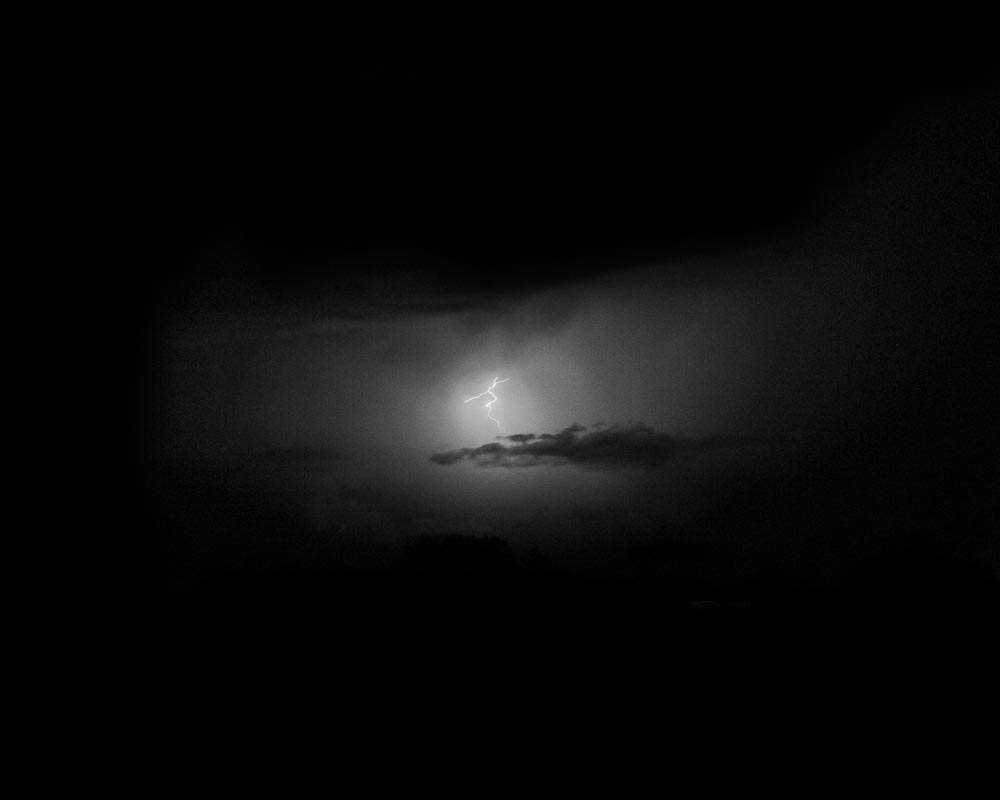
Lightning, 2022, Gelatin Silver Print, 8 x 10 inches
I’m also thinking about how the energetic nature of a place and our past can inform us about what becomes invisible and indescribable; making the photographs with the intention to affirm the present, while also attempting to peer into and record beyond the tangible. I’m looking for images that serve as symbols, portals, archetypes, talismans - that are not only there to serve as literal depictions of the world, but also perhaps suggest something beyond what is being directly represented.
Innovation does not only happen in the field of technology — it occurs everyday in a creative practice. What do you do for inspiration?
For a long time, I thought there must be a specific way to get inspired, but I’ve realized that, for me, there isn’t a perfect method. Rather than thinking, “If I do this exact external action, I’ll get inspired,” these days I am trying to focus more inwardly, doing my best to feel deeply and stay energetically open. I'm finding that a lot of what helps me is letting go and being as receptive and aware as possible to my everyday experiences, relationally with others and with nature. Then, at some point, inspiration seems to come.
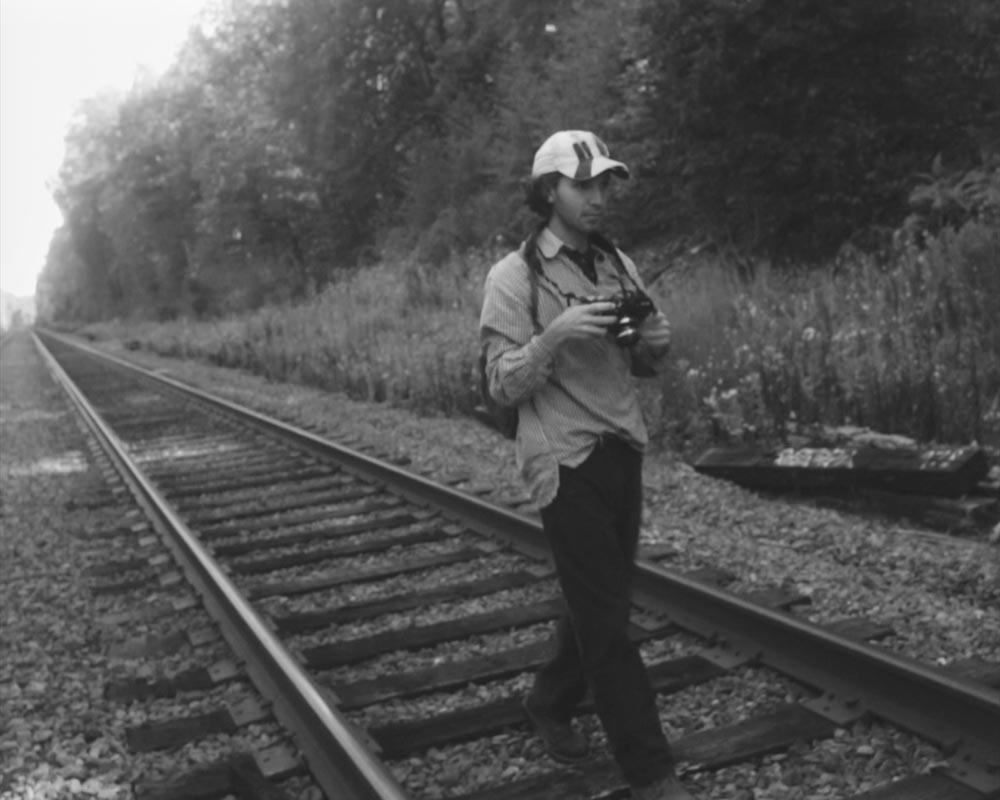
In the world
Describe your practice and process. Where do ideas start for you? In the studio or being in the world?
I would say being in the world is where things come alive for me. I think I tend to have a more receptive/intuitive approach to making my work rather than a preconceived-idea approach. The ideas come once the pictures are forming, not really beforehand. I like to bring my camera wherever I go and try to get into a state of responding to my environment, letting what draws me into curiosity or excitement reveal itself.
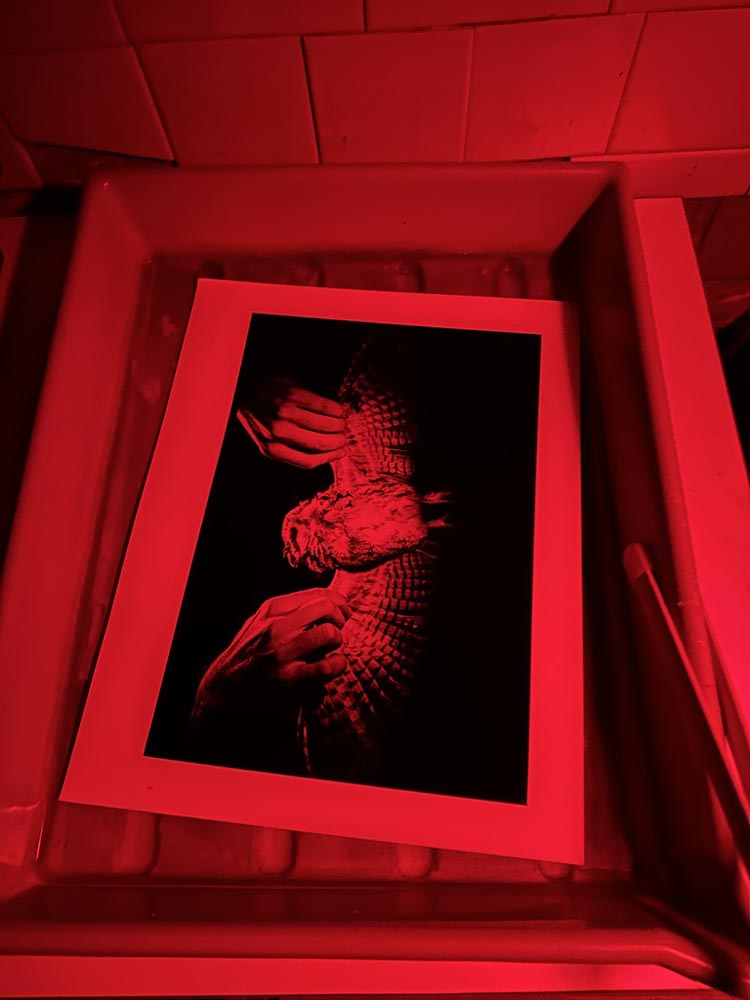
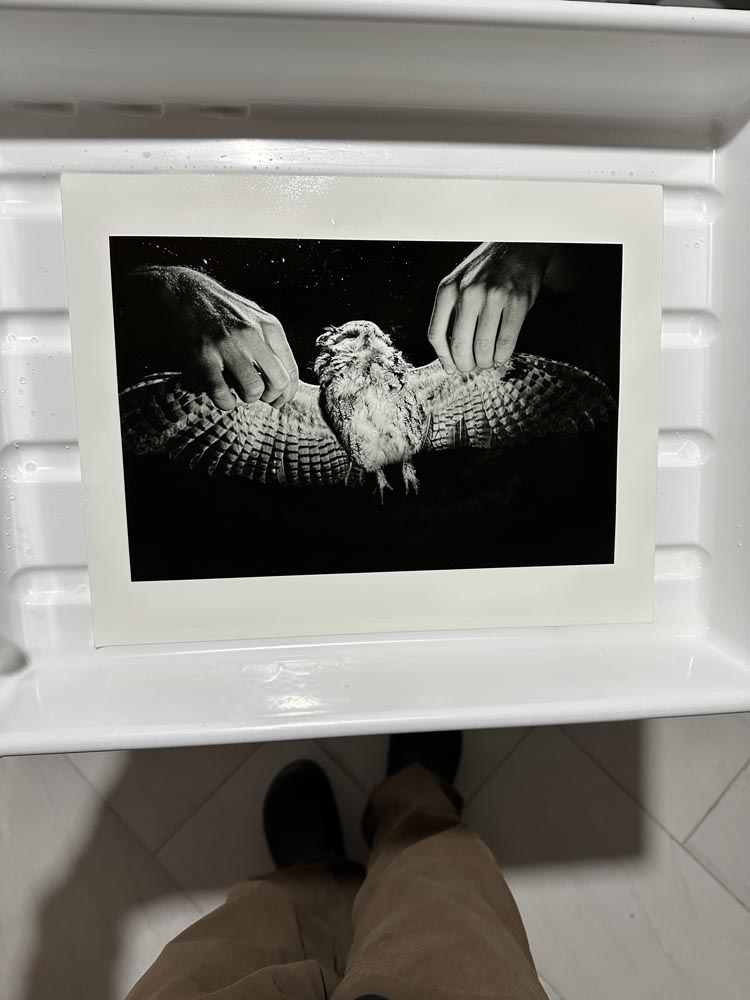
Left: Darkroom printing. Right: Silver gelatin print viewing
How do you make your work, does it start with a sketch?
In my process, I'm interested in making photographs in two ways. One is simply responding to the world around me, and the other is staging or constructing images. I then like to combine photographs from either approach into a collective sequence. My primary way of working is the non-constructed approach, only constructing when I feel something highly specific is missing from the body of work. From a technical perspective, I choose to work with a wider-to-medium focal length. I like that it forces me to relate physically to the subject. I try to take in the essence of what’s in front of the camera before making the picture, and I think one way of doing this is by being forced to get closer. Although the effect of a wider-angle lens may be subtle aesthetically, there’s a quality of intimacy when the lens is physically closer to the subject that I think can be felt in the final image.
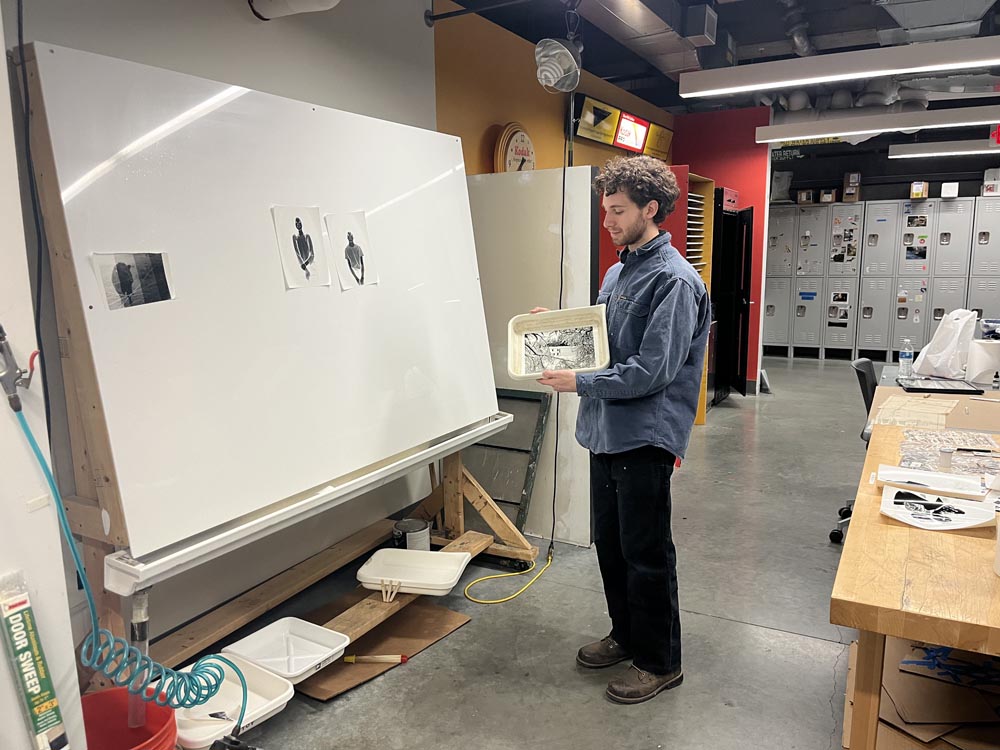
Work in progress, studio view
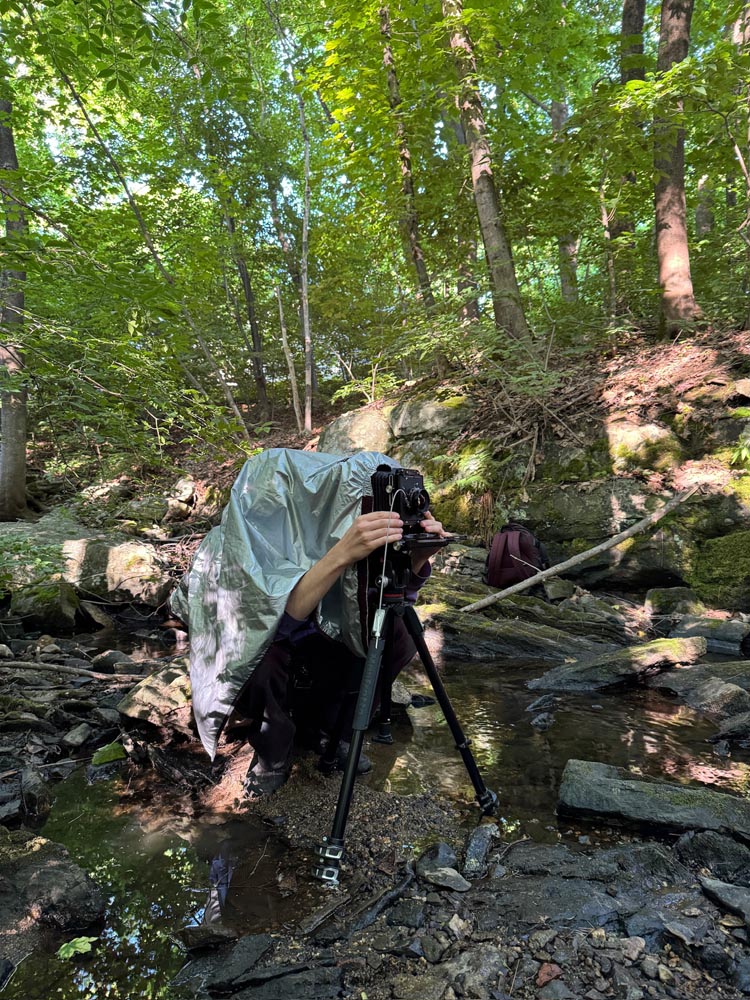
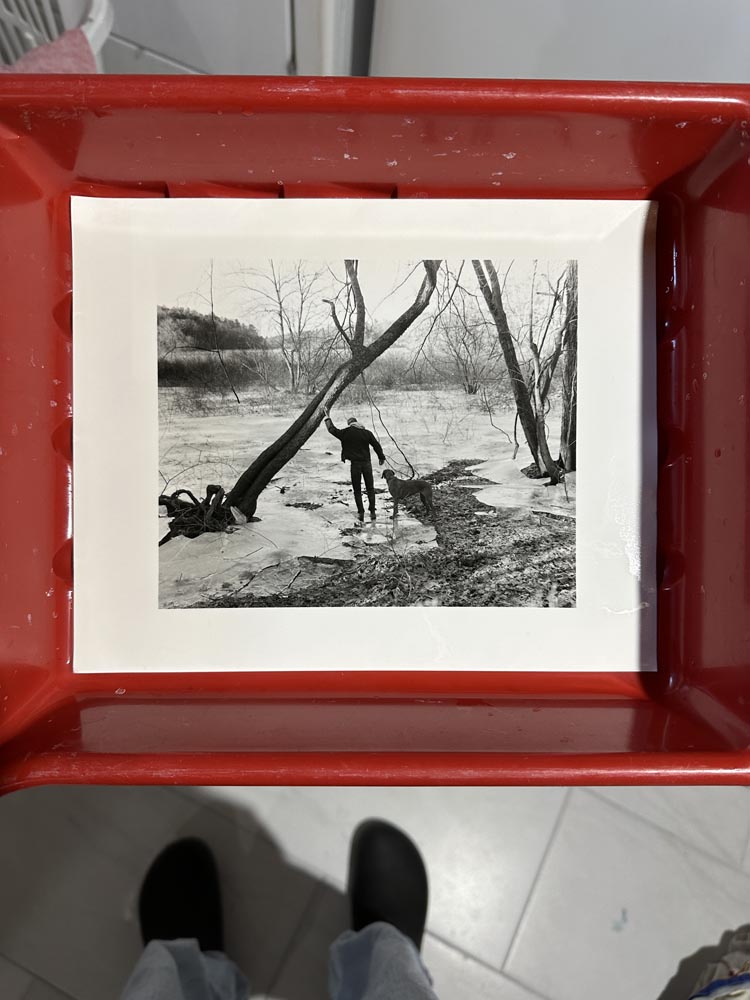
Left: At work. Right: Darkroom print viewing
Who are your biggest influences?
There are really too many to name! For this case, I’ll stick with my earliest artistic/photographic influences. First and foremost, my teacher and mentor Anne Rearick has played and still plays a huge role in my development and growth as a photographer and artist. I am sincerely grateful to her.
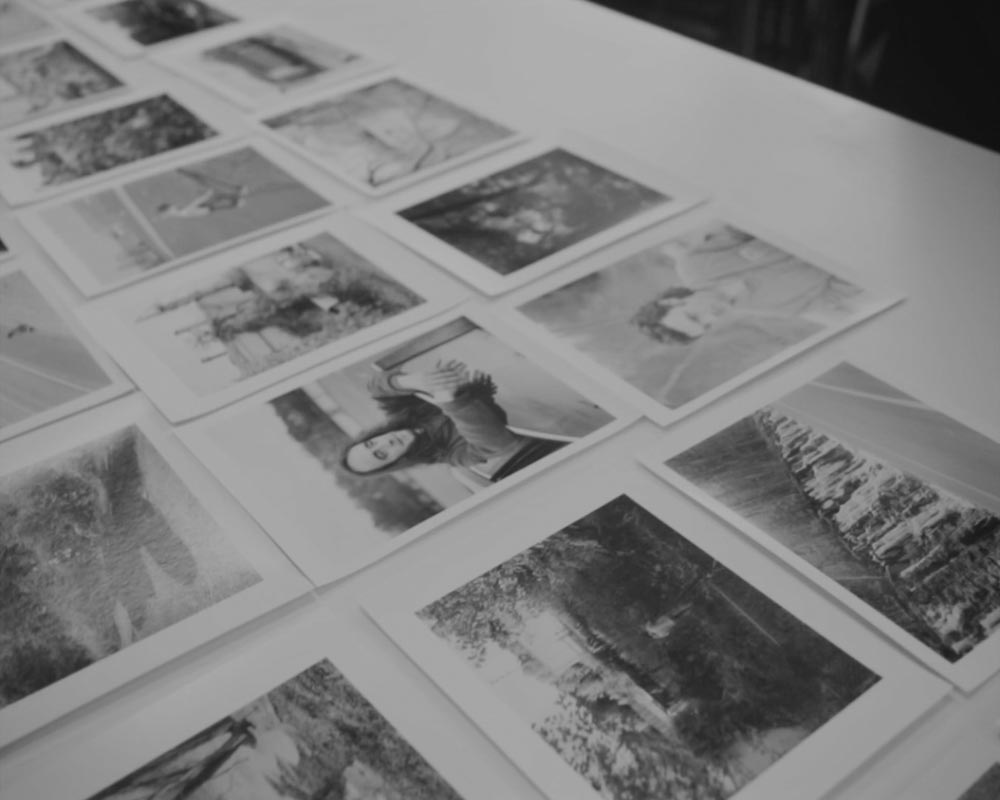
Print Sequencing
Among others, Robert Adams was another one of my earliest influences. Both his photographs and writing were impactful to me because they laid the foundation for my approach to making pictures in both a practical and philosophical sense. Adams stated, “The notable thing about great pictures is that everything fits. There is nothing extraneous. There is nothing too much, too little; everything within that frame relates. The reason that is so moving is that the artist finally says that the form that he or she has found in that frame is analogous to form in life. The coherence within that frame points to a wider coherence in life as a whole.” Adams made me thoroughly consider how I compose my photographs. Not merely because of principles to be followed to make them broadly “good” but because cultivating sincere intentionality in one's compositional approach allows for images to suggest an underlying harmony in our existence, and motivate us towards an ongoing search for hope. This overall thesis, encouraged by Adams and his pictures, has played a foundational role in my practice.
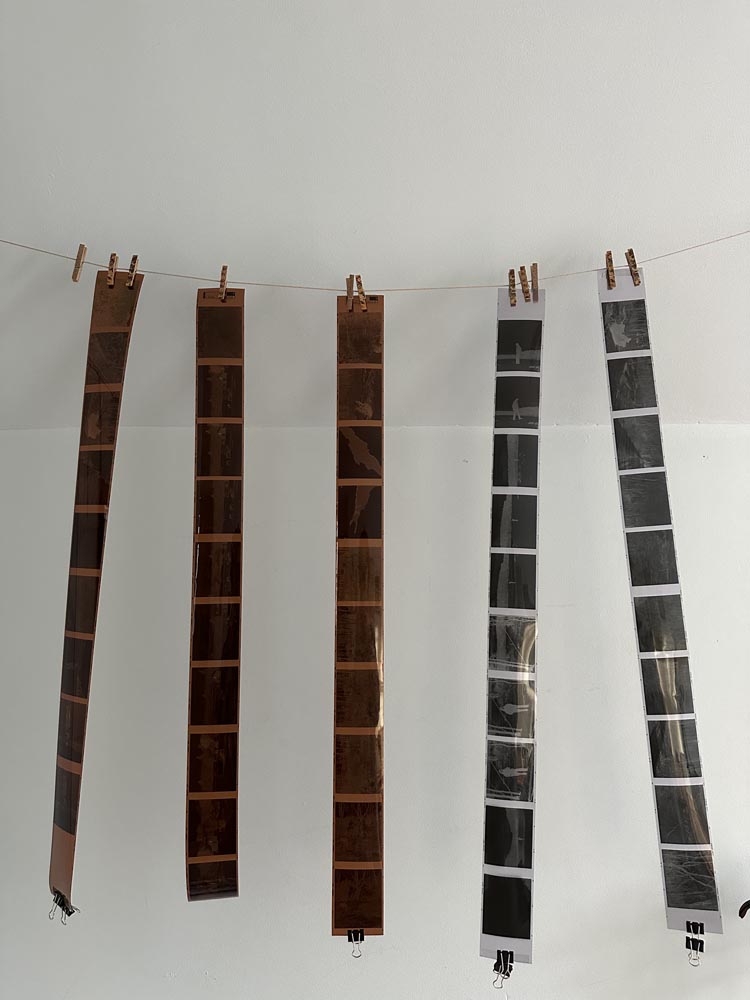
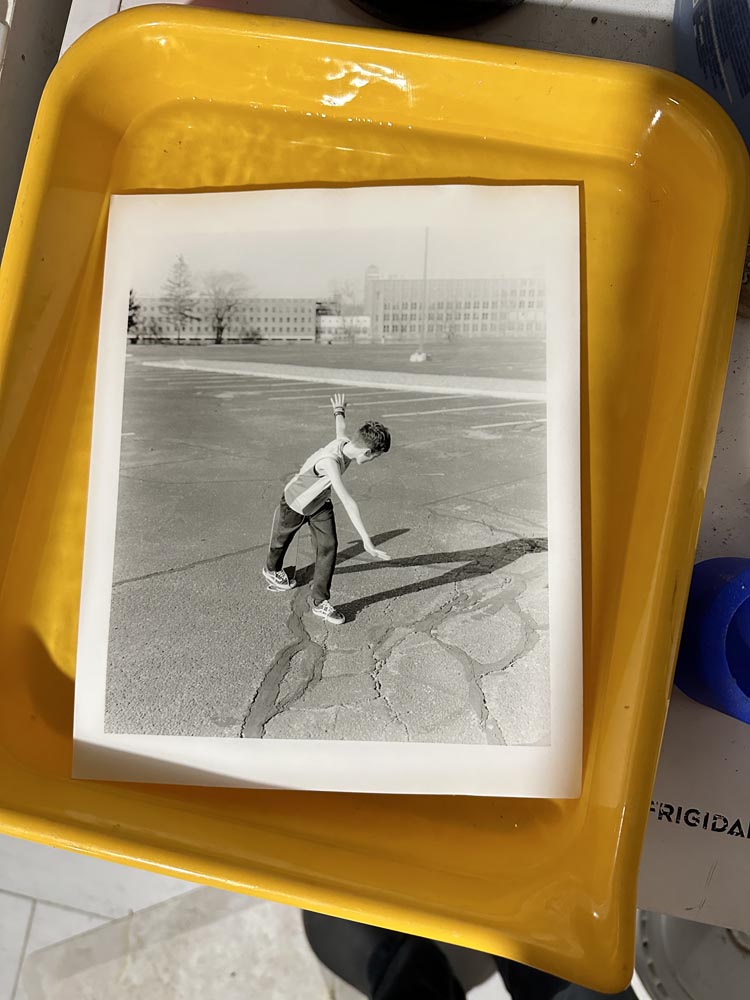
Process
Are there books or films that are an important source of inspiration?
The Wild Edge of Sorrow by Francis Weller.
How will Innovate Grant contribute to your practice?
I’m sincerely grateful for the support and opportunity the Innovate Grant offers. It will help cover the material costs of printing and framing my work in new ways, and it will also give me dedicated time to photograph in new places.
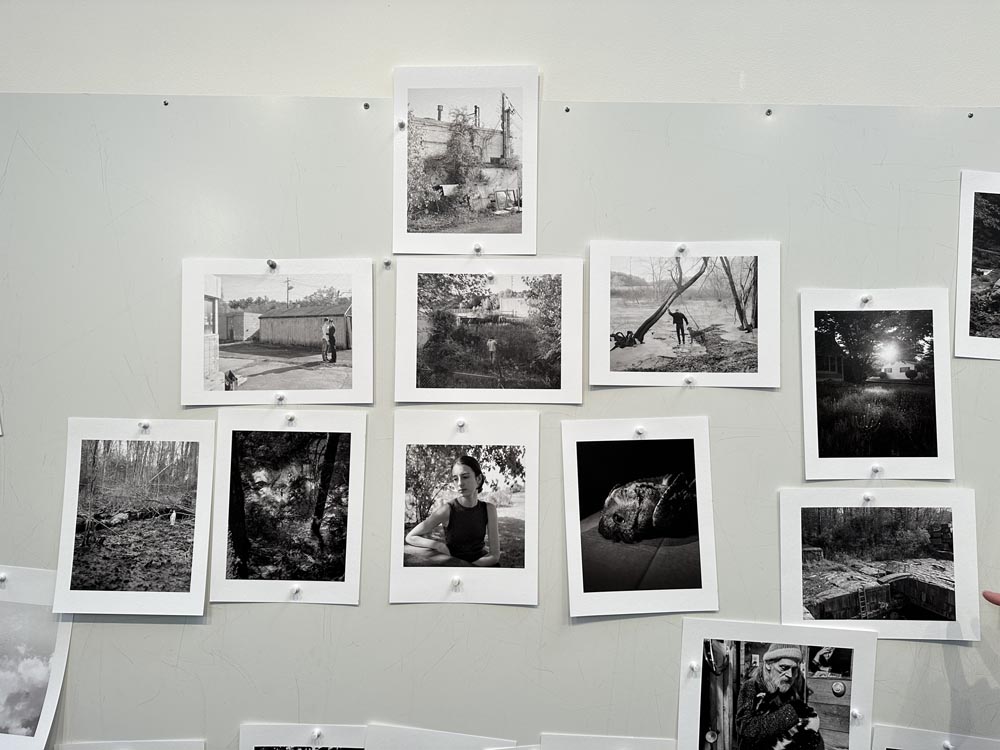
Print sequencing
What is the best piece of advice you’ve been given?
“Make us ache for what’s absent”
What is the best advice you would give to other artists?
The work gives to you what you give to it.
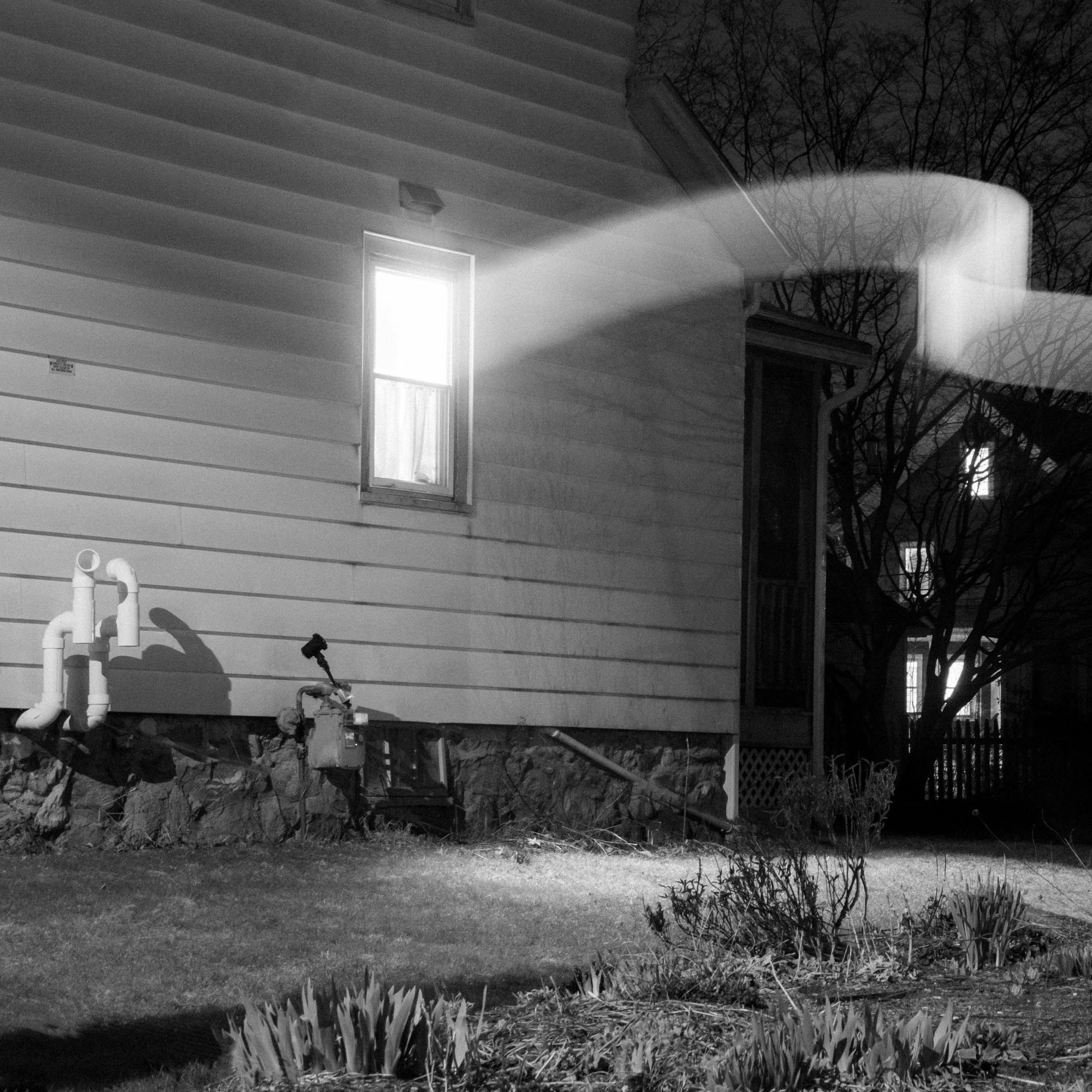
Ghost, 2021, Gelatin Silver Print, 8 x 10 inches
Stay up to date with Robin Glass
Website robin-glass.com
Instagram @robinglass_