Artist based in Berlin, Germany
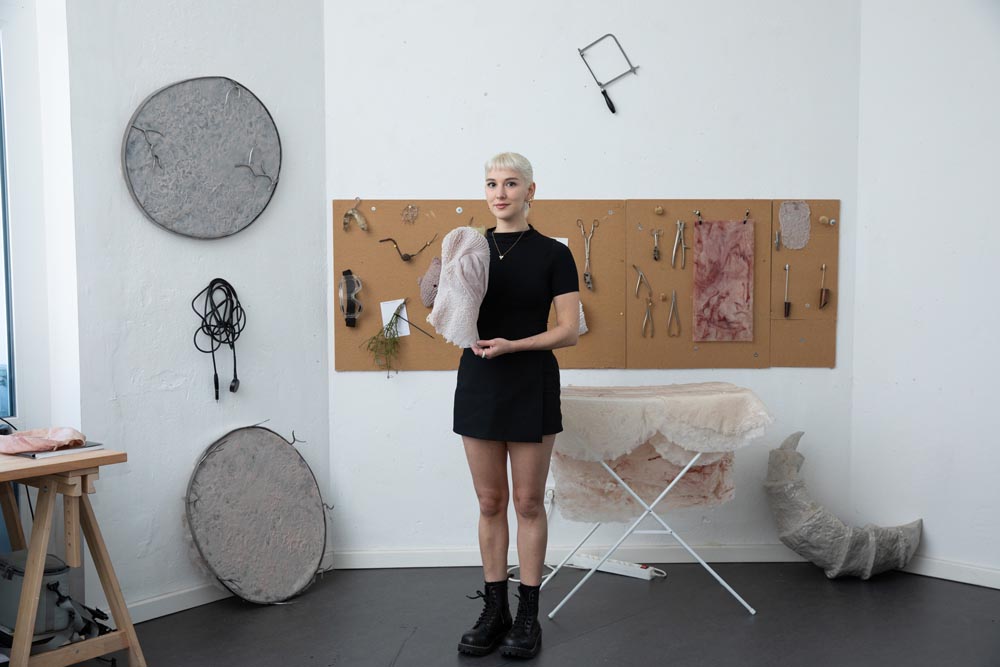
Lena Becerra in the studio
Tell us about yourself, what's your background?
I am an Italo-Argentinian visual artist working between sculpture and installation, creating systems that behave like unstable bodies. Structures that circulate, respond, and transform tensing the boundaries between body and machine, nature and artifice.
I don’t think I ever “decided” to become an artist. I’ve been working creatively for as long as I can remember, drawing, writing, building, constantly experimenting with different forms and materials. That early curiosity eventually led me to study visual arts, but my practice has always developed through a combination of formal training and self-directed exploration.
Over time, I realized that making was not just a practice, but a way of understanding, something that allowed me to process experience, test ideas, and construct meaning through material.
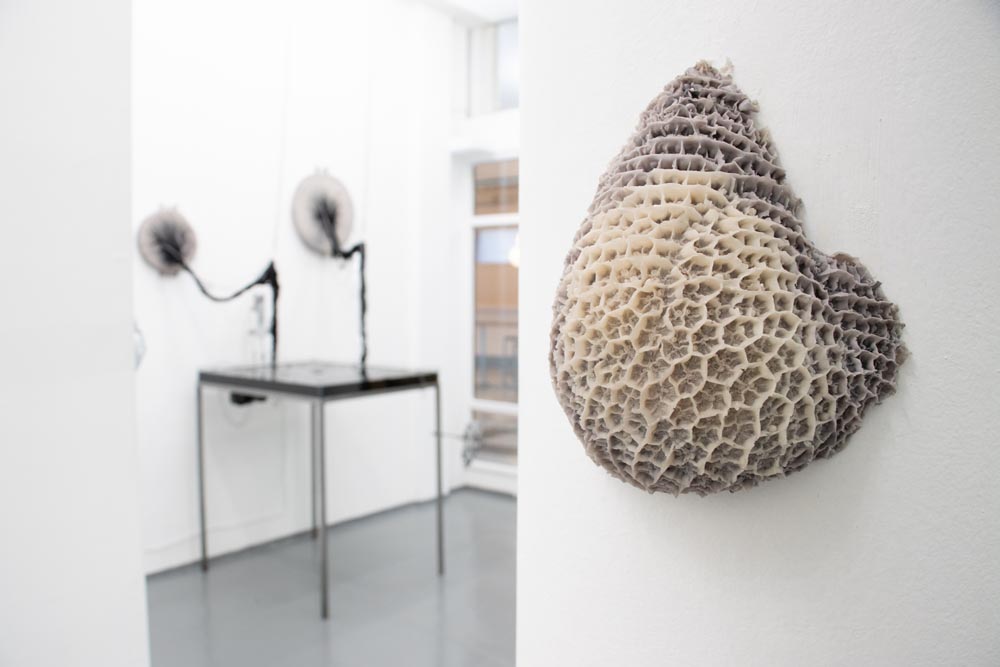
COAGVLA Installation, 2026
“This work comes from an ongoing interest in dissolving boundaries between biological and technological systems, and in understanding matter as active and responsive. I am particularly drawn to processes such as growth, decay, circulation, and transformation, and how these can be translated into environments that the body can physically encounter.”
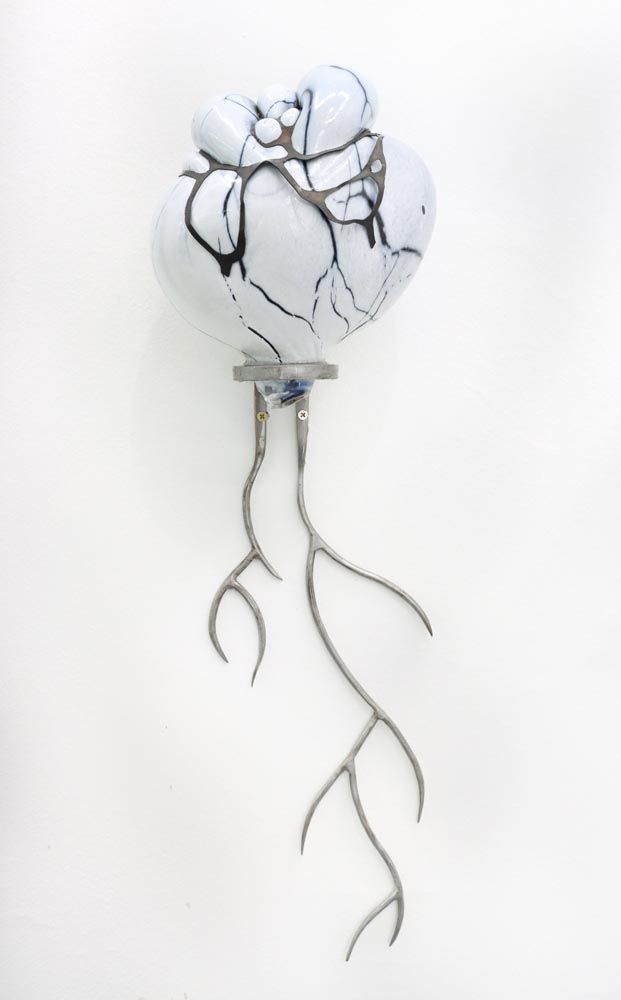
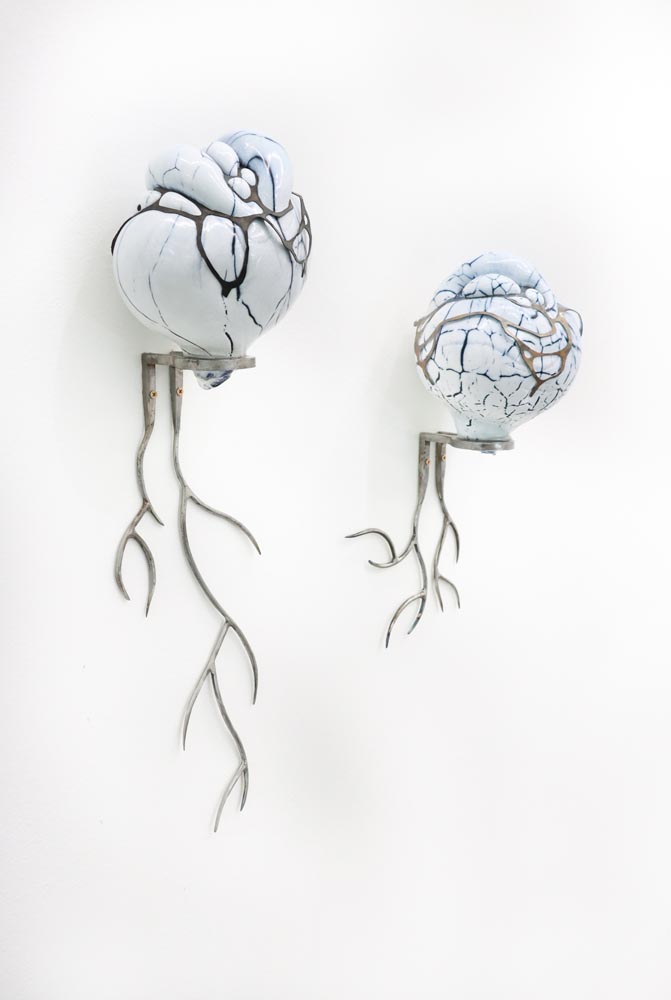
Left: COAGVLA I, 2026, Glass and steel, dimensions variable; Right: COAGVLA I and II, 2026, Glass and steel, dimensions variable
What are you currently working on and where did the inspiration for it come from?
I am currently developing a body of work that explores material systems as living, unstable organisms, which I recently presented through two exhibitions: COAGVLA at Acefala Galería (gallery that currently reprensents my work) and Xenobotany at Blak Dot Gallery.
COAGVLA focused on processes of transformation, approaching matter through an almost alchemical process of reconfiguration. The work engages with viscosity, tension, and states of change, where materials thicken, destabilize, and reorganize.
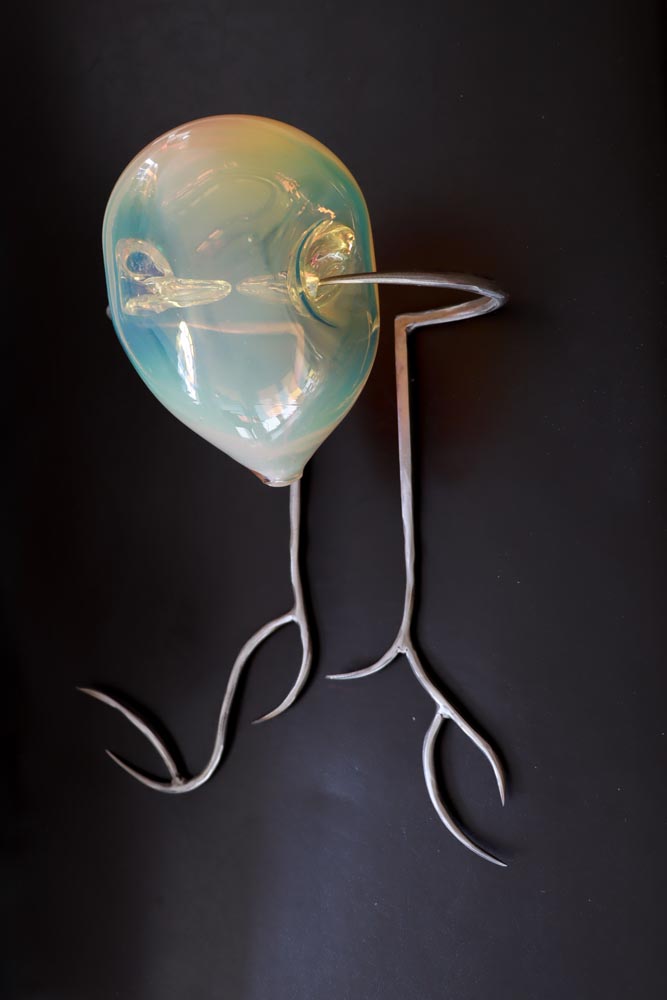
Xenobotany I, 2026, Glass and steel, dimensions variable
With Xenobotany, the practice expands into a more spatial and immersive direction. The installation takes the form of a speculative ecosystem composed of hybrid organisms, glass vessels, prosthetic anatomies, and circulating fluids forming a living archive in constant mutation.
The inspiration for this work comes from an ongoing interest in dissolving boundaries between biological and technological systems, and in understanding matter as active and responsive. I am particularly drawn to processes such as growth, decay, circulation, and transformation, and how these can be translated into environments that the body can physically encounter.
Together, these projects mark a shift in my practice, moving from individual sculptural elements into interconnected systems that behave as environments or semi-living organisms.
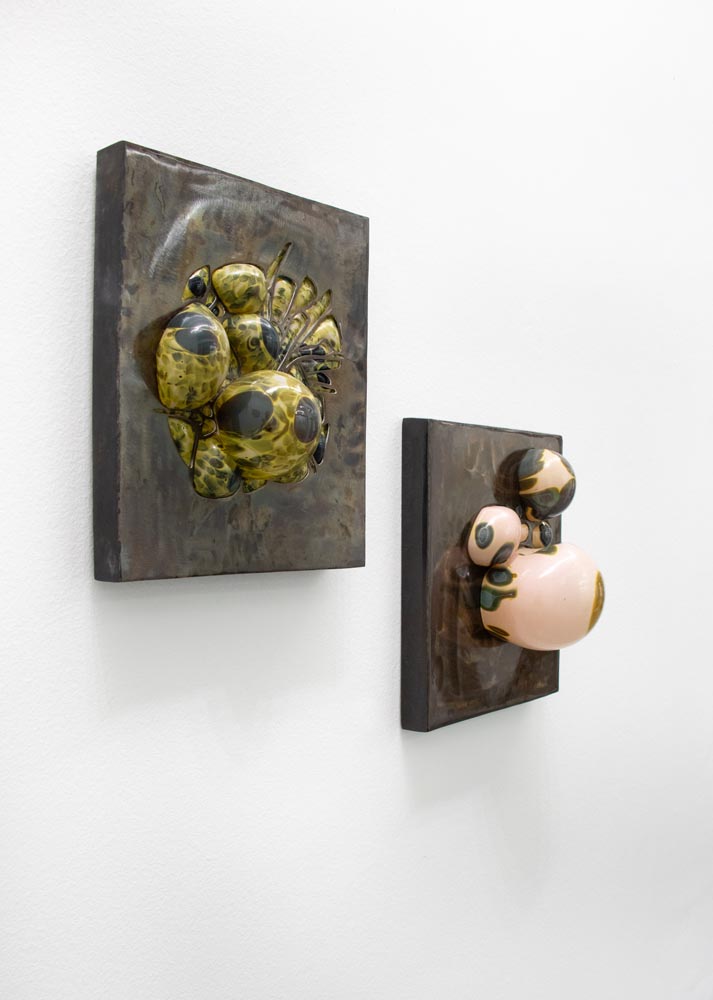
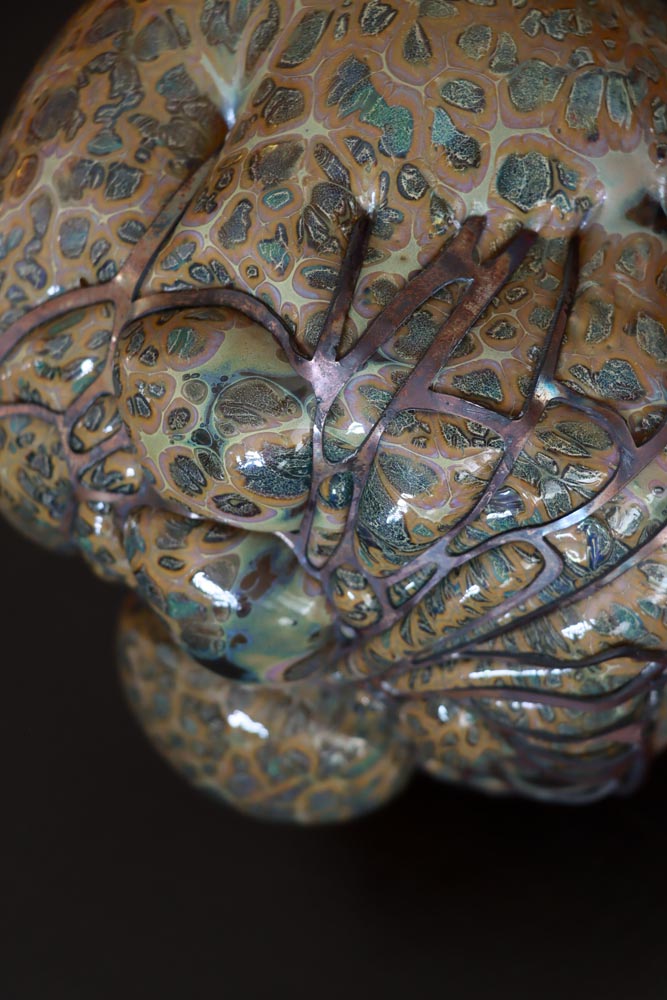
Left: Xenobiotics XI and XII, Glass and steel, dimensions variable; Right: Xenobotany II, 2026, Glass and steel, dimensions variable
Innovation does not only happen in the field of technology — it occurs everyday in a creative practice. What do you do for inspiration?
For me, innovation is not about producing something entirely new, but about shifting how materials, bodies, and systems relate to each other. It emerges through attention: through observing how matter behaves, how it transforms, and how small changes in conditions can produce unexpected results.
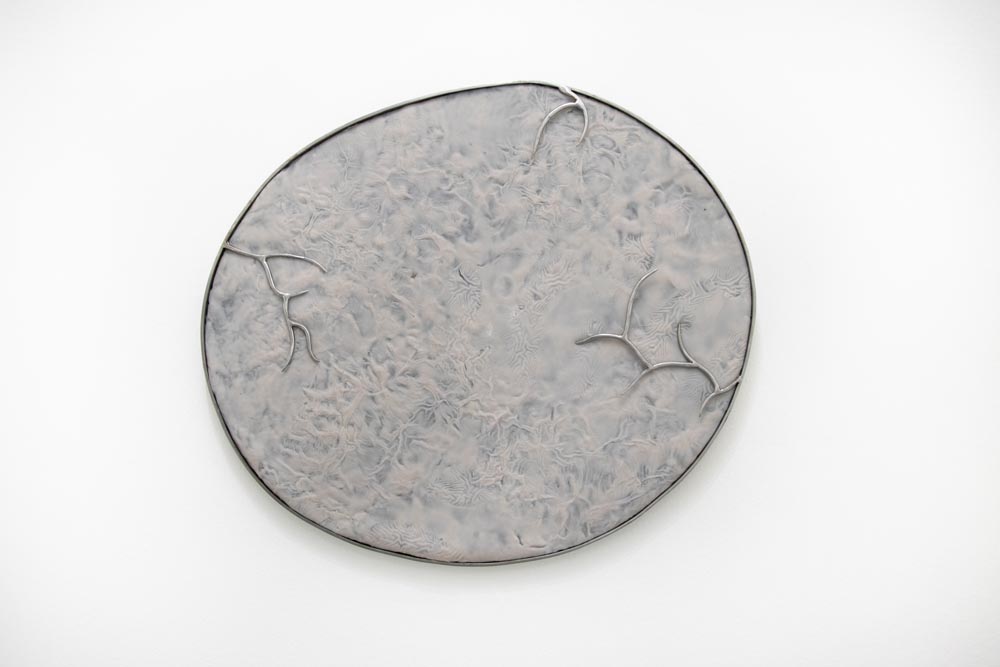
Interface, 2026, Silicone, dimensions variable
Where do ideas start for you?
My practice is deeply material-driven. Ideas often begin through contact with materials in the studio: testing, assembling, and allowing processes like gravity, pressure, or fluid circulation to guide decisions. At the same time, these explorations are informed by being in the world: by observing organic systems, bodily processes, and states of instability such as growth, decay, or imbalance.
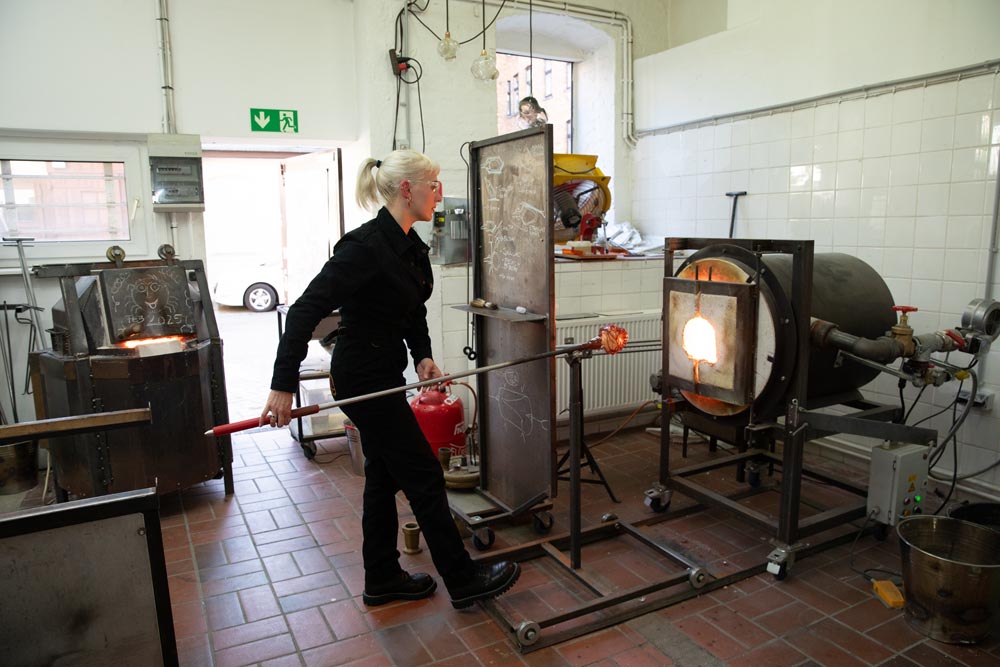
Lena glassblowing in the hotshop.
There is a constant feedback loop between intuition and structure. I might begin with a loose conceptual direction, but the work develops through experimentation such as building systems, letting them fail, adjusting, and reconfiguring. In that sense, the studio becomes a space where ideas are developed through interaction with matter.
Inspiration comes less from fixed references and more from processes, especially those that involve transformation. I’m interested in how materials can shift states, how systems can behave semi-autonomously, and how these dynamics can create environments that are responsive and alive.
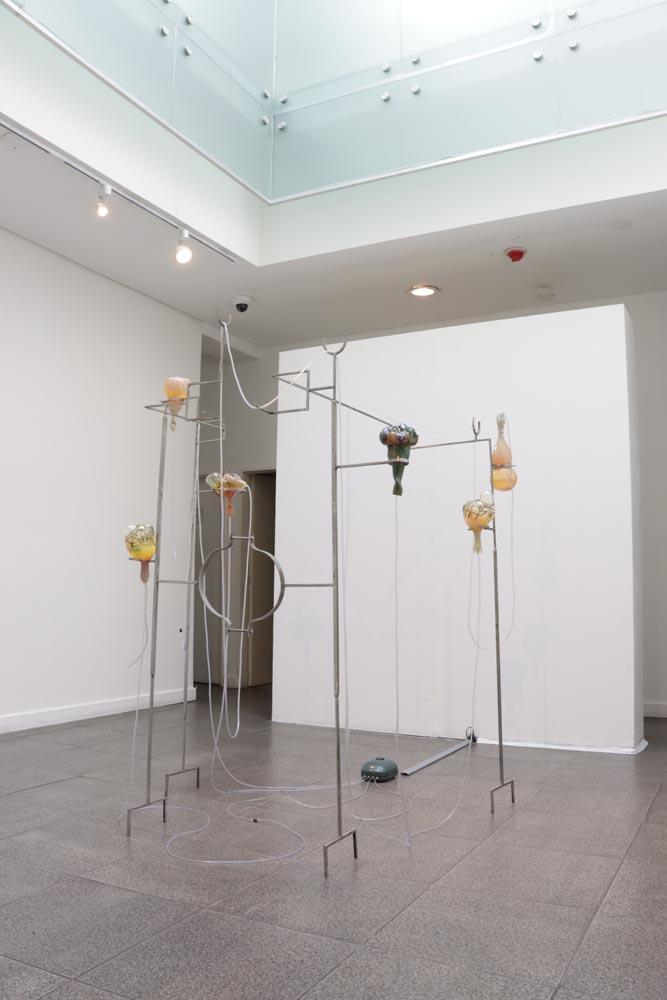
Tentakelförmig Exoskelett, 2024, Handblown glass, steel, air pump, water, 120 x 150 x 150 cm.
How do you make your work, does it start with a sketch?
Sketches and diagrams do appear, but more as tools to map relationships or flows than to define a final form. The structure of the work emerges through making: assembling components, observing how they behave, and adjusting in response. There is a continuous negotiation between control and unpredictability.
My visual language has developed through working across different materials and disciplines, including etching, glassblowing, metalwork, and installation. This led to a style that combines industrial and organic elements, rigid frameworks supporting soft, responsive forms, often connected through systems of circulation. A lot of morphologies that live in my work have been there for more than a decade, and they are constantly changing, being translated to different mediums and scales, I like to think about it as a sort of personal code.
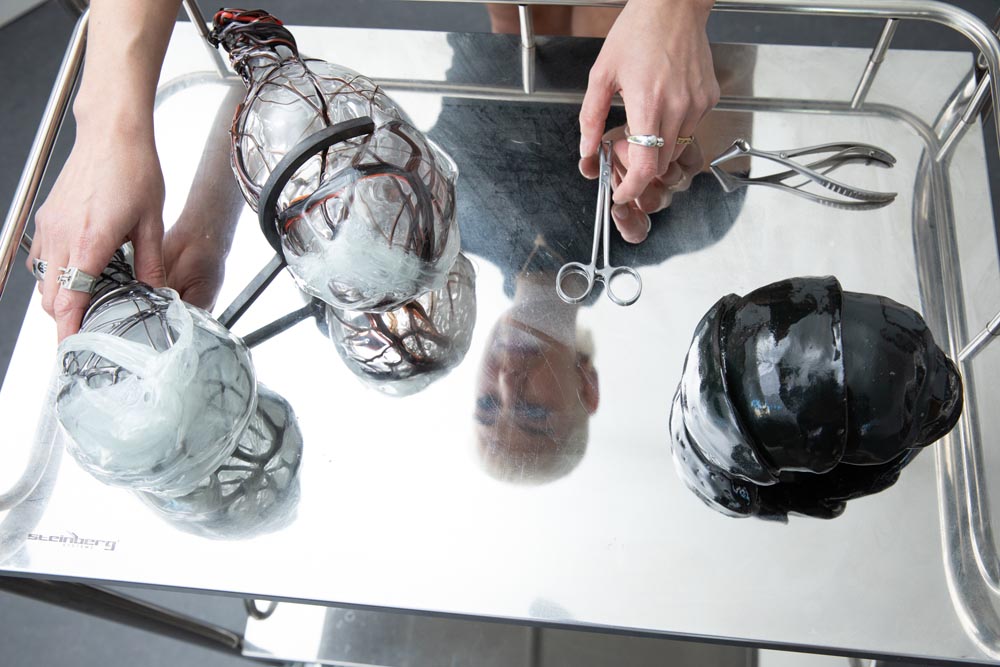
Various glass, steel and ceramic objects in Lena's studio.
Many artists live by their routines, what does that look like for you?
I consider my studio hours extremely important and dedicate most of my time to them. I see myself as a worker like any other, and I believe in consistency in practice. For me, this translates into daily working sessions, though I also recognize that my artistic process continues outside the studio. Even when I am at home or taking a walk, I am still processing ideas and searching for solutions to my creative projects.
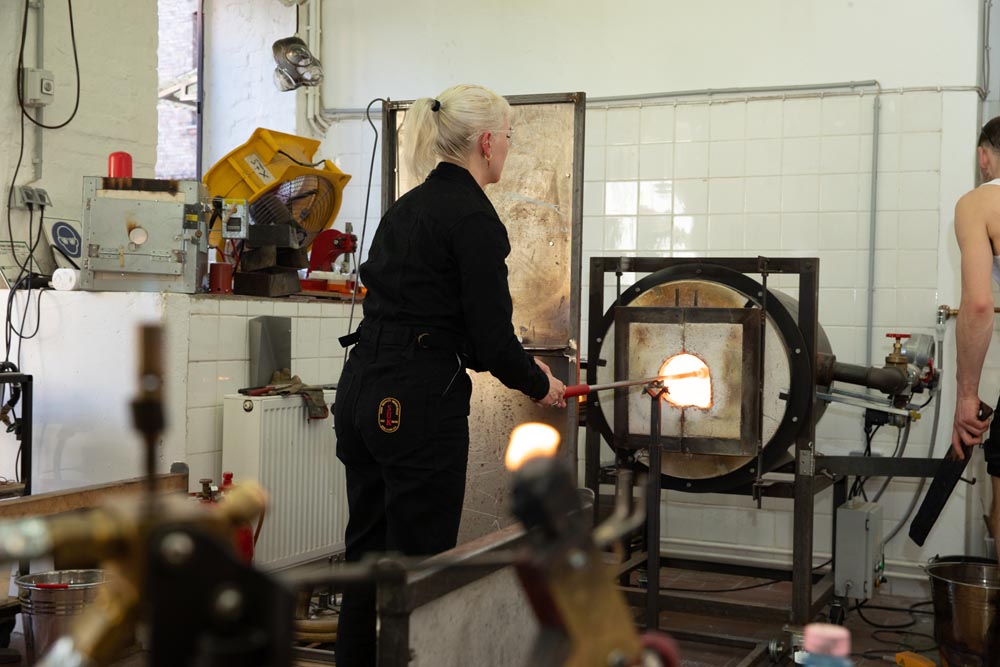
Lena glassblowing in the hotshop.
Art, for me, is a form of engineering: it requires dedication, research, construction, and, above all, creative problem solving. Through this process, I have taught myself numerous techniques, and it is precisely this constant challenge and experimentation that I find most stimulating. My studio ritual is therefore less about rigid routines and more about cultivating a sustained engagement with materials, ideas, and possibilities, where every moment, in and out of the studio, contributes to the evolution of my work.
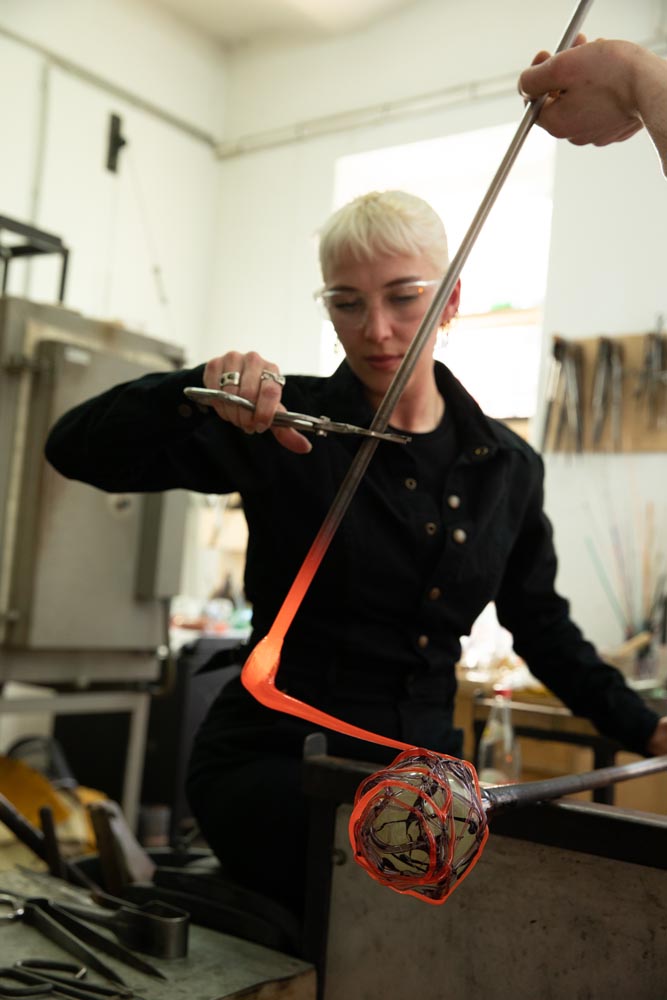
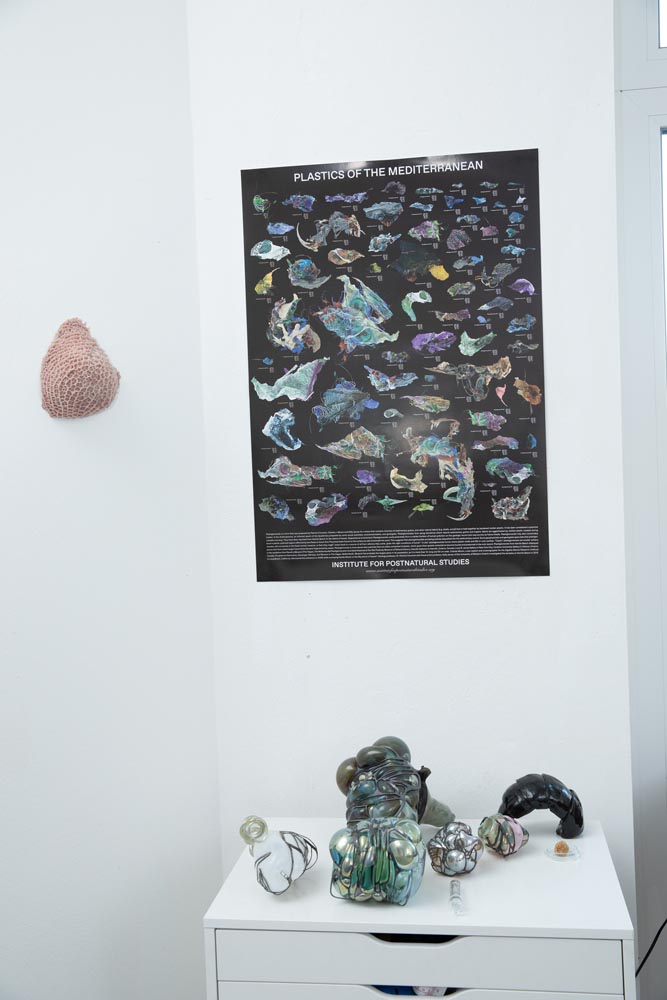
Left: Lena glassblowing in the hotshop; Right: Studio view
Who are your biggest influences?
With complete honesty, the biggest influences on me, from growing up to today, that come to mind instantly are Louise Bourgeois, Björk, David Lynch, Hayao Miyazaki, and David Cronenberg. But really, there are so many others that shape my work, found in books, films, sound, and the everyday world. I am drawn to artists and creators who explore the uncanny, the body, and the porous boundaries between imagination and material reality.
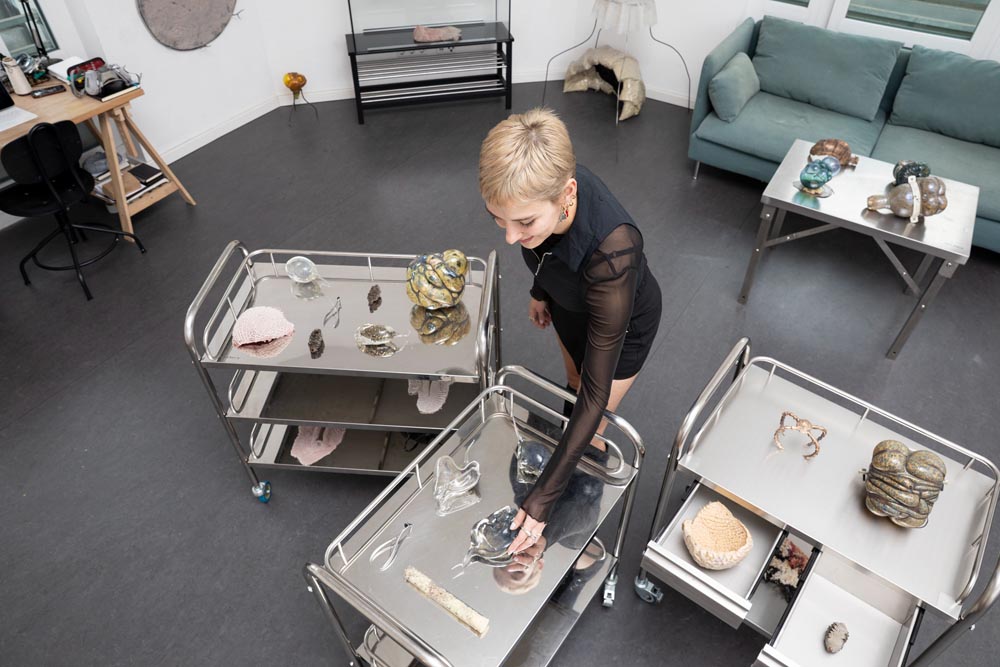
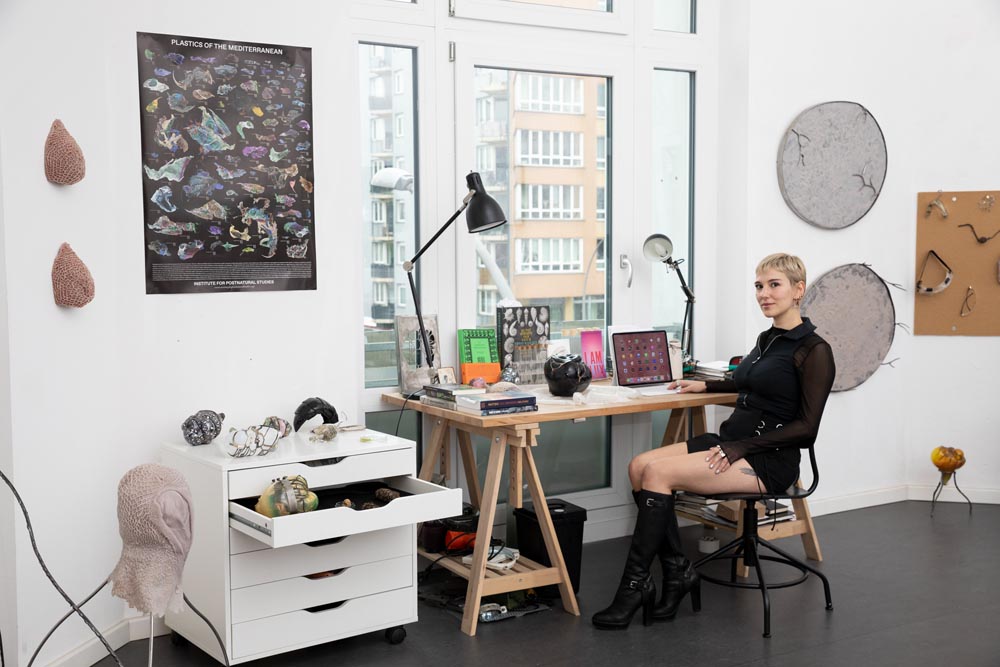
Lena Becerra
Stay up to date with Lena Becerra
Website lenabecerra.com
Instagram @lena.bcrra