Artist based in Cleveland, OH
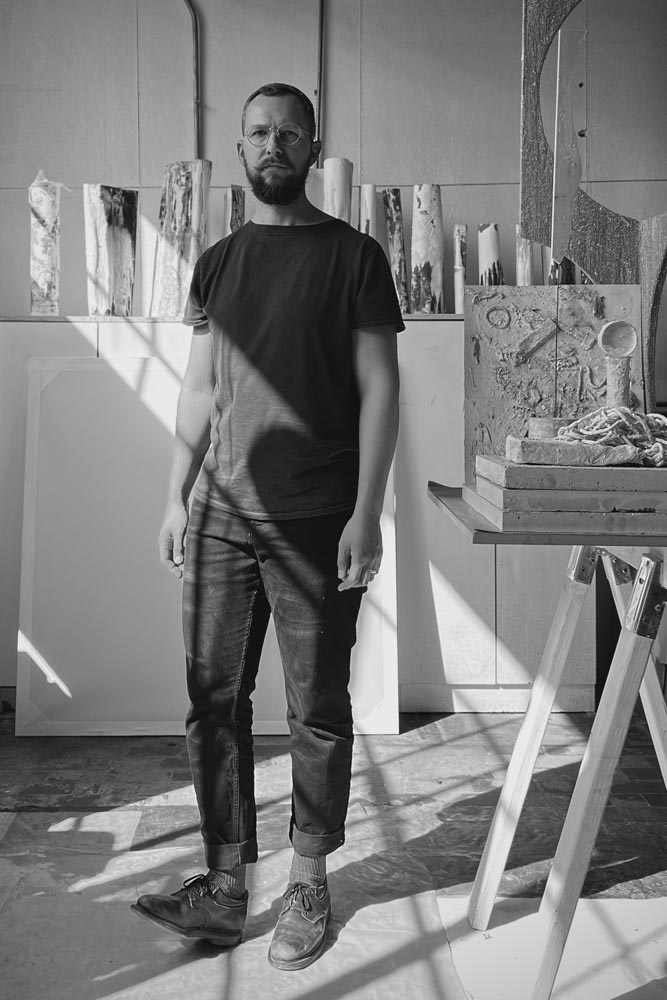
Jerry Birchfield, portrait of the photographer
Tell us about yourself, what's your background?
My father is a woodworker and my mother is an artist and was an art teacher for much of her career. Our home was filled with everyone making something all the time – art and craft projects, but also cakes, and furniture, and fishing rods, and paper mâché theater scenery, and party decorations, and treehouses, and skateboard ramps. Later, in high school, I started taking classes at Cuyahoga Community College where I enrolled in a photography and a sculpture class my first semester.

All installation views: A Pale, A Post, A Boundary. Devening Projects, Chicago, IL, 2021. Photo: Field Studio
I looked over my photography teacher’s shoulder as a print developed in a tray of chemistry and I was completely hooked. I simultaneously would wander into my sculpture class without much of an understanding as to what we were after, but I ended up exploring materials and forms and eventually (completely out of character) doing a performance piece. I immediately fell in love with the mystery and potential of the whole endeavor of artmaking.

All installation views: A Pale, A Post, A Boundary. Devening Projects, Chicago, IL, 2021. Photo: Field Studio
I went on to art school at the Cleveland Institute of Art where I majored in photography but spent as much time as possible taking classes in the painting, drawing, printmaking and sculpture departments. At the time it felt like an identity crisis, but later I realized that this interdisciplinary approach was at the core of my practice.

A Terrifying Thought 2026 CNC carved PVC, toned gelatin silver prints 14” x 11” x .75” each
“I am currently working on two projects that have been developing slowly . . . and deepen longstanding concerns in my practice with image-object relationships through new material investigations.”
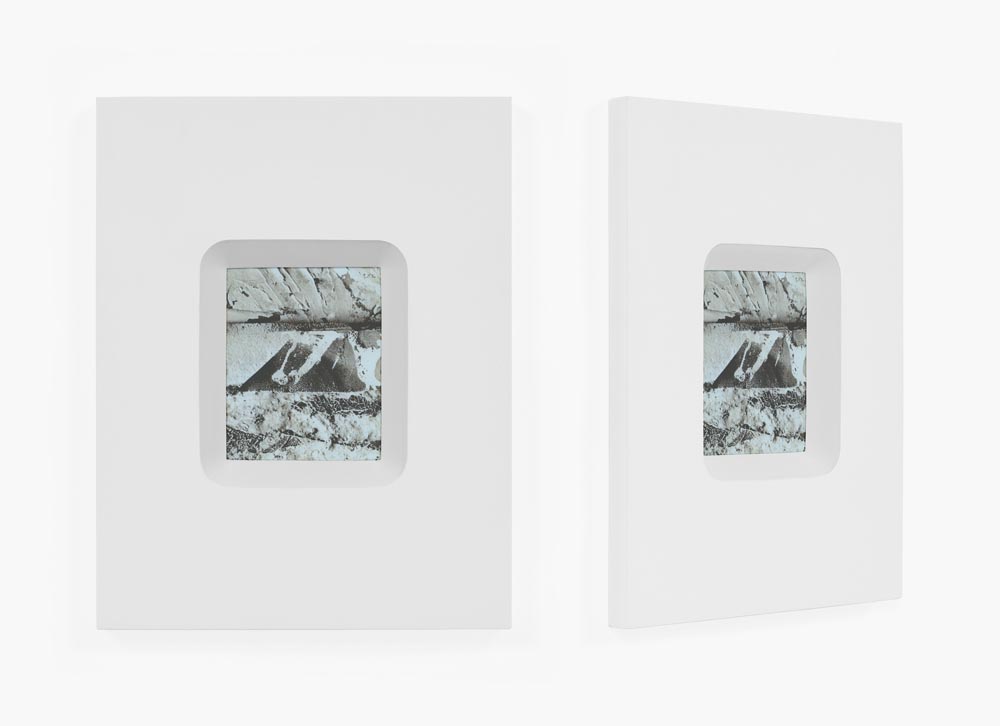
Untitled from series A Terrifying Thought 2026 CNC carved PVC, toned gelatin silver print 14” x 11”
What are you currently working on and where did the inspiration for it come from?
I am currently working on two projects that have been developing slowly. The first is at the beginning stage and expands the scope of the Pale series. Rather than plaster, this iteration will incorporate photographs dipped in wax, allowing them to be burned out through the investment bronze casting process. The second, a body of work tentatively titled A Terrifying Thought, uses CNC fabrication to produce structures in which images, supports, mats, and frames become interchangeable components of a multipart work. Both projects deepen longstanding concerns in my practice with image-object relationships through new material investigations.

Untitled from series A Terrifying Thought 2023 CNC carved PVC 20” x 16” x .75”
Innovation does not only happen in the field of technology, how does it occur within your practice?
Photography is often used as a way of recording moments and scenes that one encounters. While I do plenty of shooting with a camera, it does not define my relationship to the medium. I am constantly collecting bits of information (usually verbal or written phrases) that land powerfully and resonate in some meaningful way either conceptually or poetically. The sources come from everywhere – things I am reading, songs I’m listening to, something my son says, movies we’re watching, or pieces of conversations I overhear in public. These bits of information often become titles for works that may not even be made yet. While not photography, this process of framing, recording, and collecting feels analogous to the medium in a way that is meaningful to my engagement with the operation of images.

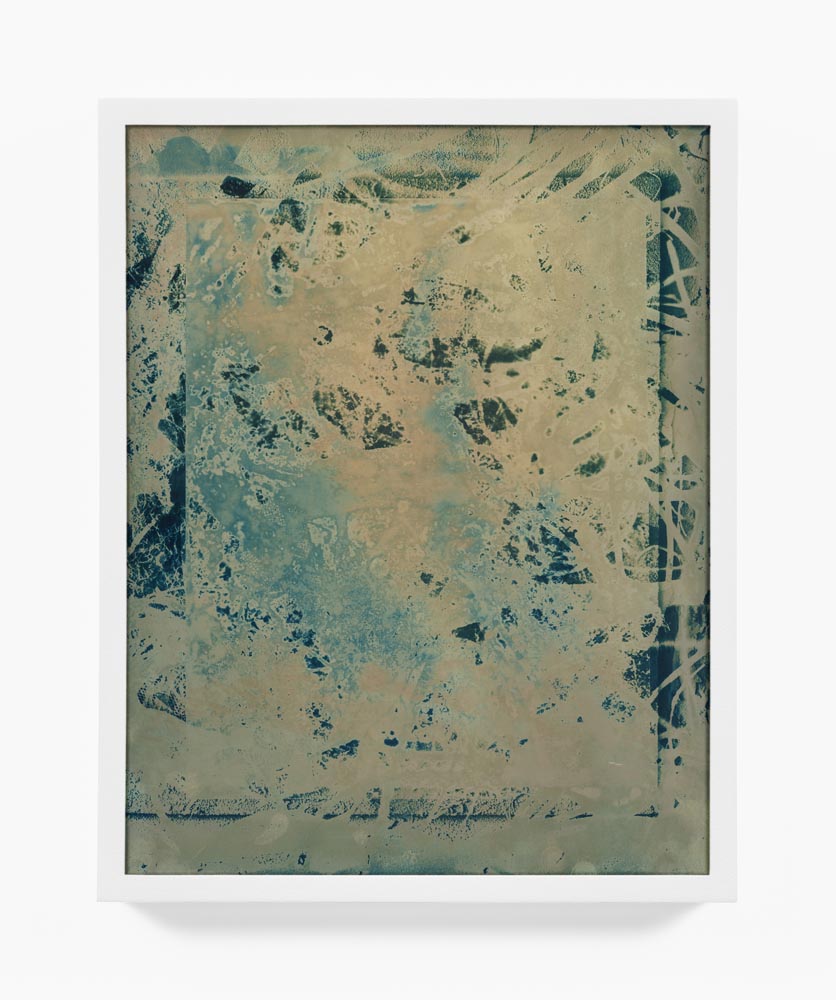
Left: Untitled from series Stagger When Seeing Visions 2023 Solarized selenium toned gelatin silver print 14” x 11” Right: Untitled from series Stagger When Seeing Visions 2023 Solarized bleached toned gelatin silver print 14” x 11”
Where do ideas start for you?
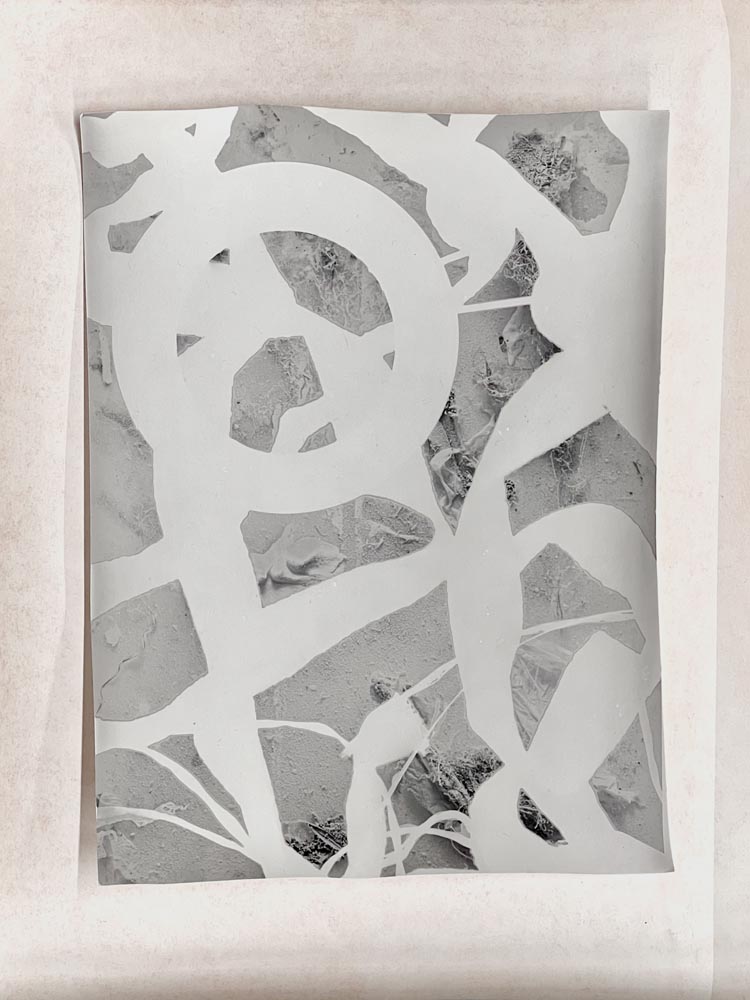
Although my work ultimately takes various forms and incorporates a variety of material experimentation and media, most work starts for me in the darkroom. It’s a mysterious place in which images are allowed to lurk and hide, traverse time and space, and eventually emerge out of the primordial darkness on their own terms. An ongoing series titled Stagger When Seeing Visions has been at the center of my practice for years. It begins with black-and-white 4x5 negatives that depict assemblages made from detritus in my studio.
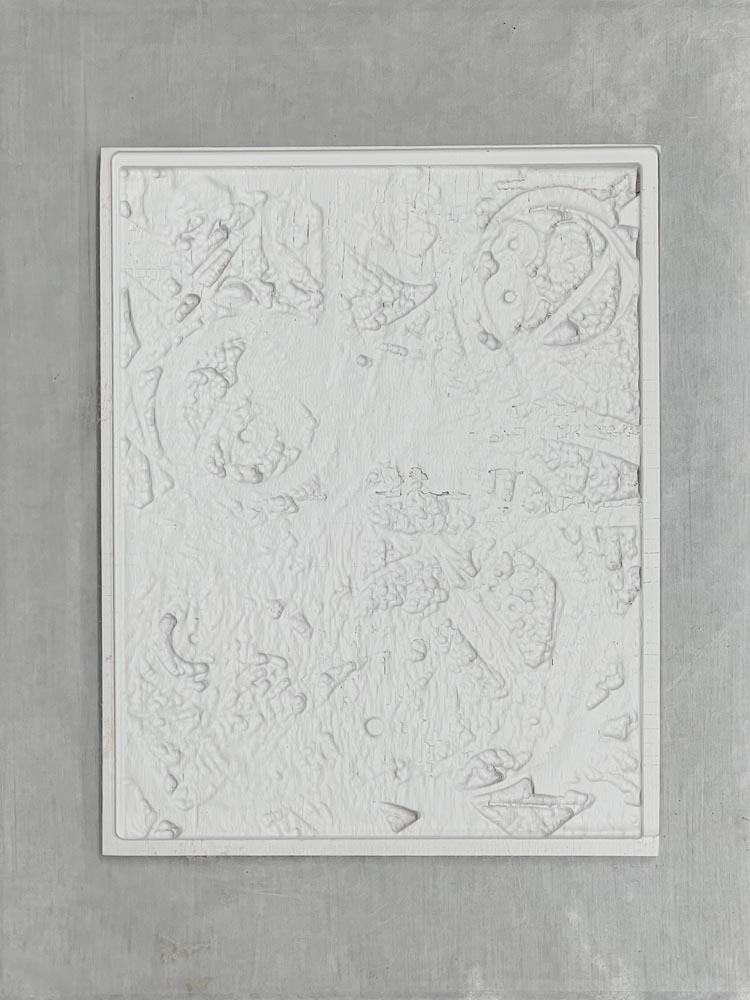
Left: View of work in progress CNC carved painted plywood, Plexiglas 10” x 8” x .25” Right: View of work in progress Solarized and toned gelatin silver prints 14” x 11”
These negatives and materials are then brought into the darkroom where photographic paper is subjected to a series of processes including negative projection printing, photogram, cliché verre, solarization, multiple exposure, bleaching, and toning. These prints then become either works in their own right or the basis for other more sculptural works and define the form of the world in which I imagine all my work existing.
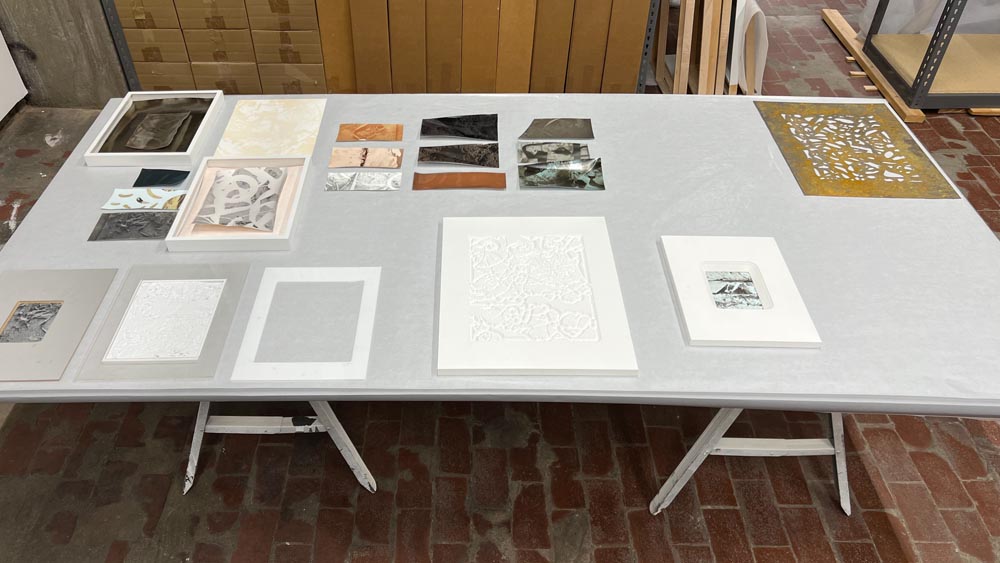
Studio view of works in progress
How do you make your work, does it start with a sketch?
I think about my practice like a massive sphere in which all content levitates unfixed to any anchor and is only confined within the parameters of that space. At times the sphere is near vacant with disparate leftover pieces of debris floating across its interior. At other times, it is filled to capacity and changes shape to accommodate its contents or expands entirely.
I often find myself at a point of conflict as I pursue removal from specific levels of decision making in the process of creation. Rather than a clearly defined plan with an additive set of decisions that equals a final work, I create sets of parameters and initiate sets of procedures. Final works, then, come out of moments of recognition or a pause in the process. Again, this attitude towards artmaking points metaphorically to photography as a system of framing and recording that underlies my practice as a whole.

Studio view
For example, the process that produces the plaster wall works is as follows: the image on a gelatin silver print is traced with an X-Acto knife, the cut and loosely structured print is placed in a mold, plaster is poured onto the print filling the surrounding space (the dimensional surface is formed when the wet plaster causes the print to warp and fix in position as it dries), the surface is flooded with enamel paint, then burnished with graphite. Some pieces are sanded back to reveal these accumulated layers, while others might be subjected to this entire set of procedures multiple times. These works are complete when they are fixed in time by removing, ejecting, or rescuing them from this cycle.

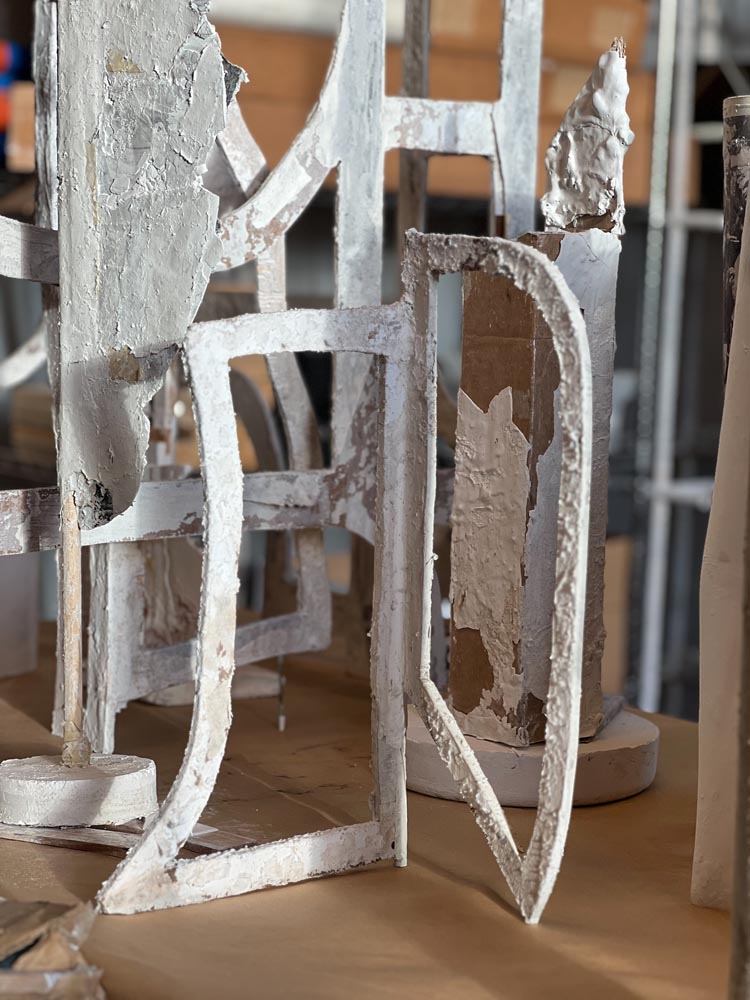
Studio view
Many artists live by their routines and rituals, what does yours look like?
Even though I continually pursue my work and my drive to make art is very present and real, I still struggle to believe that a life of sustained, consistent artistic practice is a reality for most of us. I am a father, I teach photography, and I run Field Studio, a photography company that works with artists and art organizations to represent their work. During this season, my art practice happens in the margins without much routine.
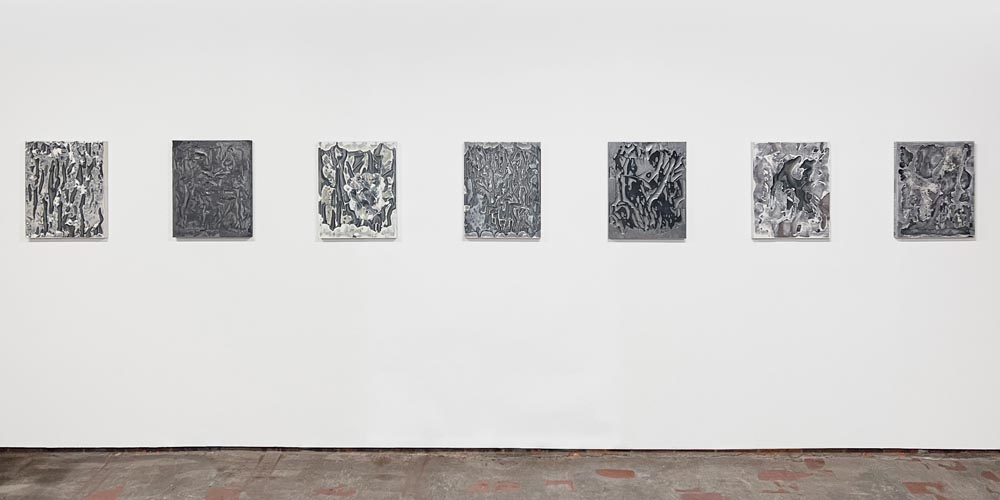


Studio view
Who are your biggest influences?
While I have a deep affection for photography, I use it structurally (as discussed above) and as a signifier of an image-based cultural shift that began in the early twentieth century and remains profoundly relevant to our current cultural moment as we stare into the abyss of an increasingly algorithmic and AI-mediated future. László Moholy-Nagy and Man Ray, from this era, remain huge sources of influence on my work. Both maintained deeply interdisciplinary practices rooted in photography. Moholy-Nagy’s commitment to photographic education and to understanding the cultural impacts of the medium and Man Ray’s engagement with photographing other artists and works of art, most notably, the narrative and myth around his Dust Breeding photograph of Marcel Duchamp’s Large Glass are all ever-present sources of influence.


Right: Pale 17 2020 Toned gelatin silver print, plaster, powder coated steel, glass 2O" x 10" x 6"
Are there books or films that are an important source of inspiration?
Books:
The Bible
Spine by R.H. Quaytman
Paris by Night by Brassaï
A Handful of Dust by David Campany
Under Blue Cup by Rosalind Krauss
Toward a Philosophy of Photography by Vilem Flusser
Talking Heads' Fear of Music by Jonathan Lethem
The Wild Robot by Peter Brown
Music:
Surf’s Up by The Beach Boys
Fear of Music by Talking Heads
13 Blues for Thirteen Moons by Thee Silver Mt. Zion Memorial Orchestra & Tra-La-La Band
Films:
Jaws directed by Steven Spielberg
Searching for Bobby Fischer directed by Steven Zaillian
Stand by Me directed by Rob Reiner
The Limits of Control by Jim Jarmusch
Most of the Jacques Tati catalog
Most of the Andrei Tarkovsky catalog

What’s the best piece of advice you’ve been given?
The Spirit helps us in our weakness
and
You are not my enemy
What is the best advice you would give to other artists?
The Spirit helps us in our weakness
and
We are not your enemy

All installation views: A Pale, A Post, A Boundary. Devening Projects, Chicago, IL, 2021. Photo: Field Studio
Stay up to date with Jerry Birchfield
Website jerrybirchfield.com
Instagram @jerrybirchfield