Photographer based in Leipzig, Saxony, Germany
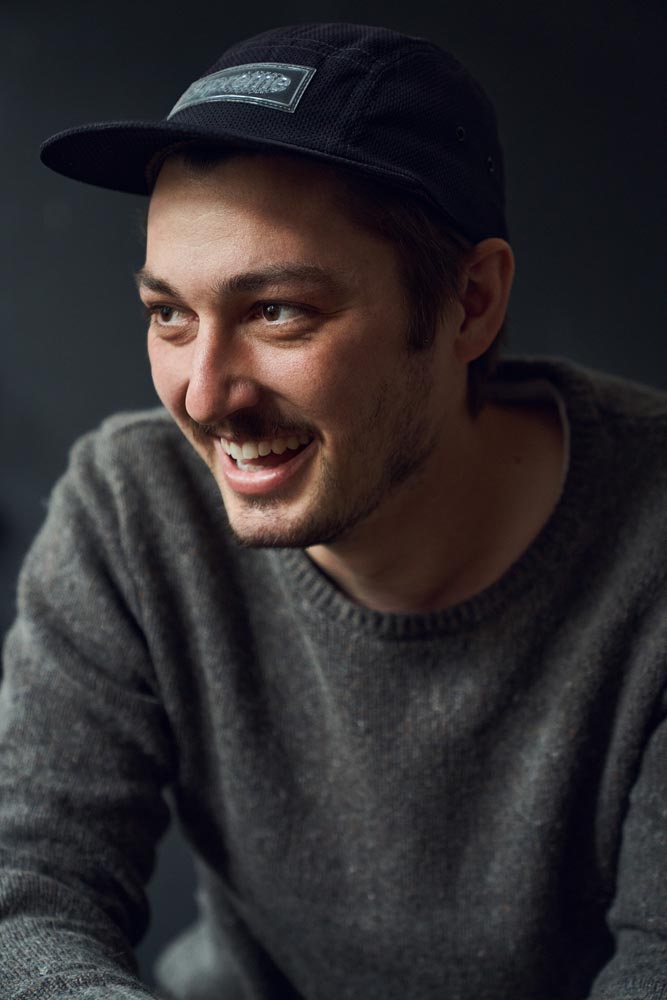
Felix Schöppner
Tell us about yourself, what's your background?
I grew up in a small town near Frankfurt, Germany, in what I’d describe as a pretty protected environment—almost like a small, intact bubble. I’m right in that Gen Y generation, so I grew up without smartphones, meeting friends on the sports field and calling each other on landlines. Looking back, that kind of growing up shaped a lot of how I see things.
My parents are architects and ran their own studio, so for a long time it felt quite natural that I might go in that direction too. After the usual childhood dreams—like wanting to be a construction worker or something similar—becoming an architect was the first “serious” idea. But at some point, maybe around 16 or 17, it became clear that I didn’t want to follow that path. My parents would have supported it, but they never pushed me. They encouraged me to find my own way instead of continuing theirs, which left things pretty open for a while.
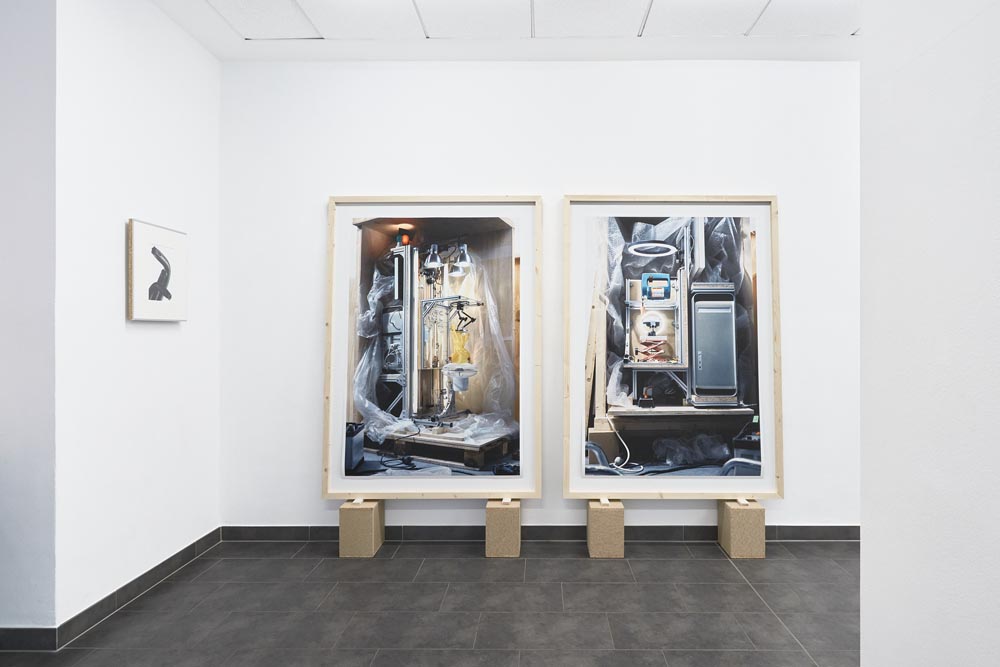
»Handle with Care« M BOOKS Weimar, Germany, 2026 Photo Credit Felix Schöppner
I got into photography through a friend who had just been given a digital SLR camera by his grandfather. That moment really stuck with me—I was immediately hooked. Digital cameras were just becoming more accessible at that time, and within a few weeks I was completely into it. At first, I was just photographing my friends skateboarding. There wasn’t any bigger plan behind it—it was more about being outside, hanging out, and making something that went beyond the moment. I started experimenting more, especially with flash, using cheap analogue speedlights that I could trigger remotely. They were simple and replaceable, which was perfect when things got knocked over during a session. At some point, the question of what to do after school came up, and that’s when things became more concrete. I realised I wanted to take photography seriously and eventually started studying communication design (with a focus on photography) when I was around 20. Back then, I was much more interested in documentary work.
Being on the move was always a big part of it for me. Not necessarily traveling far, but just getting out of familiar surroundings. Even now, when a lot of my work happens in the studio, that aspect is still important, which is also why I’ve always enjoyed assisting. Looking back, I often wonder how much of this path depended on digital photography. I’m not sure I would have developed the same connection to the medium if I had started 30 years earlier. Even though I’d describe myself as a patient person, I don’t know if I would have had the endurance to spend hours or days in a darkroom at that stage.
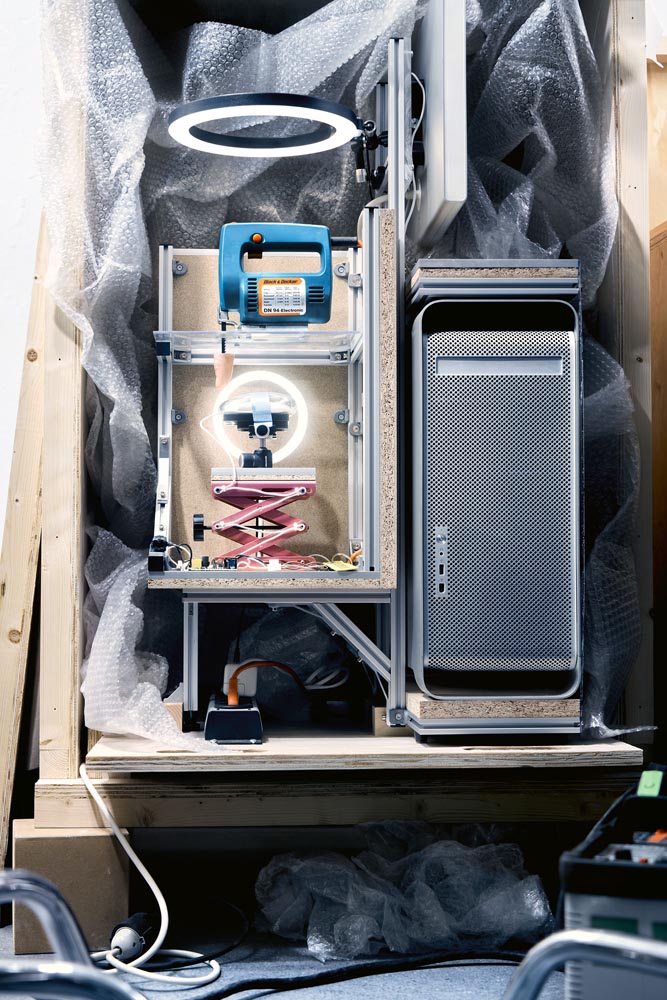
Mouse Mover , Inkjet print on fine art paper, artist frame, 134,9 x 188,9cm, 2025
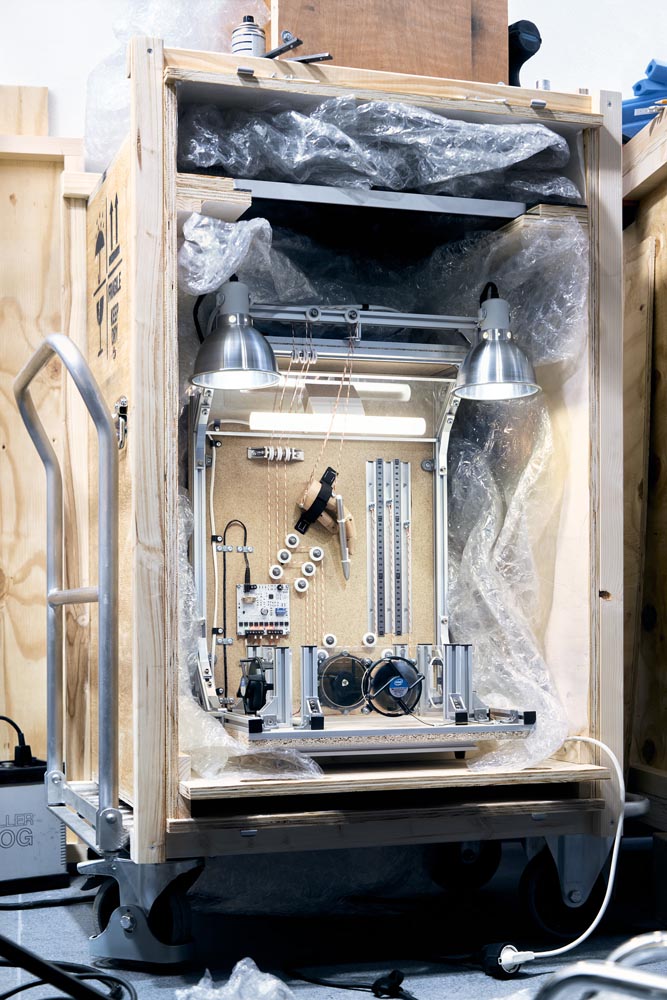
“What fascinated me was how inventive people can be when it comes to avoiding something they technically have to do, but don’t really want to...During research, I came across images of laboratory equipment being sold online, photographed in their crates, partially unpacked. That in-between state really stuck with me. It felt like a good way to describe our current relationship to work—somewhere between presence and absence, function, and suspension.”
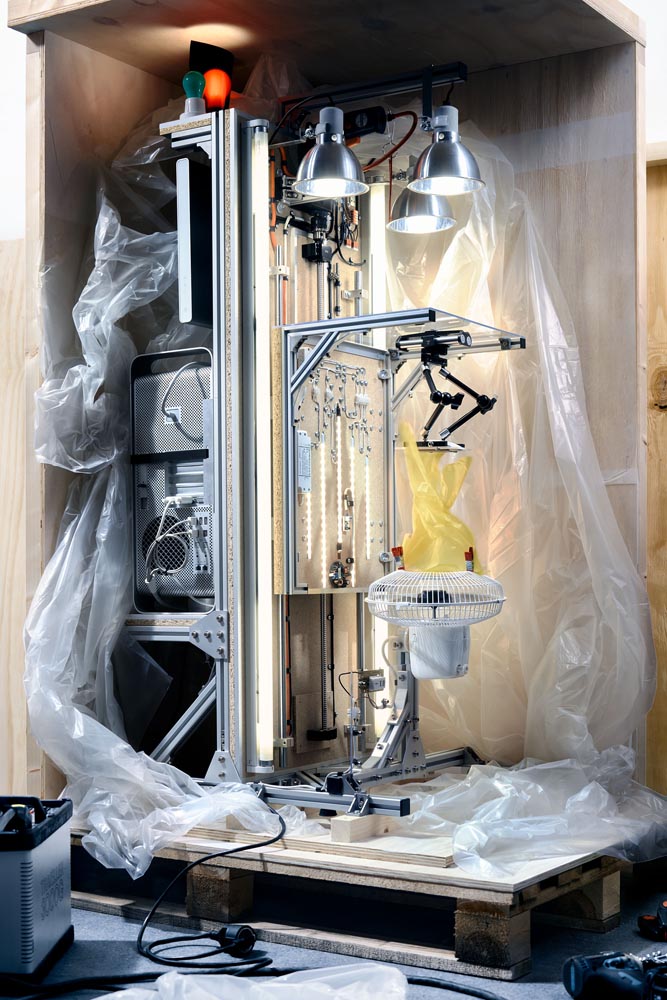
Mouse Mover , Inkjet print on fine art paper, artist frame, 134,9 x 188,9cm, 2025
What are you currently working on and where did the inspiration for it come from?
At the moment, I’m continuing to work on a longer-term project that revolves around the broader idea of labour. The series of Mouse Movers is part of that. I showed it earlier this year under the title “Handle with Care", which was also my graduation project for my Master’s at the Bauhaus University in Weimar. It actually took me quite a while to arrive at that topic. I kept circling around situations where objects or environments are shaped through human interaction—how things change through use, manipulation, or intervention. At some point, I came across these DIY “mouse movers,” and that felt like a very precise entry point.
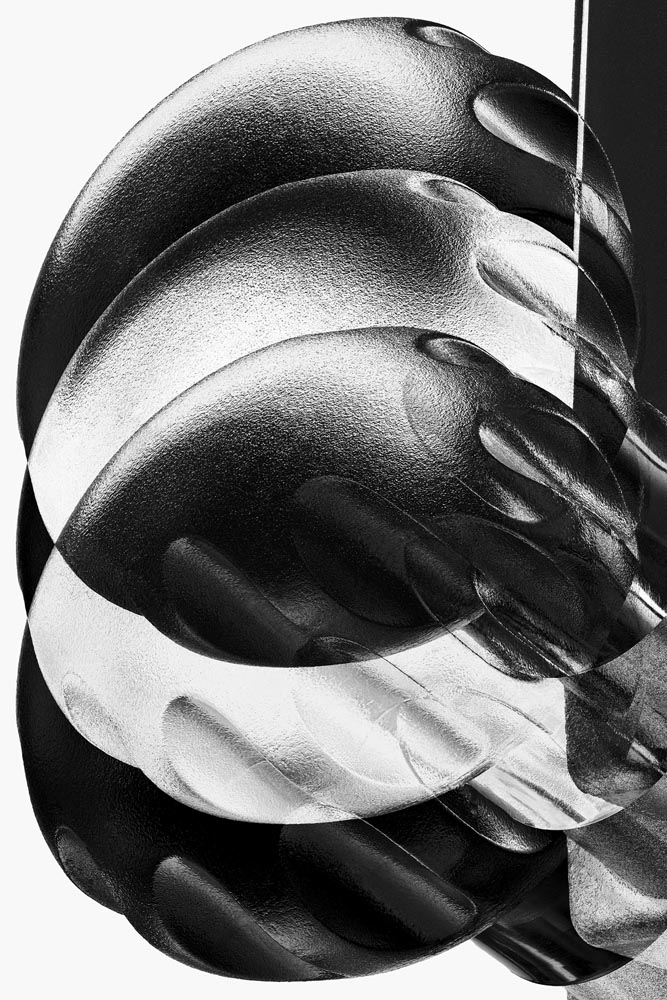
"Router", Inkjet print on fine art paper, artist frame, 29,6 x 43,6cm, 2026
What fascinated me was how inventive people can be when it comes to avoiding something they technically have to do, but don’t really want to. In a way, that’s deeply tied to labour itself—humans have always tried to make work easier, more efficient, or more bearable. But here, it shifts slightly towards simulating work rather than actually doing it. This became especially visible during the COVID pandemic and the shift to remote work. A lot of people started to question what they were doing, but at the same time were still tied to systems that require presence—at least on a superficial level. These devices are a response to that: simple constructions made from everyday objects that keep a system running while the person is technically absent. I spent quite a bit of time looking at online forums and videos where people build these things—using fans, watches, record players, whatever they had at hand. That DIY aspect really interested me, especially how complex problems are sometimes solved in very direct and improvised ways. At the same time, it contrasts with this idea of over-engineering, where products become more complex than necessary. Both aspects found their way into the work. The way the objects are presented—in these transport cases—actually came from a coincidence. During research, I came across images of laboratory equipment being sold online, photographed in their crates, partially unpacked. That in-between state really stuck with me. It felt like a good way to describe our current relationship to work as well—somewhere between presence and absence, function and suspension.
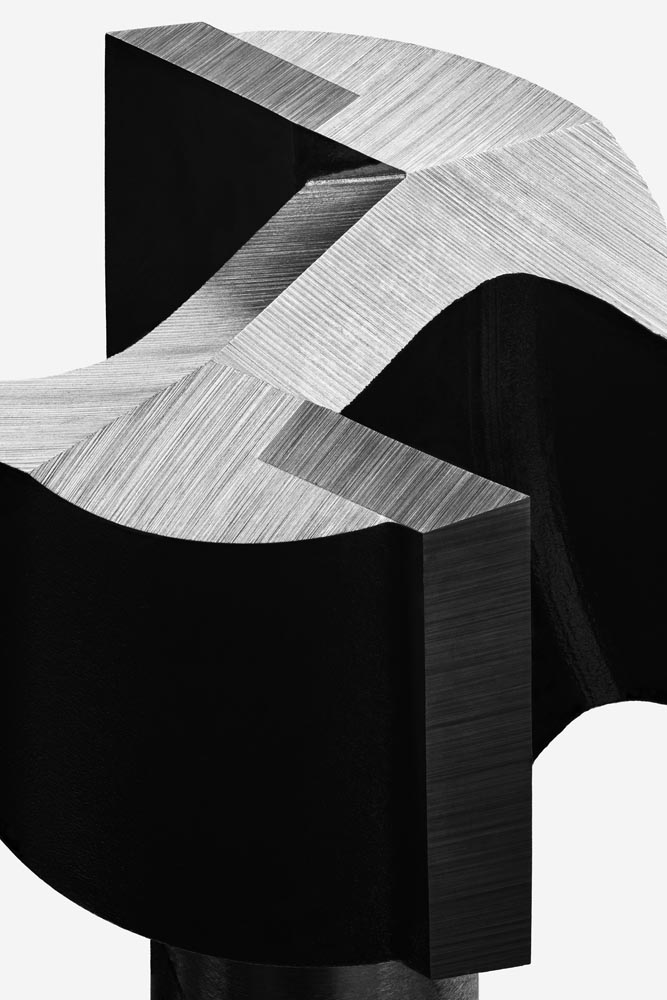
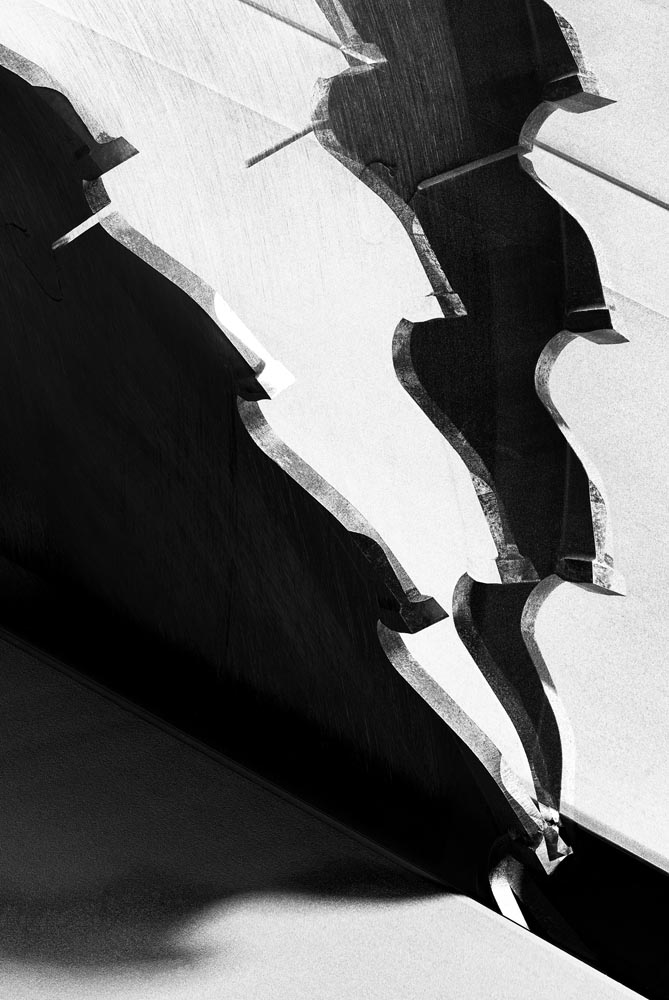
Left: "S 8mm / D 20mm / NL 20mm / SL 32 mm / GL 52mm", Inkjet print on fine art paper, artist frame, 40,1 x 50,2cm, 2026
Right: "Push-Pull Saw", Inkjet print on fine art paper, artist frame, 29,6 x 43,6cm, 2026
Right now, I’m continuing to develop the project further, working on new apparatuses that I’ve already planned but haven’t built yet. In addition, there are photographs of the tools and machines used in the manufacturing process, which serve as a counterpoint to the mouse movers. I’m also interested in expanding the topic more broadly—looking at historical systems of labour and mechanics, like early automated processes in mills or how heavy loads were handled in the past, and connecting that to current developments around automation and AI. At the same time, I’ve been thinking more about the book as a format. It’s something I’ve always been interested in, because it completely changes how a body of work is experienced. Especially with more conceptual work, a book allows for a slower and more layered way of engaging with the images. You can return to it, discover new things over time—it’s a very different experience compared to an exhibition.
In terms of inspiration, it comes from a mix of things. I spend time online, of course—looking at different platforms, references, DIY communities—but also a lot in books. And honestly, a lot of ideas come from very everyday situations. I spend quite a bit of time in the car, and that’s often where I think things through, reflect, and connect ideas. Many starting points are actually quite small and incidental—they just grow over time.
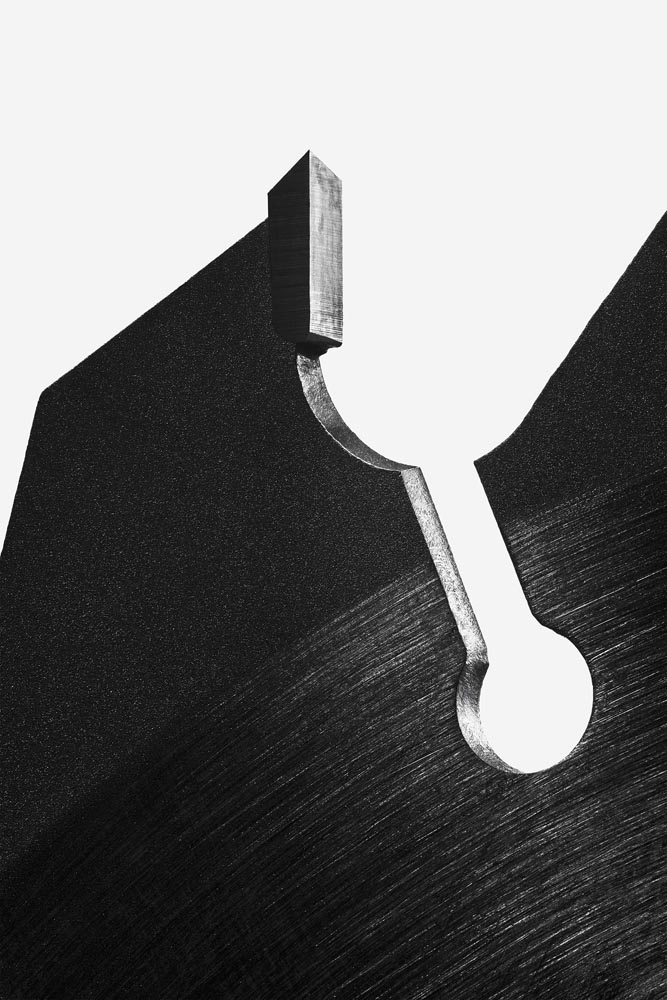
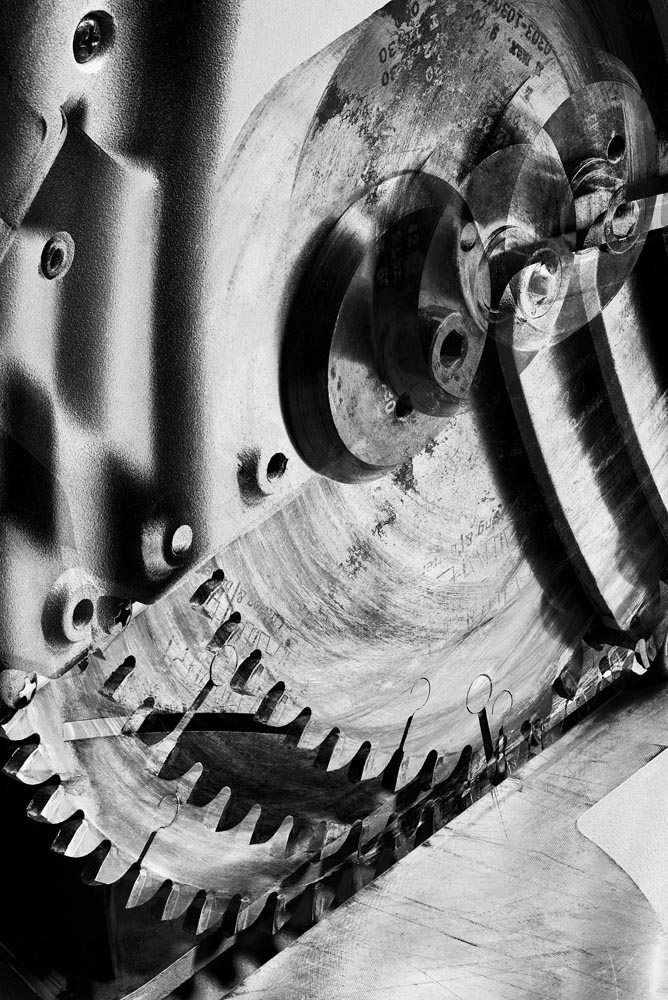
Left: "16 Teeth", Inkjet print on fine art paper, artist frame, 40,1 x 50,2cm, 2025; Right: "Mitre Saw", Inkjet print on fine art paper, artist frame, 29,6 x 43,6cm, 2026
Innovation does not only happen in the field of technology — it occurs everyday in a creative practice. What do you do for inspiration?
I spend a lot of time trying things out, testing ideas, and following small impulses without knowing exactly where they’ll lead. Most of it doesn’t make it into the final work, but that’s not the point. The process itself is what generates new ideas. I don’t really believe in waiting for inspiration. It usually appears while working, not before. Through repetition, trial and error, and sometimes even failure, things start to shift and open up in unexpected ways. So in a way, inspiration is less something I look for, and more something that develops through continuous engagement.
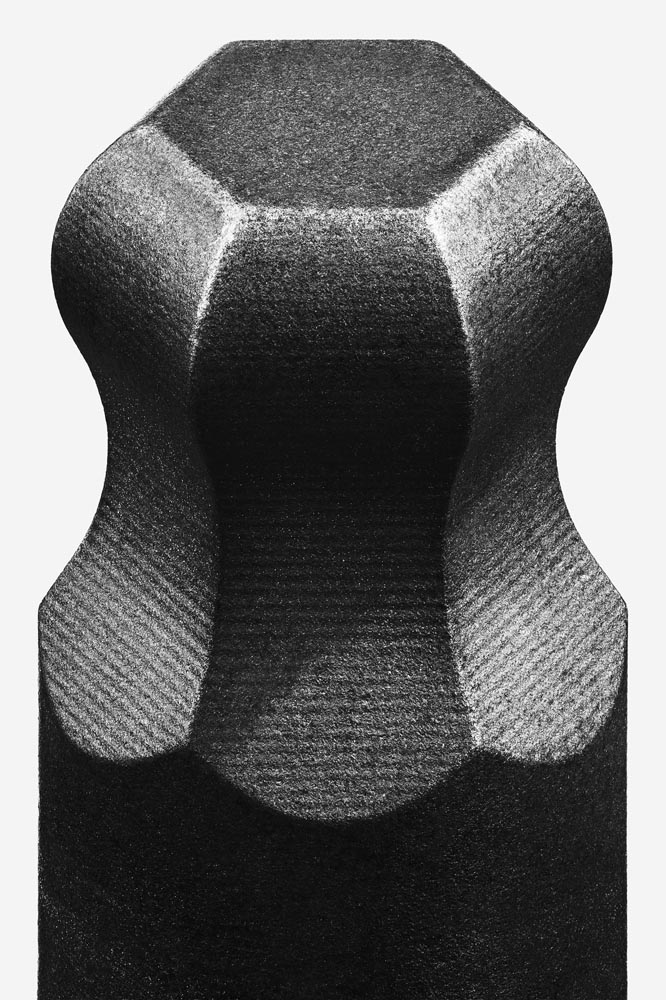
"Hex-key, 10mm", Inkjet print on fine art paper, artist frame, 40,1 x 50,2cm, 2025
Where do ideas start for you?
For me, ideas don’t really start in one specific place—they usually come from somewhere in between. At the beginning of a project, things are quite open. I often just have a loose term or a vague idea in mind, nothing fully formed. The initial impulse usually comes from something I encounter in everyday life—something I see, or something that triggers a certain association that I want to follow. But the actual development happens mostly in the studio. That’s where things start to take shape. I spend a lot of time testing, building, discarding, and starting over. Even if a lot of that never ends up in the final work, it’s a crucial part of the process.
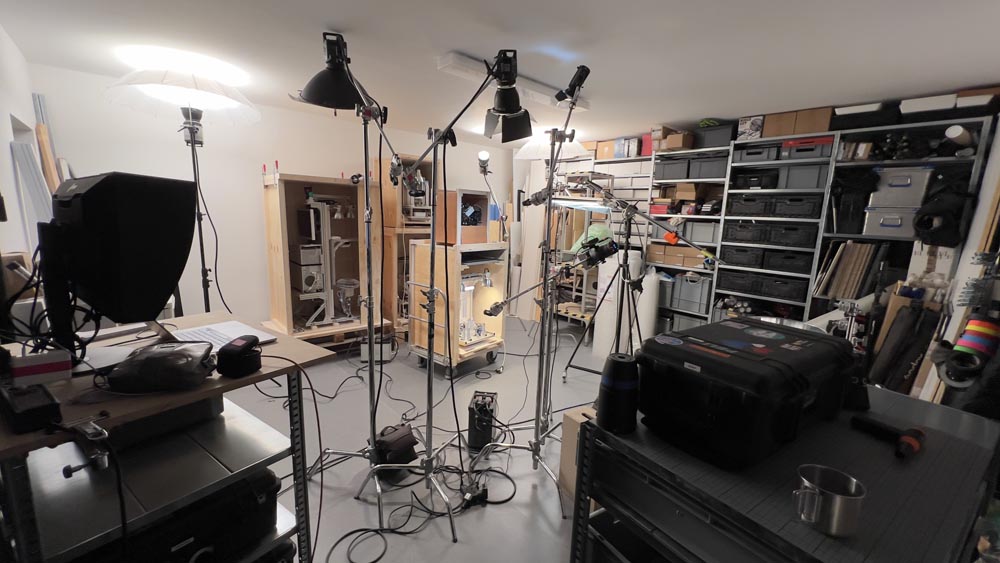
Setting of "Handle with Care" in the studio (I moved into a new one in January, this was the previous space I had for a year)
For my current project, it took me quite a long time to even define what I was actually interested in. I knew I wanted to work around the idea of labour—especially the physical act of making or altering something—but it took almost two years until that became clear enough to build on. During that time, I was constantly trying things out, working on other projects, and slowly narrowing things down. Once the conceptual framework is there, the process becomes more intuitive again. One step leads to the next. I start building, measuring, adjusting—sometimes throwing things away and then bringing them back later in a different context. The images don’t exist beforehand; they emerge through that process.
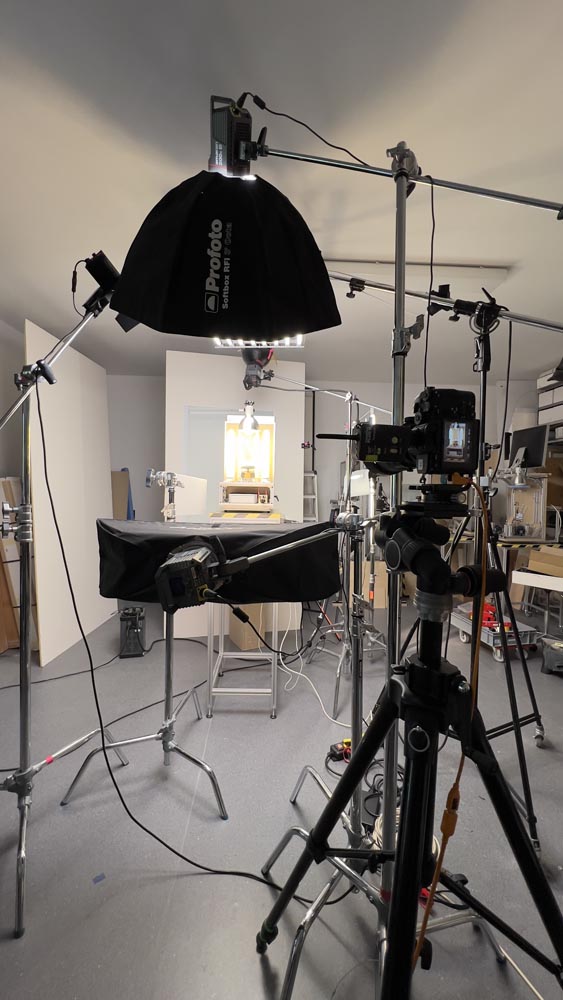
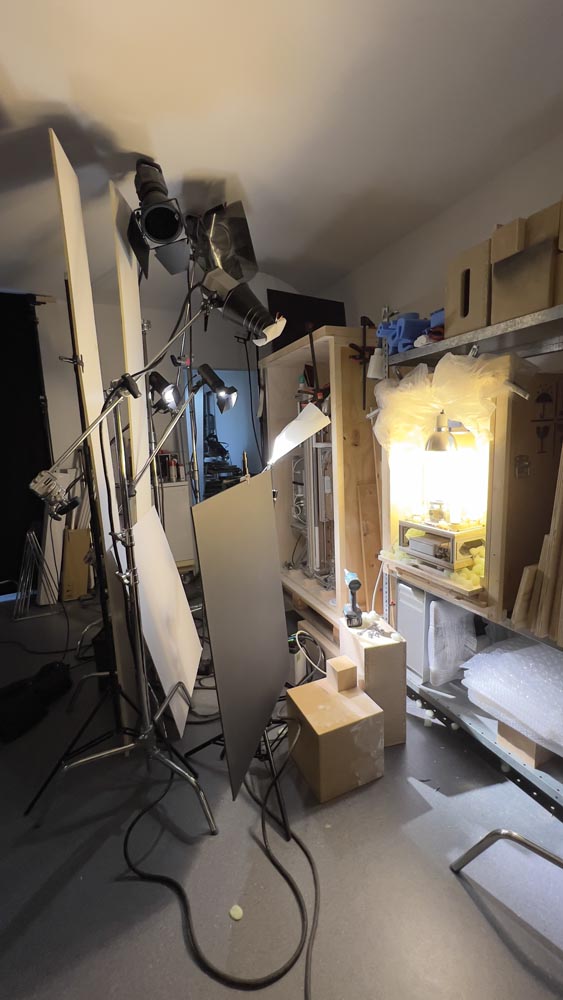
Setting of "Handle with Care" in the studio (I moved into a new one in January, this was the previous space I had for a year)
I’ve realised that I can’t force ideas. What helps me more is just continuing to work. That’s why I really like Tom Sachs’ idea that “creativity is the enemy”—it’s less about waiting for the right idea and more about staying engaged. The ideas come out of the process itself. At the same time, an important part of my practice is knowing when to slow down. There are days where I’m in the studio and don’t produce anything in a traditional sense. I just look at things, rearrange them, or let them sit for a while. Those moments are actually essential, because they take away the pressure to constantly produce—and often that’s when something clicks.
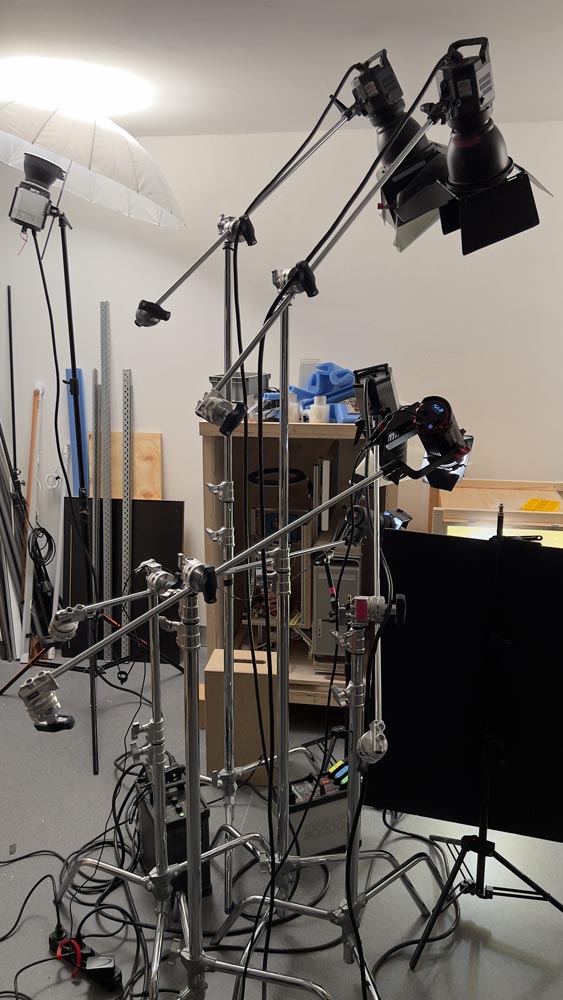
Left: Setting of "Handle with Care" in the studio (I moved into a new one in January, this was the previous space I had for a year)
Right: Mouse Mover, Inkjet print on fine art paper, artist frame, 134,9 x 188,9cm, 2025
How do you make your work, does it start with a sketch?
Usually, I begin with a broader idea or theme, and then I work my way into it by building and testing things in the studio. The objects and setups develop over time—they’re not fully planned from the beginning. It’s more a process of trying things out, adjusting, discarding, and sometimes bringing elements back later in a different context.
Earlier on, I was mainly building sets that only existed for the photograph. They were constructed very specifically for a certain camera position or perspective and didn’t really have a life beyond that moment. With “Handle with Care”, that changed quite a bit. From the beginning, it was important to me that the objects could stand on their own—that they could function and exist independently of the image. That shift also changed how I work in the studio. The constructions became more precise and physically demanding. Rather than using temporary solutions such as tape or clamps, I began creating objects, working like a craftsman in a workshop rather than a photographer in a studio. Mistakes became more final—you can’t just undo a cut. At the same time, I often leave traces of the process visible, like markings or construction details, because they’re part of the process as well.
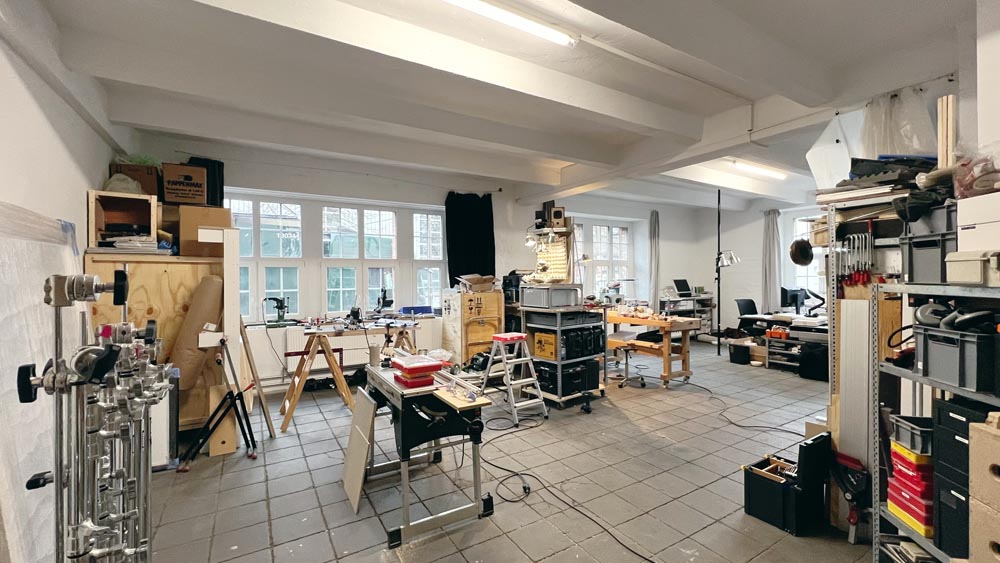
In the studio
Material-wise, I ended up working a lot with chipboard and aluminium profiles. Both have a very functional, almost industrial quality, and they’re closely tied to working environments and production contexts. I’m interested in that connection, but also in how these materials can be recontextualised and read differently within an image. Lighting and photography come in relatively late in the process. In earlier work, I used a more controlled and stylised lighting approach. Now, the light often develops out of the object itself. Some of the constructions even contain their own light sources, which influence the overall atmosphere and create something closer to a constructed environment than a neutral studio setup.
In terms of style, I don’t think it was something I consciously decided on. It developed through spending a lot of time figuring out how things behave in front of the camera. Over time, the focus shifted from just making images to building them. I’m generally interested in how objects are perceived—how their meaning changes once they’re removed from their usual context. We tend to look at things in terms of function, but I’m more interested in what happens when that function becomes slightly unclear. Even small shifts can open up a different way of reading an object. So I would say that style is less about a fixed visual language and more about a way of working—somewhere between construction, observation, and reinterpretation.
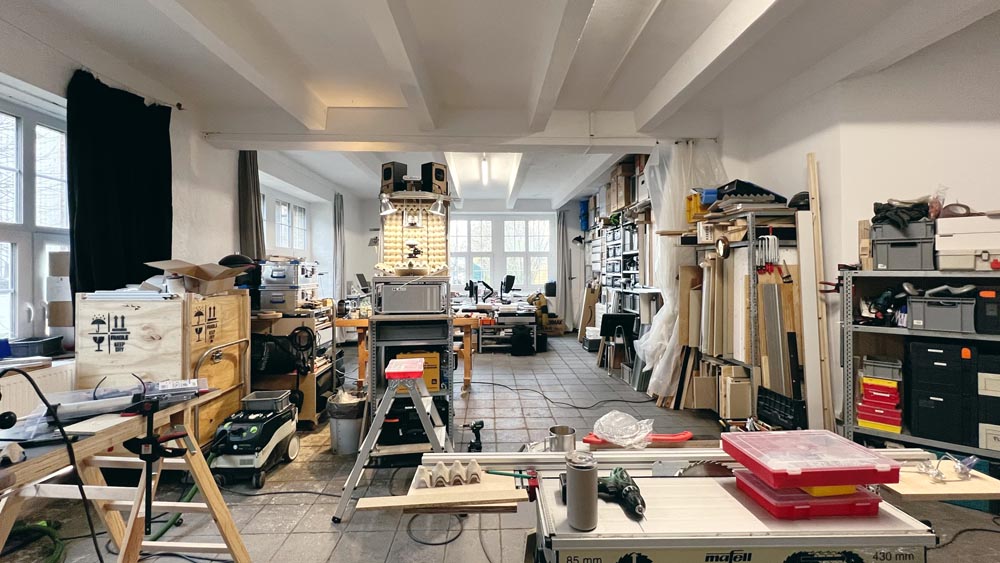
In the studio
Many artists live by their routines, what does that look like for you?
I wouldn’t say I have a very strict studio ritual. My dogs are probably the closest thing to a fixed routine I have. I’m naturally more of a night person and like working late, but my girlfriend is the complete opposite, so over time I adapted a bit. These days, I’m usually in the studio from around 9 to 6, and then often continue working from home in the evening. In general, I try to spend as much time in the studio as possible—usually six or seven days a week.
In terms of how I work, it really depends on what I’m doing. If I need to focus I prefer complete silence. But when I’m in more of a production mode, doing repetitive or technical tasks like building, editing, or refining images, I always listen to audiobooks, mostly crime or spy stories. I tend to stick to a few specific narrators whose voices I really love. Even a great book doesn’t work for me if it's not of those narrators. One of them has recorded the entire Jack Ryan series, which I’ve probably listened to more than once.
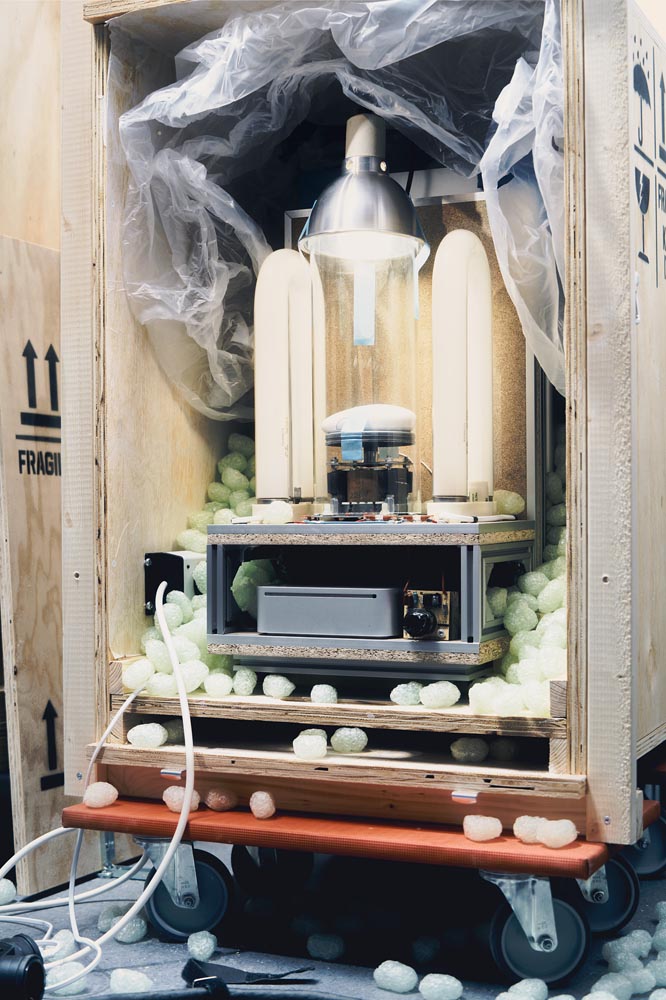
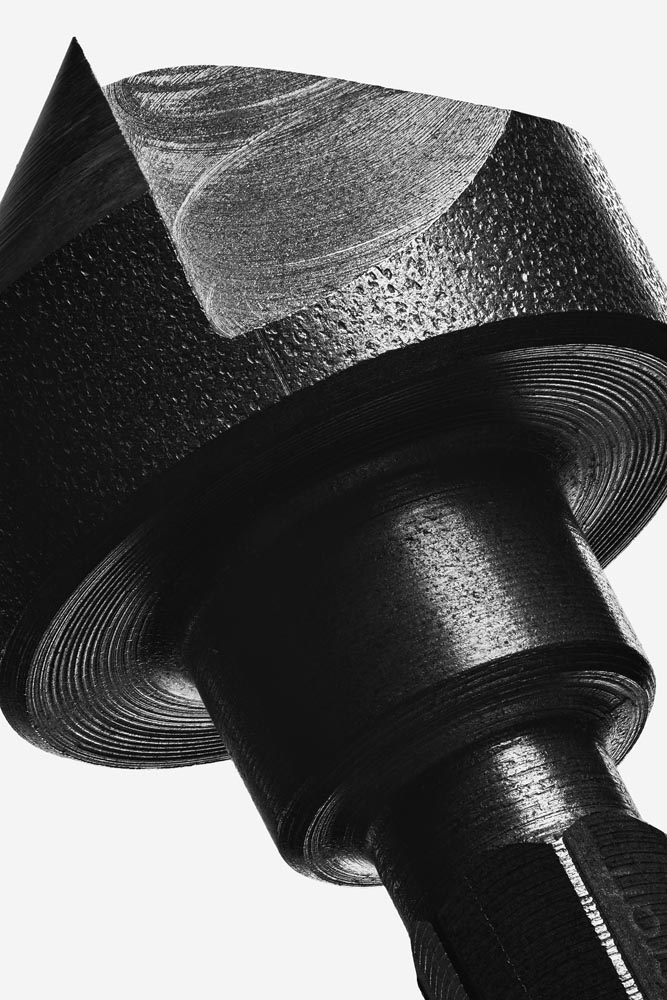
Left: Mouse Mover, Inkjet print on fine art paper, artist frame, 134,9 x 188,9cm, 2025
Right: "Countersink, 22mm", Inkjet print on fine art paper, artist frame, 40,1 x 50,2cm, 2025
Who are your biggest influences?
In terms of photography, Thomas Demand is probably my all-time favourite. What fascinates me about his work is that everything is constructed—he builds his images entirely from paper, which means he has full control over every parameter. At the same time, his work often deals with broader social or political themes, but in a very subtle way. The images are visually precise and almost quiet, and the actual tension only unfolds on a second level, like in his "Yellowcake" series.
Another big influence for me is Tom Sachs. In 2022, I saw his exhibition "Space Program: Rare Earths" at the Deichtorhallen Hamburg, where he presented a kind of fictional space mission as a performative system. What I found really interesting was that the objects in the exhibiton had an actual function within that narrative. It wasn’t just a constructed image, but a whole framework where the works became part of a larger system.
That idea of combining construction, function, and narrative really stayed with me. Both artists approach their work in very different ways, but what connects them for me is a strong sense of control and intention, while still leaving space for interpretation.
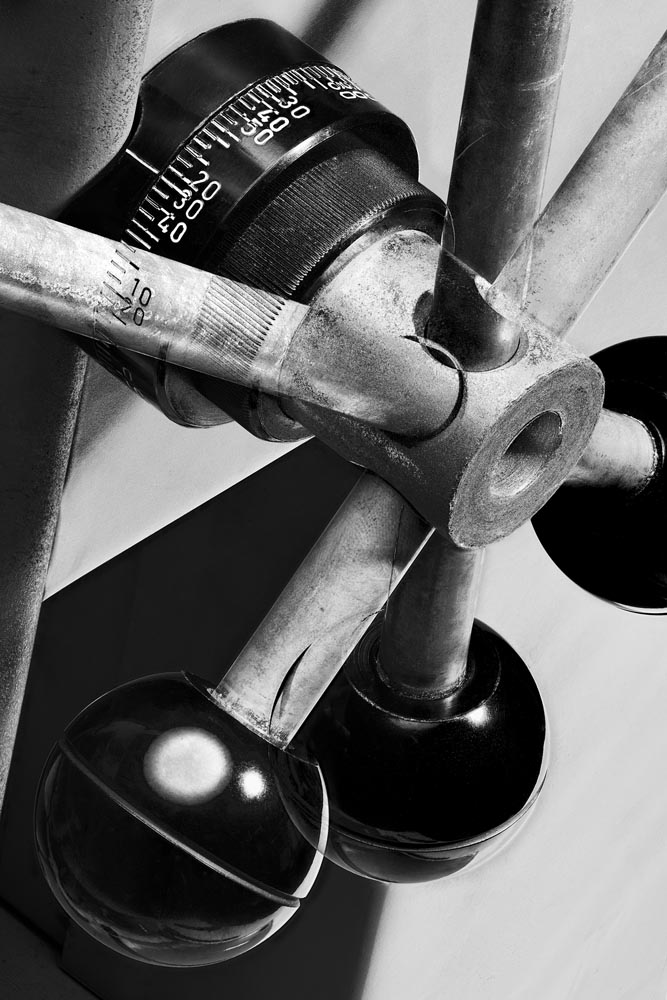
"Drill Stand", Inkjet print on fine art paper, artist frame, 29,6 x 43,6cm, 2026
Are there books or films that are an important source of inspiration?
Way too many books to name here… but at the moment I’m reading Bruno Latour and Hannah Arendt. What interests me about both is how they look at systems—whether it’s networks of relations, structures of power, or the way human activity is organised and understood. That connects quite directly to what I’m working on, especially in terms of labour, responsibility, and how we position ourselves within larger systems. I wouldn’t say that their ideas translate directly into images, but they definitely shape how I think about the work and the questions behind it.
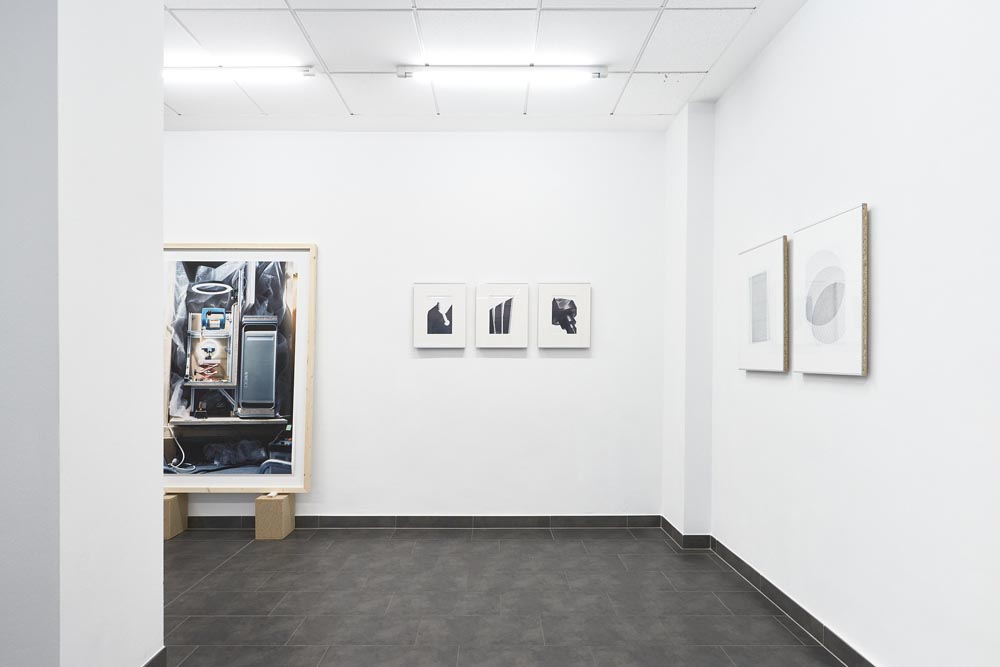
»Handle with Care« M BOOKS Weimar, Germany, 2026 Photo Credit Felix Schöppner
What’s the best piece of advice you’ve been given?
Probably a comment from one of my professors, Kris Scholz, back when I was still working more in documentary photography. It was one of those meetings of the course and he told me that my images were about 20 years too late. I still don’t know how seriously he meant it—whether it was ironic, critical, or somewhere in between—but it definitely stuck with me. It triggered a longer thought process, and not long after that, I started to change the way I was working although the actual reason was something else. Looking back, I’m very glad I did.
What is the best advice you would give to other artists?
Try not to fall into routines. They can feel comfortable, but they also make it easy to avoid challenges or things you’re unsure about. Those moments of uncertainty, being alone with yourself are usually the ones where something actually shifts.
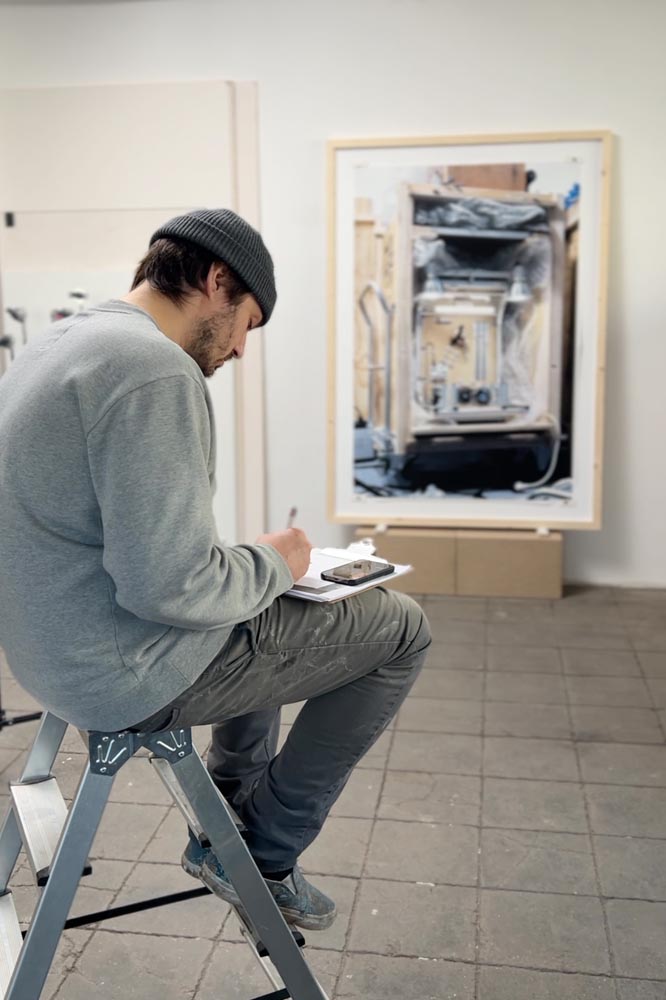
Felix Schöppner
Stay up to date with Felix Schöppner
Website felixschoeppner.de
Instagram @felix.schoeppner