Photographer based in London, UK

David Vintiner
Tell us about yourself, what's your background?
I grew up in a small town in the south of England. There wasn’t much of an art scene around there but I was creative and my parents were encouraging so after high school I went off to art college. Whilst there we had a visit to a Richard Avedon retrospective in London. It was literally like a light-bulb moment standing in front of those larger than life intimate, powerful portraits. I just knew that’s what I wanted to do.

Mandy being baptised, Ringwood
“I’ve just finished a long term project traveling the whole length of England along a straight line of longitude -1°50 West. The work is about the desire to seek meaning and purpose through ceremony, ritual & the routine of daily life.”

Avebury
What are you currently working on and where did the inspiration for it come from?
I’ve just finished a long term project traveling the whole length of England along a straight line of longitude -1°50 West. The work is about the desire to seek meaning and purpose through ceremony, ritual & the routine of daily life.


Left: Cohen, folk singer, Birmingham. Right: Spaghetti Junction, Birmingham
I’d been thinking about making some work about my home country for a number of years. After walking into my local bookshop I saw a travel book by Robert Twigger ‘Walking the great north line’ in which he walks this route in one continuous journey. I instantly knew this line could be a really interesting device to thread my work along. So for four years I would go on smaller journeys along this route to make photographs. Sometimes I had specific images in mind, sometimes I would just walk and see where things took me.
I’m currently working with a brilliant designer Tom Booth-Woodger bringing this project together into a book, due for publication later this year.
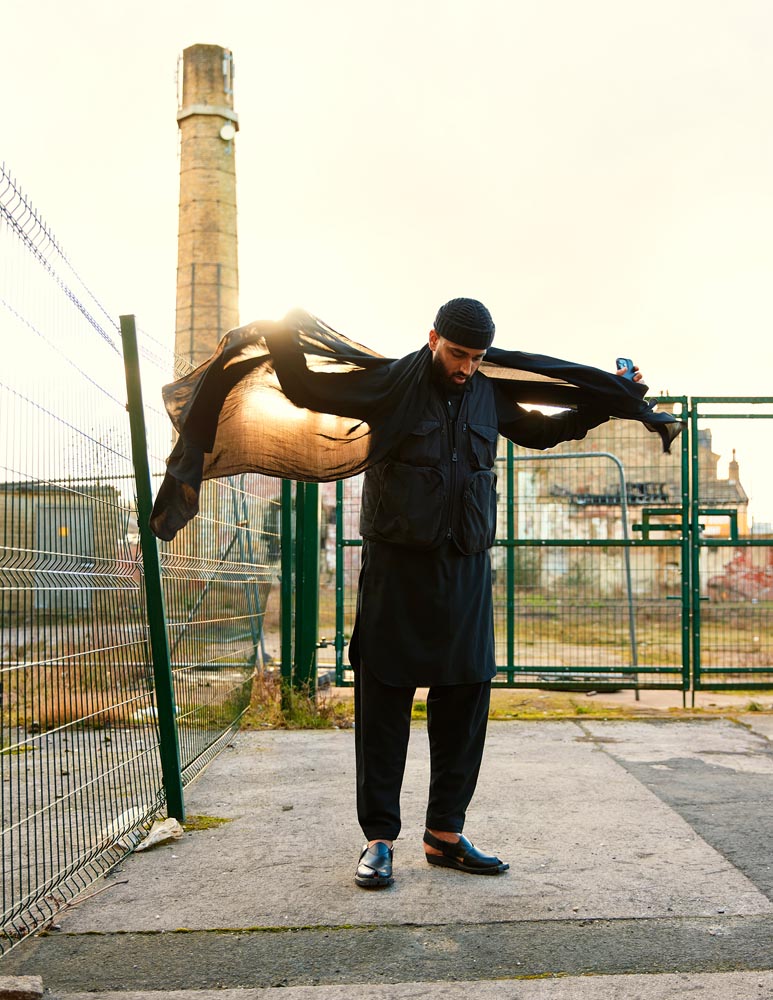

Left: Ali on the eve of Ramadan, Bradford. Right: Esther and Chloe, Castleton
Innovation does not only happen in the field of technology — it occurs everyday in a creative practice. What do you do for inspiration?
I think it’s really important to have as wide a range of inputs as possible so I try hard to keep my inspiration broad and varied. That might take the form of photography books, exhibitions, poetry, fictional literature, film, documentaries, music, going for a walk, going for a walk with my camera. I’ve recently taken up life drawing again and am really enjoying that intense act of studied drawing.
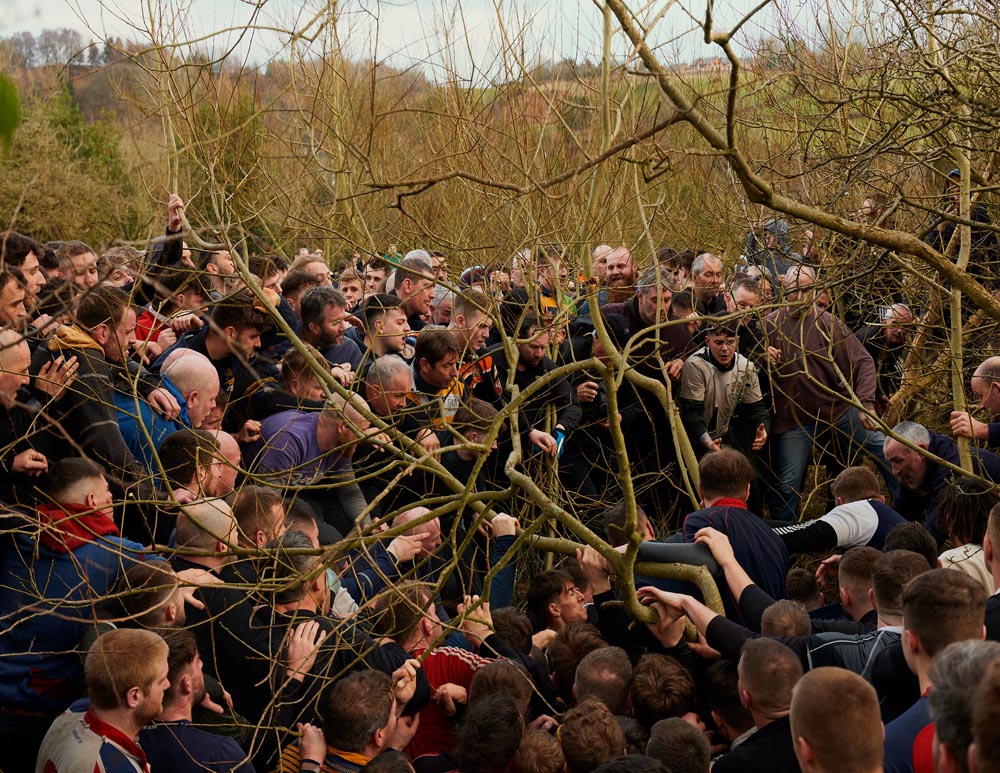
Royal Shrovetide Football, Ashbourne
Where do ideas start for you?
I think each project I work on starts in a different way. For the -1°50 West project I really didn’t know what the work was about when I first set out. The most important thing initially was to just go out and and start making images without thinking too deeply. I would then return home, make a few small prints and see what connections within the images were starting to emerge. I probably made work like that for about a year. Once a clearer narrative started to emerge I would then go out to look for specific story devices, particular people to meet or rituals to photograph. At this stage, some of the portraits were made by arrangement, others were still from chance encounter.

Sequencing images for the book layout
Once the project started to build I would start sticking these small prints onto my wall. I knew the work had to lay out in a geographical order so it was useful to then see what gaps I had to fill and what themes were occurring. It became like a huge jigsaw puzzle - but without knowing what the final picture is.
Time is so important too. I like to make work, edit it and then leave it alone for a while. It’s endlessly fascinating how your mind changes its reading of those same images after some time has passed.


Left: Books of inspiration. Right: Small prints for editing
How do you make your work, does it start with a sketch?
Stylistically I think each project has a slightly different aesthetic. I try to think about what in my photography will suit the story I’m trying to tell. My approach for -1°50 West was very much about lived human experience so I knew the portraits needed to feel gentle and intimate. Aesthetically I wanted the images to feel very rooted in England, for me that meant the muddy greens and browns of the landscape and warm greys and browns of our urban areas. I spent quite a bit of time trying to find the right kind of green to convey the feeling I encounter when out on location. The majority of the work was photographed under available light to keep that sense of a gentle photographic touch. Not too stylised. I wanted it to feel real and intimate.

Work prints
Many artists live by their routines, what does that look like for you?
I don’t think other than the hours I work (9-5) I have much of a routine. I think with photography it tends be quite varied so each day & week looks different. I might be making work out on location, processing or printing work, researching or editing work together.


Left: Merlin, Stone Henge. Right: Map of -1°50 West
Who are your biggest influences?
I grew up watching Michael Palin’s travel documentaries, All throughout his journeys he has a curiosity and a very warm, easy manner with everyone he meets. Without realising it at the time, I think he set off in me a lifelong fascination with humans and their lived experiences too. I was lucky enough to meet and photograph him a few years ago which was a very special moment for me.
I think the writer John Steinbeck, again for his focus on very human stories, in particular Cannery Row.
Photography wise there are so many to choose from but currently I’m really influenced by the work of Gregory Halpern, Carolyn Drake, Alec Soth & Yelena Yemchuk.

Heather burning, Reeth
Are there books or films that are an important source of inspiration?
I take great inspiration from books, currently I’m getting lots of inspiration from poetry. I find when editing together a large body of work, poetry helps me to think about how to move from one image to the next. How to create pace, rhythm & repetition within the work. How to juxtapose images to create a narrative or counter-narrative. Poetry books that live on my desk at the moment are;
England’s Green by Zaffar Kunial
Gold from Stone by Lemn Sissay
Photography books are also a huge inspiration, I’m particularly intrigued by ‘I’ll let you be in my dreams if I can be in yours’ by Carolyn Drake & Andres Gonzalez. Two photographers who worked side by side photographing along the US & Mexico border. The same scenes appear multiple times photographed from the two different perspectives at the same time. The edit of the book is incredible, confusing, disorientating and cinematic, it moves the viewer around in a fascinating way.

Lindisfarne, pilgrims
What’s the best piece of advice you’ve been given?
“When you think you have the photograph you wanted to make - stop and look behind you”. This advice was given to me by my lecturer at university and it’s amazing how useful this is. I take it to mean both literally ‘look behind’ and also to mean ‘look again - but in a different way’. Turn your initial idea on its head. Challenge your preconceived idea. Its amazing how many times when I’m editing work those are the very images make the final edit.

Sequencing small prints
What is the best advice you would give to other artists?
Keep going and listen to your gut instinct.

David Vintiner
Stay up to date with David Vintiner
Website davidvintiner.com
Instagram @david_vintiner