Artist based in Providence, Rhode Island
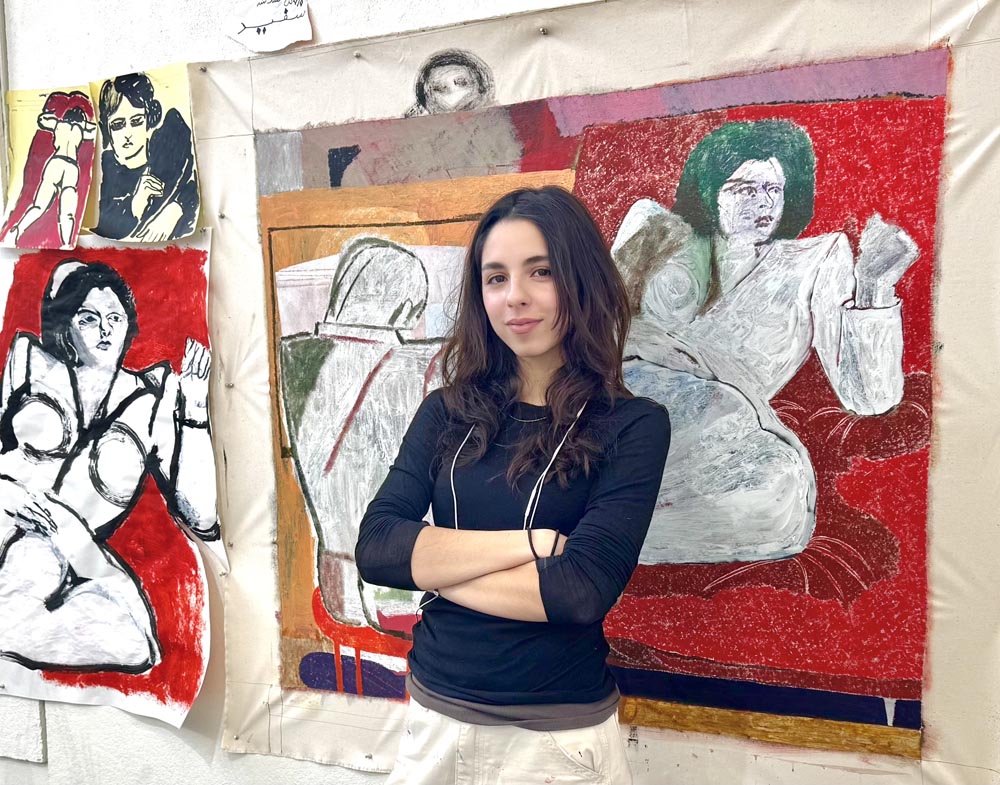
Baran Shafiey, Portrait of the Artist
Tell us about yourself, what's your background?
I was always surrounded with art and materials as a child; I grew up in a family of artists, and that accessibility allowed me to see art as an everyday element. My parents, however, were never trying to push me towards art professionally, so that path wasn't assumed.
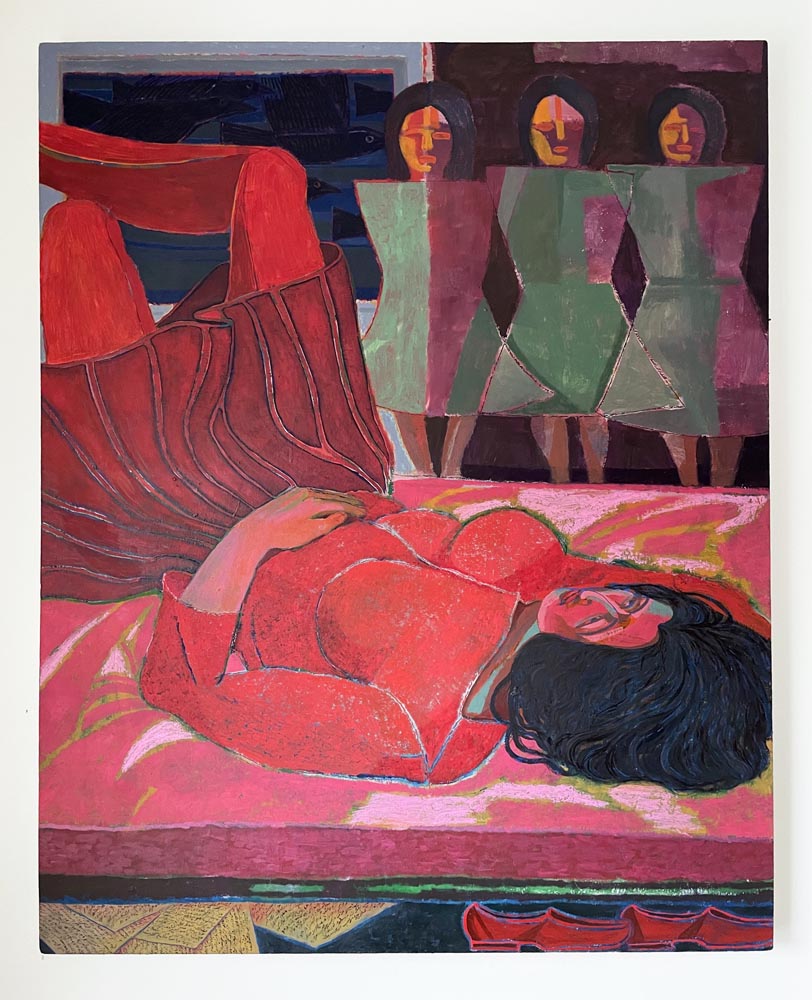
Red Lady, 2025, Oil paint on canvas, 32x40"
When my parents and I moved to New York City from Iran, I found myself more emotionally invested in making. It was difficult for all of us to start a new life, and as finding friends became a massive challenge, I would spend more time drawing and painting at home.
Having my dad as a mentor for observational drawing, I was accepted to an arts high school in Manhattan and began learning how to draw and paint more seriously.
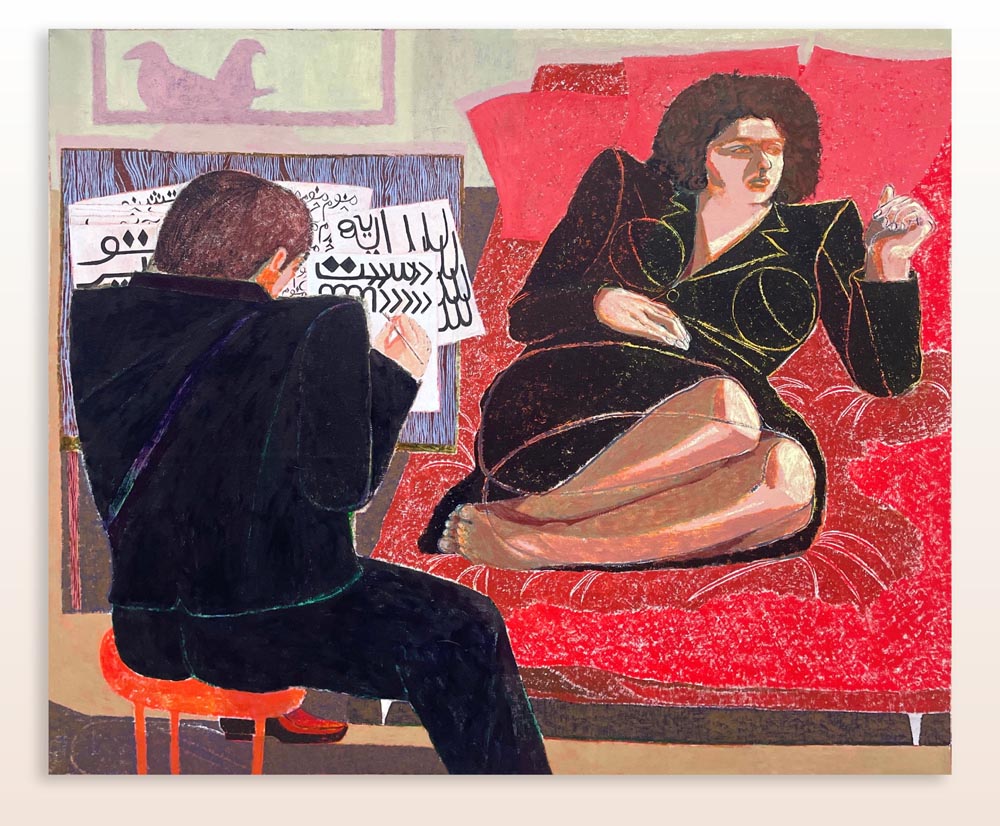
Writer #1, 2026, oil paint on canvas, 38 x 46"
“When my parents and I moved to New York City from Iran, I found myself more emotionally invested in making. It was difficult for all of us to start a new life, and as finding friends became a massive challenge, I would spend more time drawing and painting at home.“
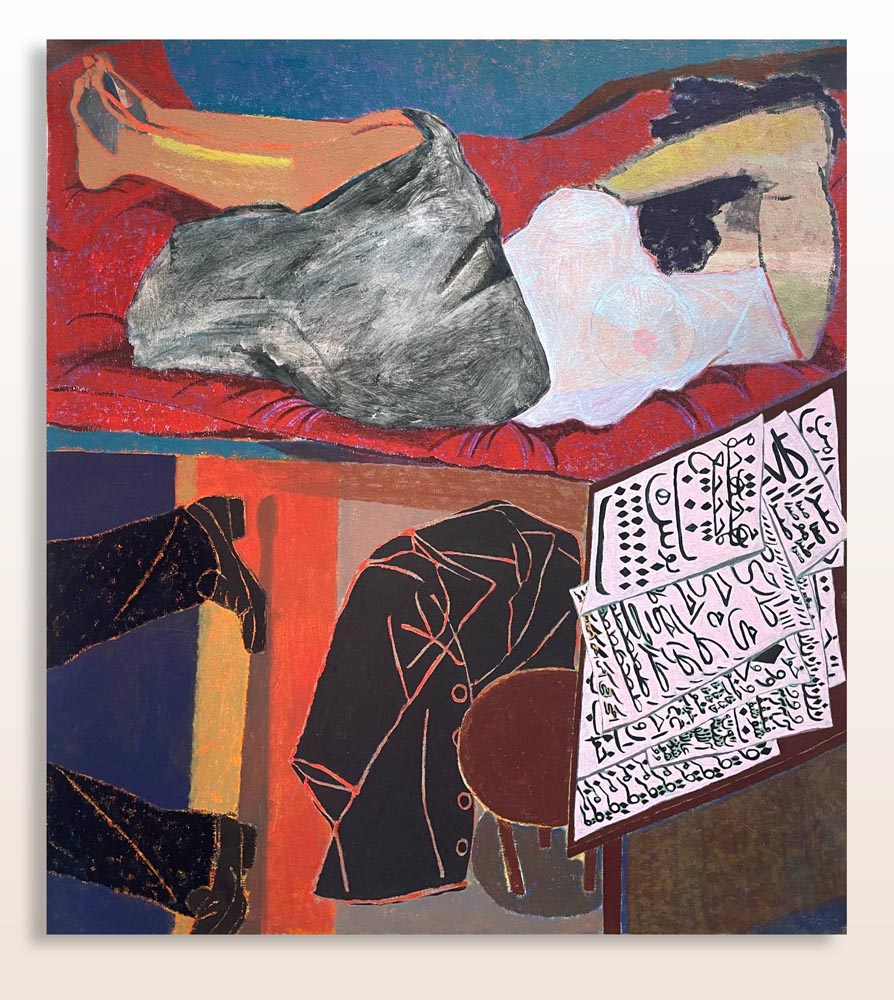
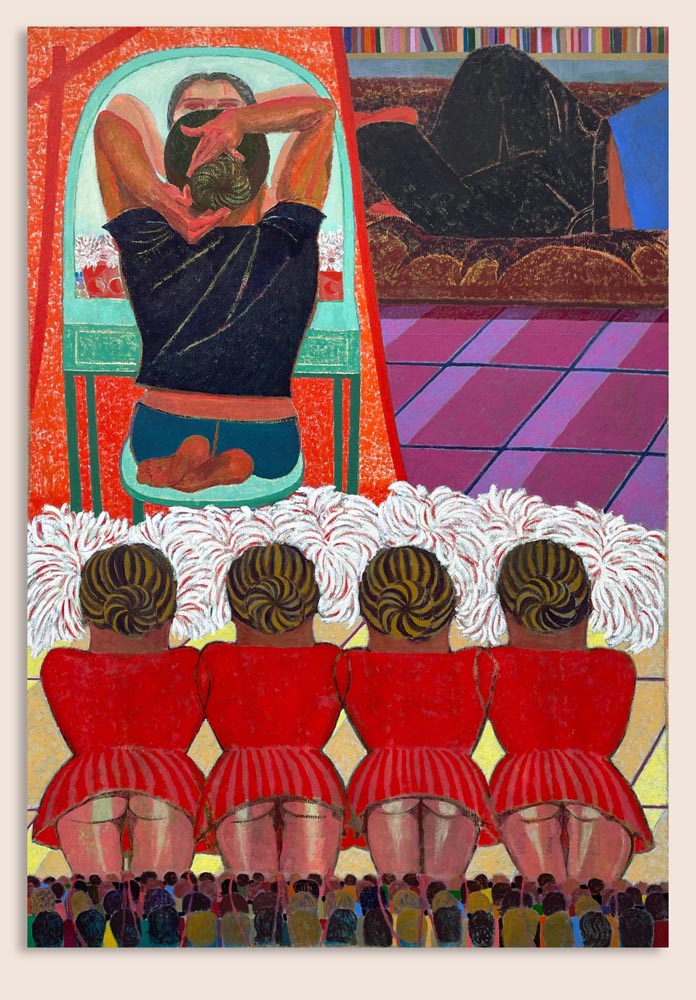
Left: Writer #2, 2026, oil paint on canvas, 29x 32"; Right: Untitled, 2026, oil paint on canvas, 36 x 50"
What are you currently working on and where did the inspiration for it come from?
I recently had the honor of attending Anderson Ranch Arts Center for a 5-week residency, which opened up a new path in terms of the themes I have been exploring.
I have been captivated by the concept of an unavoidable audience: the presence of our seemingly passive surroundings as sets of eyes that witness our everyday life. This theme began after I spent a summer painting piles of fruits. the cherries became crowds, and the paintings started to look back at me.
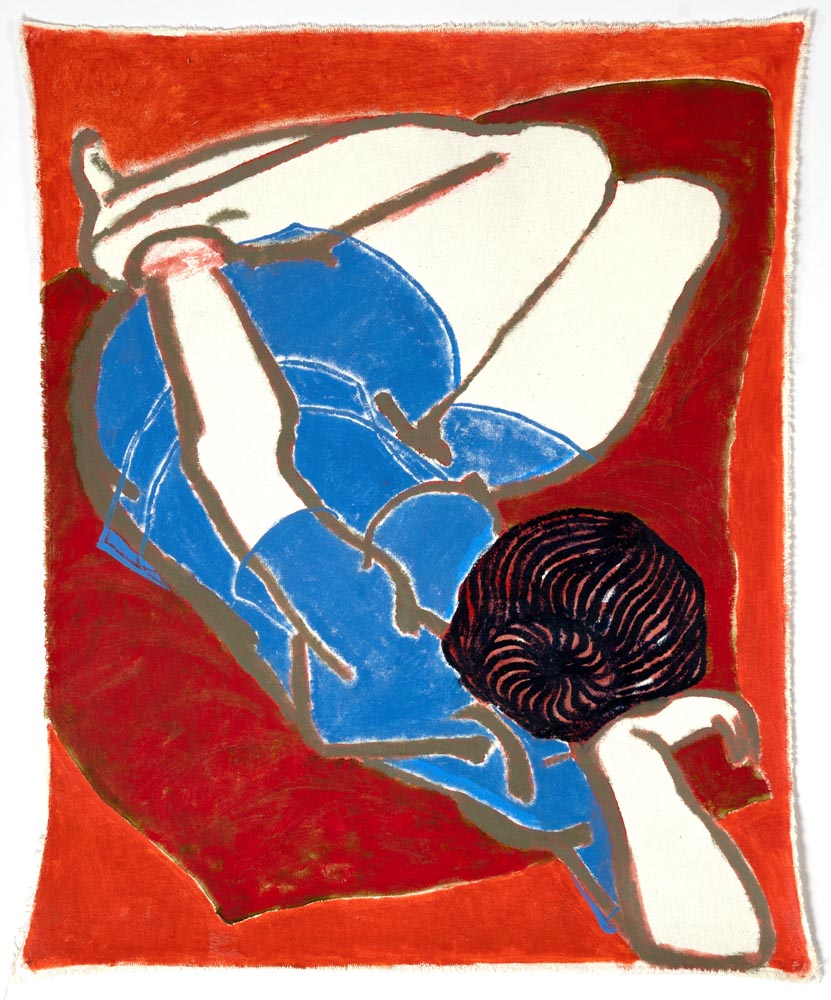
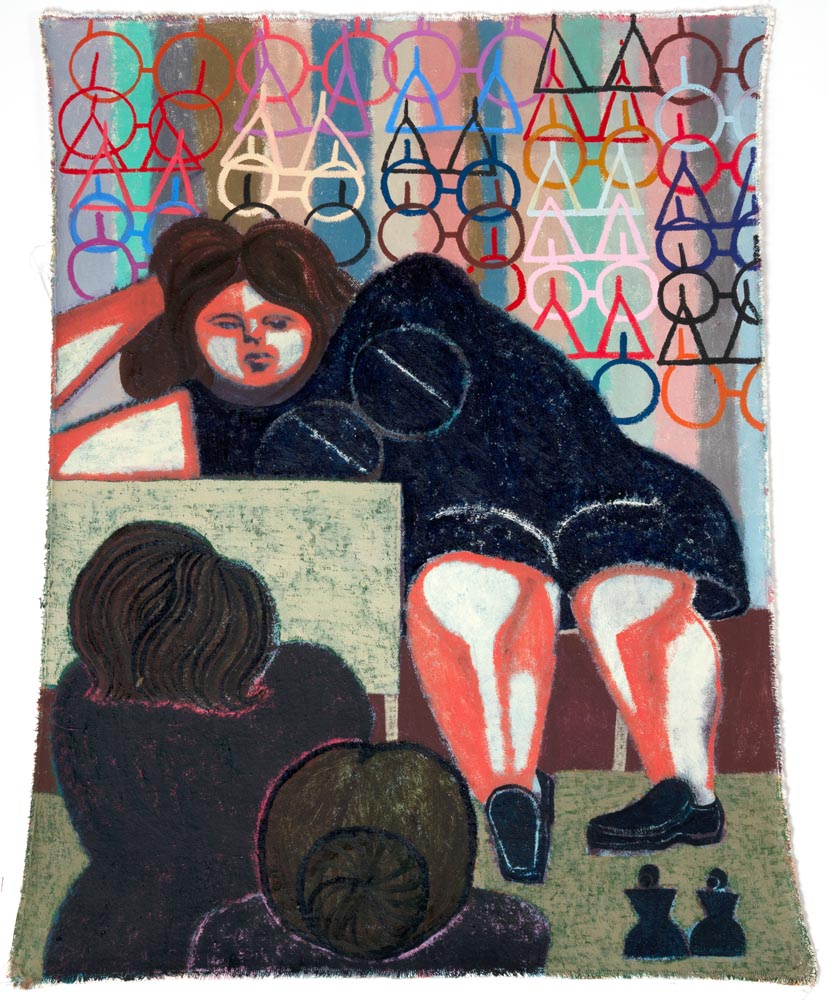
Left: Pajamas, 2026, oil paint on canvas, 18 x 24"; Right: Lingerie Shop, 2026, oil paint on canvas, 18 x 24"
As my work and writing has progressed, I’ve noticed a shift in my understanding of where this desire comes from. Through the process of painting and drawing a composition over and over again, I began to see myself as both the viewer and the subject.
With the work I made at Anderson Ranch Arts Center, I found myself feeling empathetic with all the figures in my paintings. This further reassured the multiplicity of the Self, and somewhat resolved the constant necessity of a witness, as the witness became the Self.
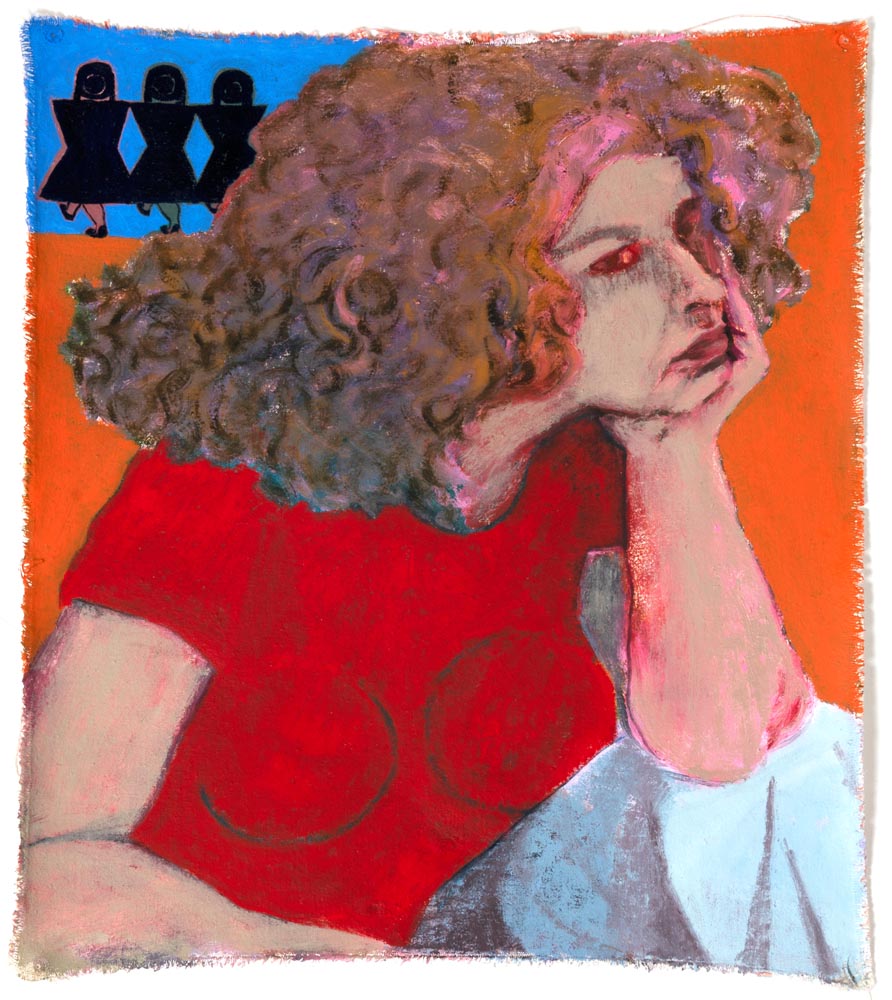
Maman, 2026, oil paint on canvas, 15 x 18"
My frustration with storytelling—or more so, the expectation to be a storyteller from my audience—sparked a much stronger attraction towards formalism and letting go of “making sense” in a narrative way.
Considering the conceptual realizations throughout my recent work, I remain formally explorative. Many of my recent paintings, reference drawings by RB. Kitaj, David Hockney, Egon Schiele, etc. I imitated the lines, gestures, and poses, to fit into the compositions I was playing with. I like to remind myself that I’m still learning how to push paint around on a surface, and I therefore, allow my playfulness to take the lead.
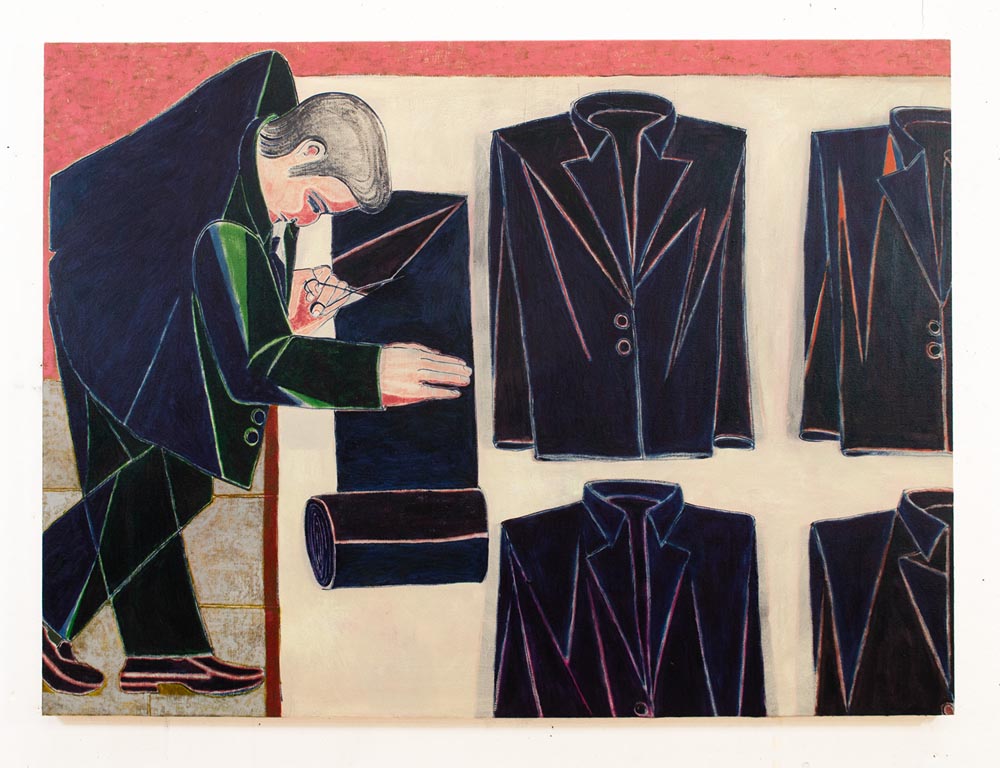
Tailorshop #1, 2024, Ink and oil paint on canvas, 36x48"
Innovation does not only happen in the field of technology — it occurs everyday in a creative practice. What do you do for inspiration?
I try to be observant of my surroundings and write every day to remember how much there is to be inspired by in small proximity.
I tend to dwell on the simple little things that I see or think about. For example, I write "The shadow of two birds sitting at my window," and later that line is visualized in a painting.
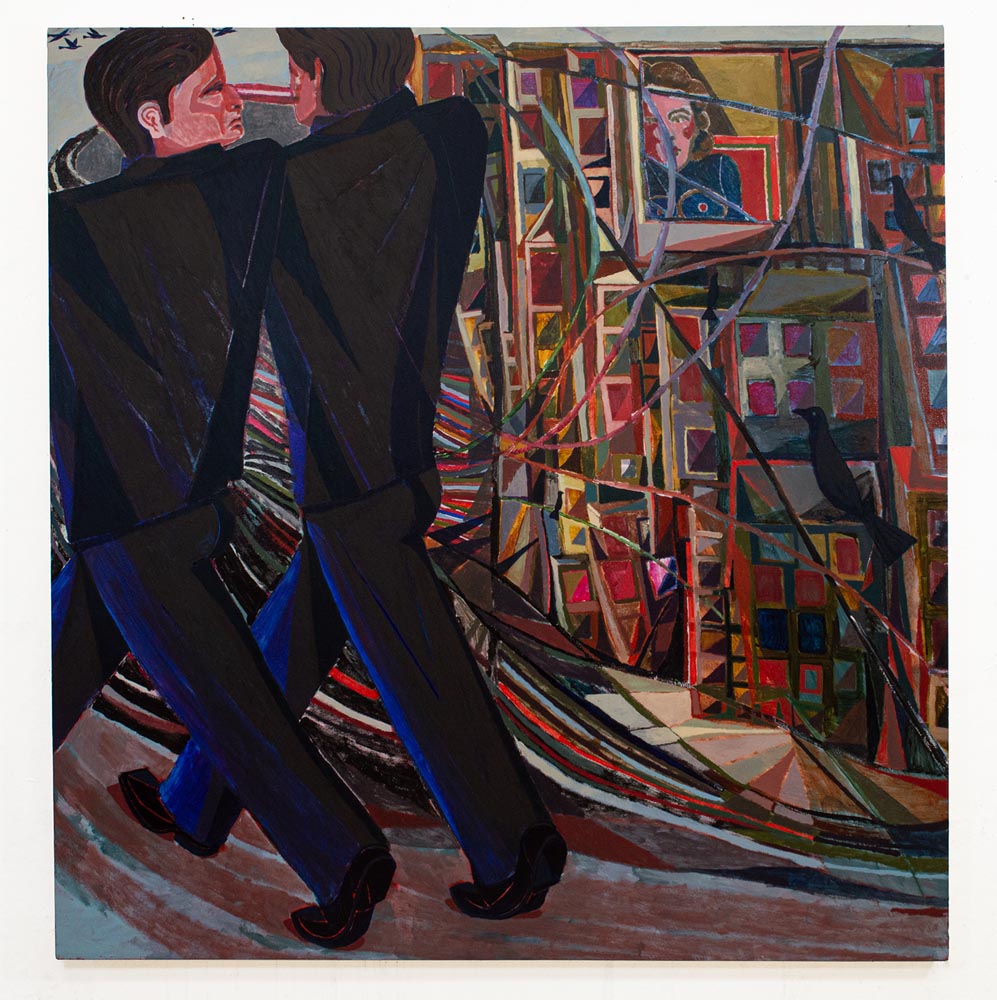
Gisha, 2025, oil paint on canvas, 54 x 56"
I'm inspired by Iranian cinema in the 1990s in this way. I have a small book of Abbas Kiarostami's notes that represents a structure of writing and thinking that I resonate with. For instance, he writes, "I sold my garden today. Do the trees know?"
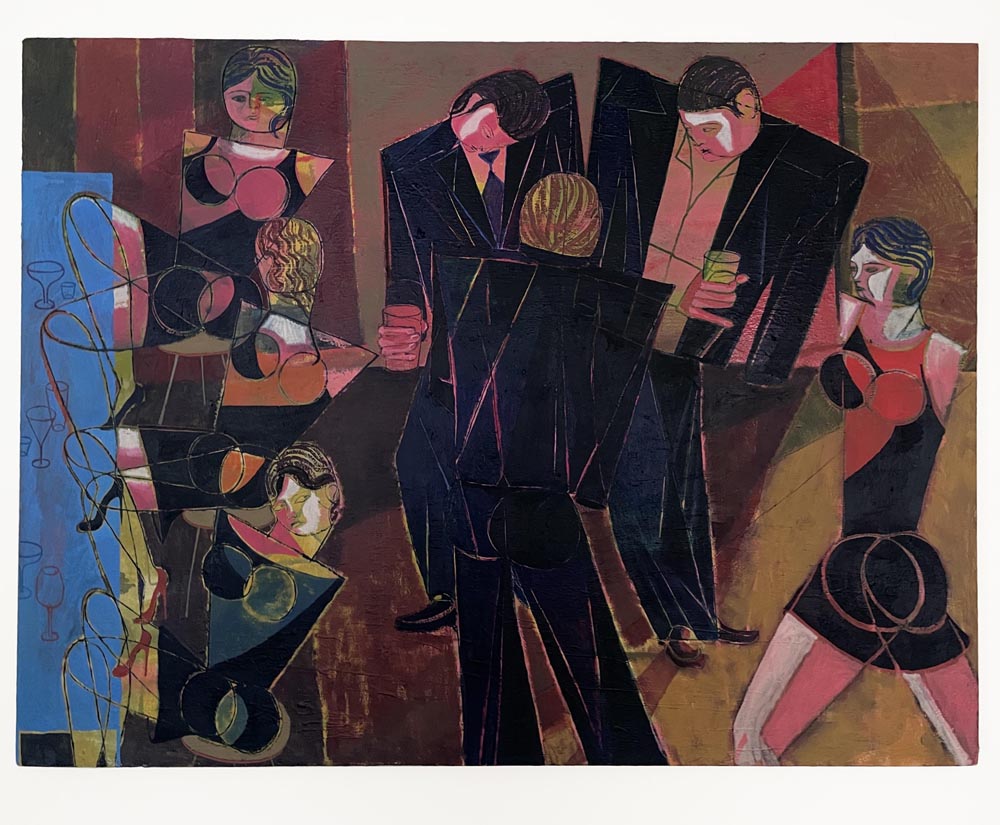
Weekday Mehmooni, 2025, Oil paint on canvas, 36x47.5"
I also dedicate time to looking at artist books, researching their backgrounds, or going to museums and shows to see paintings in person.
Going to my friends' studios is always inspirational to me—seeing how other people operate in their space, and the disciplines they set for themselves to maintain their practice. Dialogue about art and making is important, whether the conversation is focused on concept, material, or form.
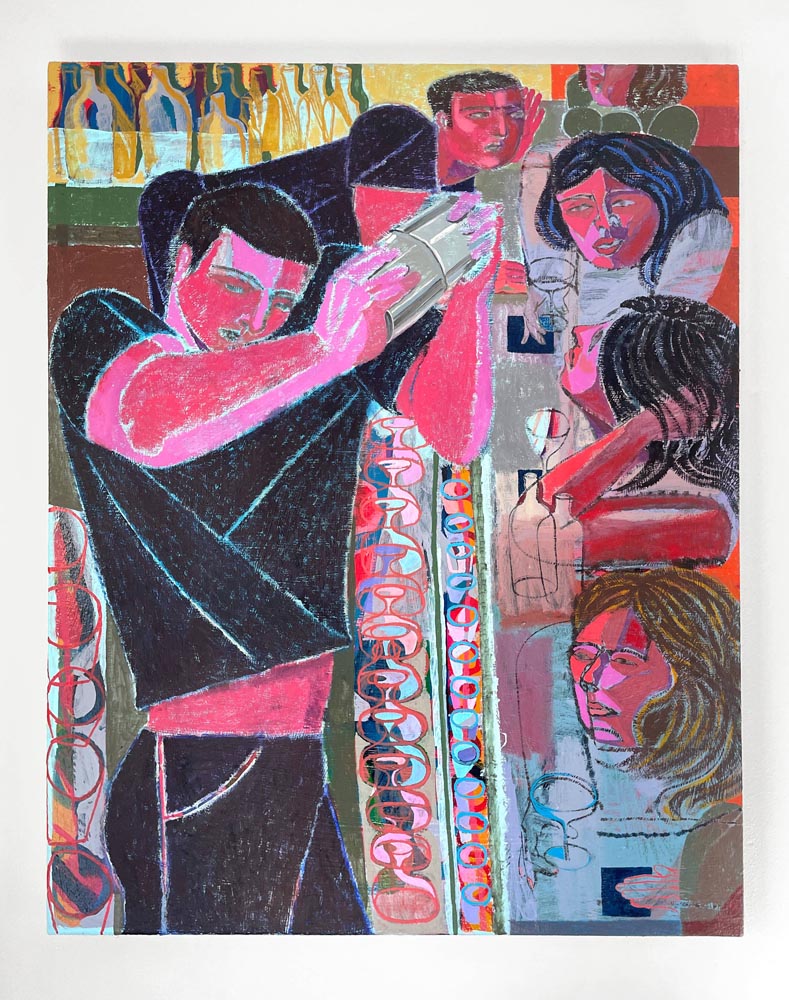
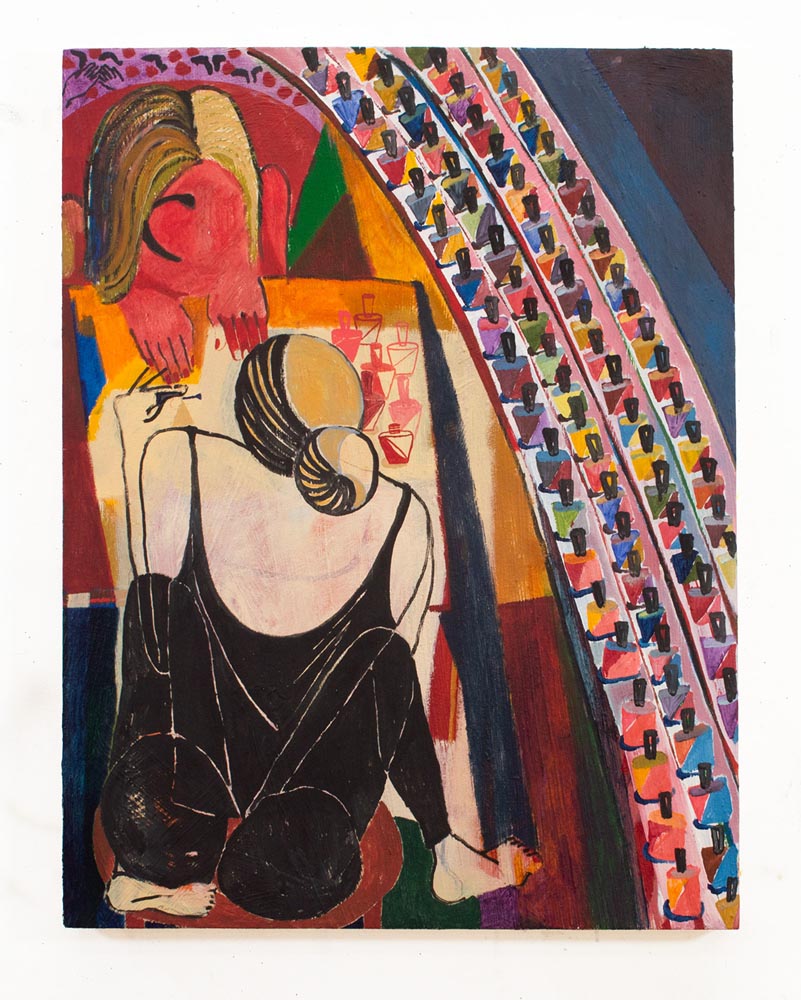
Left: Dolores, 2025, Oil paint on canvas, 27x34"; Right: Nail salon, 2025, Oil paint on canvas, 22x28"
As a social person, my surroundings always include people. I'm very family-oriented, but also spend a lot of time with friends. These relationships and all their little quirks fascinate me and influence my work, whether consciously or subconsciously. The conflicts, the laughs, the passive hangouts, or even phone calls with my family members in Iran can all spark ideas and realizations.
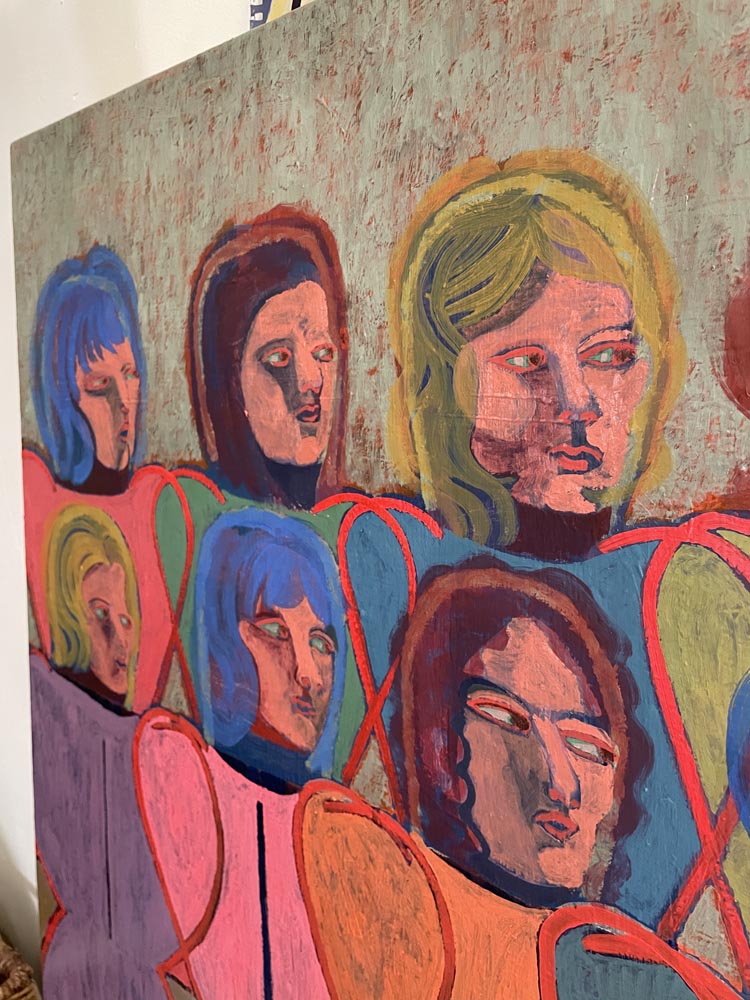
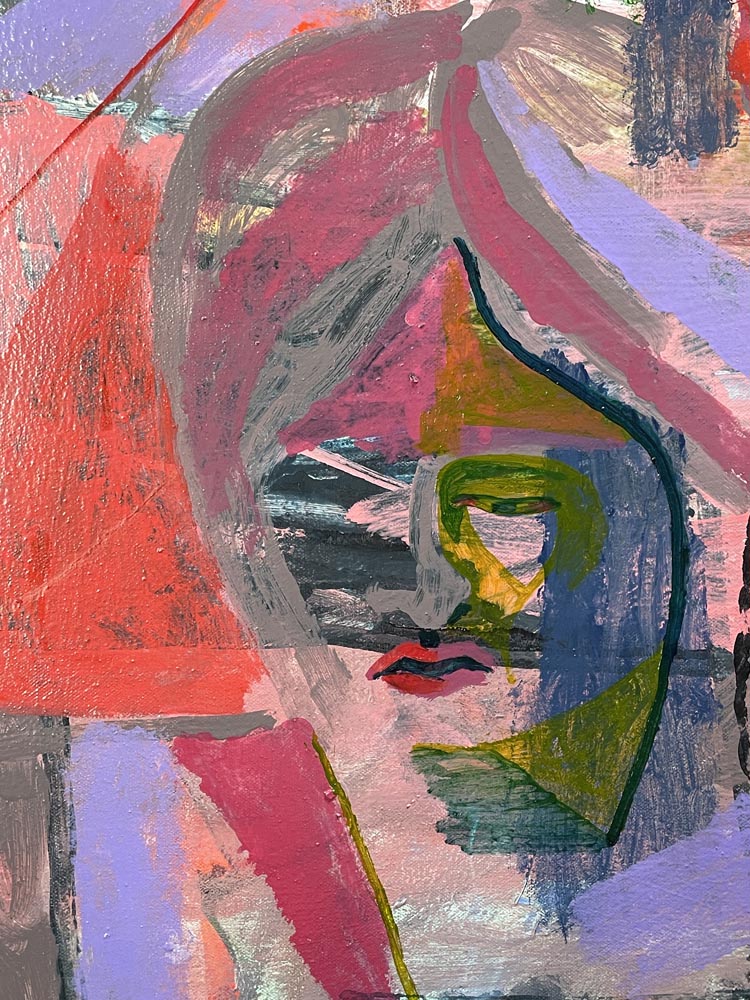
detail shot of untitled piece in progress, oil on canvas
Describe your practice and process. Where do ideas start for you? In the studio or being in the world?
Ideas start in both the studio and being out in the world.
I spend a lot of time drawing, whether it's in my sketchbook wherever I am, or with acrylics and ink in my studio. These drawings are often repeated, and through this repetition, I find myself naturally resolving formal and conceptual questions or conflicts.
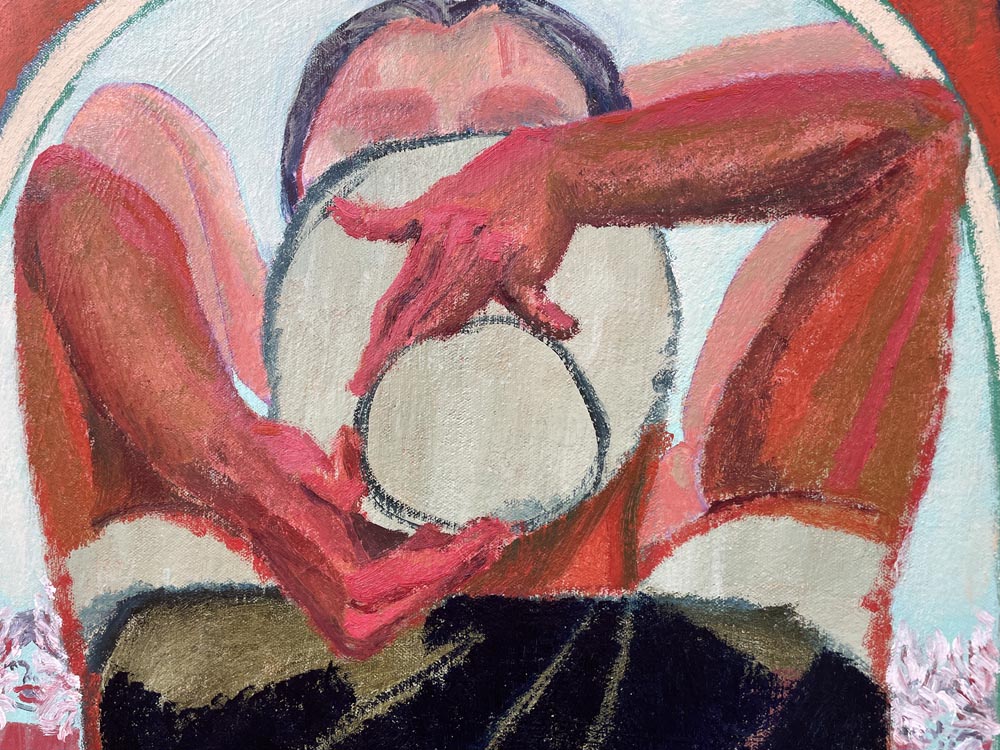
detail shot of Untitled piece, oil on canvas
There is a lot of trust involved in my practice. I start many of my paintings in looser and more abstract ways and clean them up as the painting begins to feel closer to my intentions.
I use a lot of different mediums for oil paint, the main one being Galkyd. The consistency is like honey—it's sticky and thick, but dries very fast, allowing me to paint in various layers with oil paint. The surface that it creates is also very sticky and shiny, which I tend to go over with heavier and slower marks that make the paintings feel more grounded.
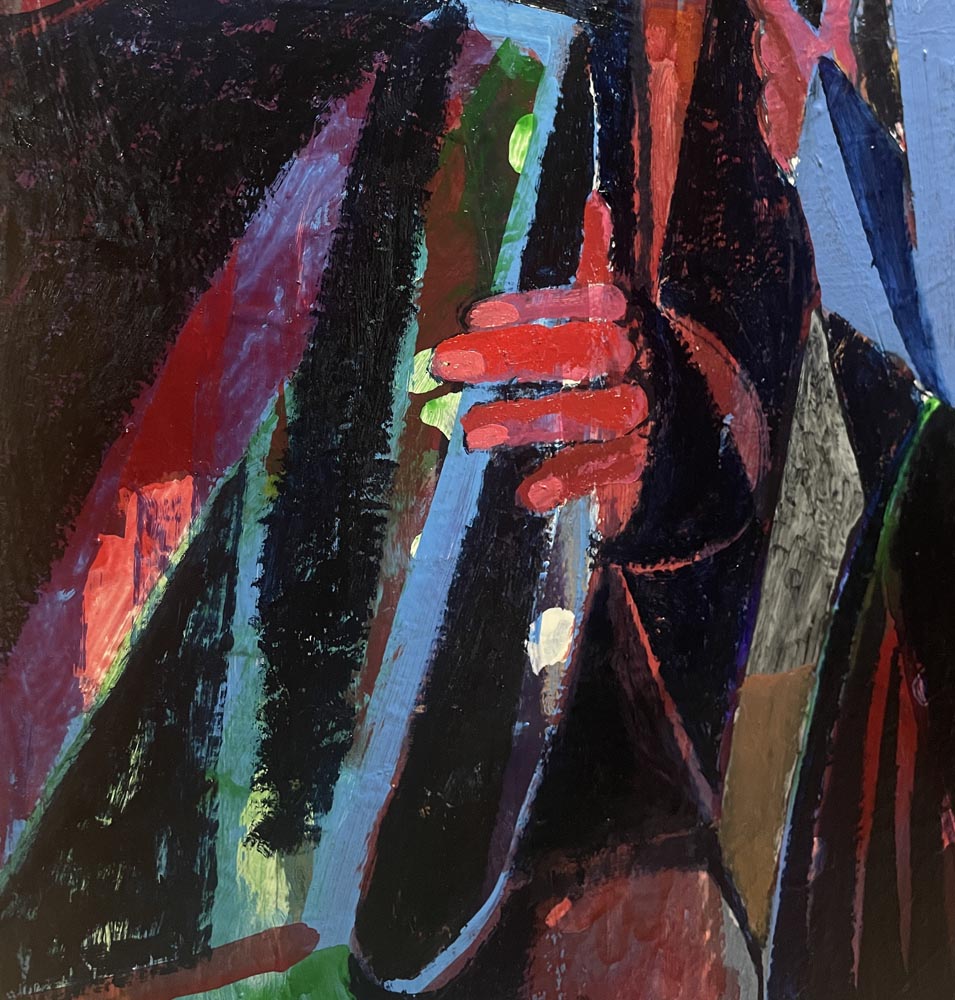
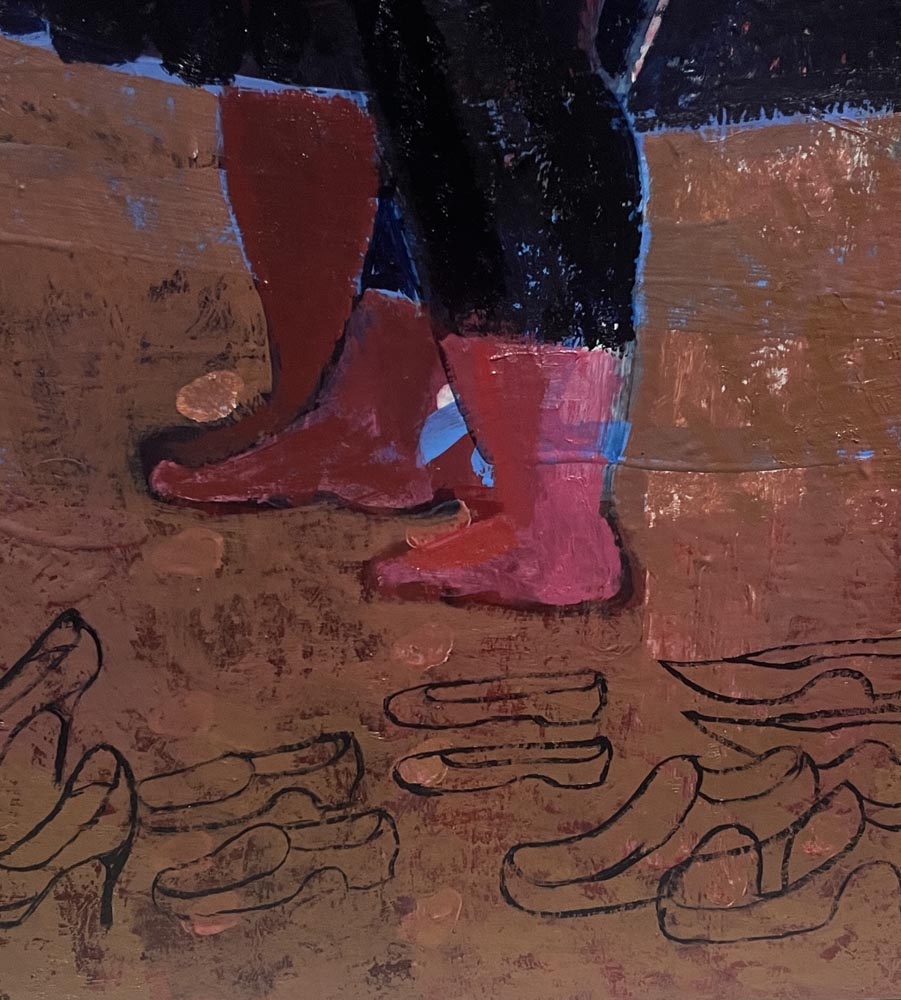
detail shot of piece titled "Rooboosi", oil on canvas
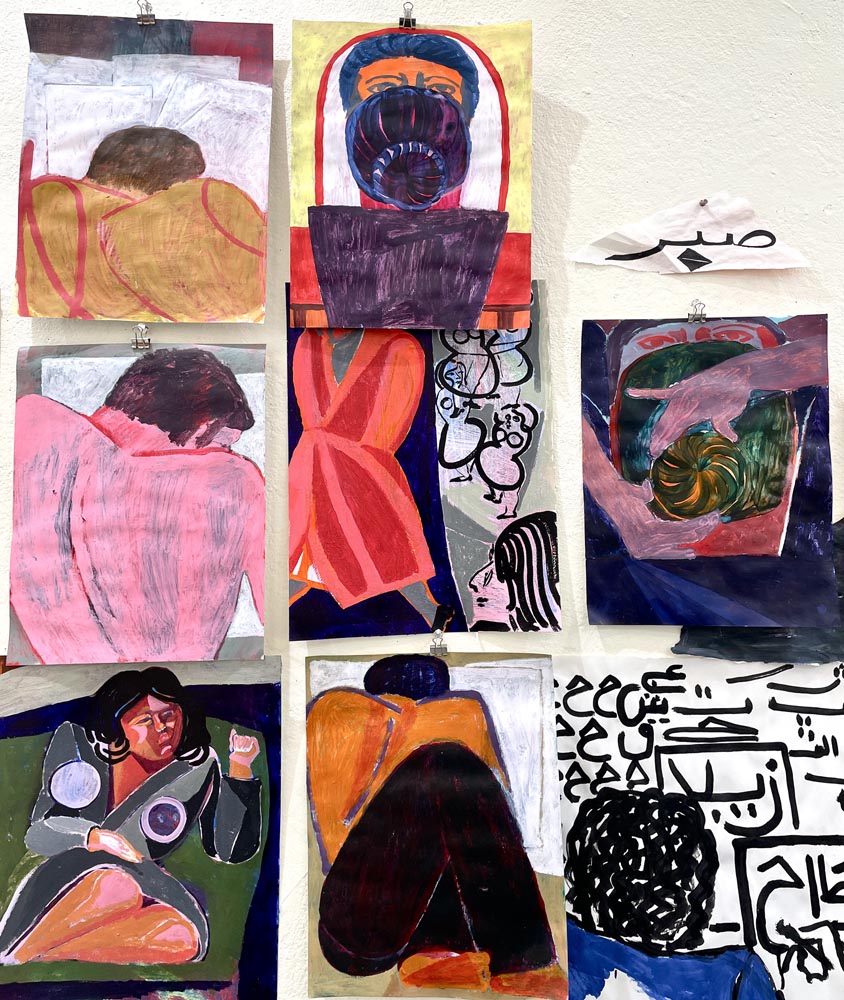
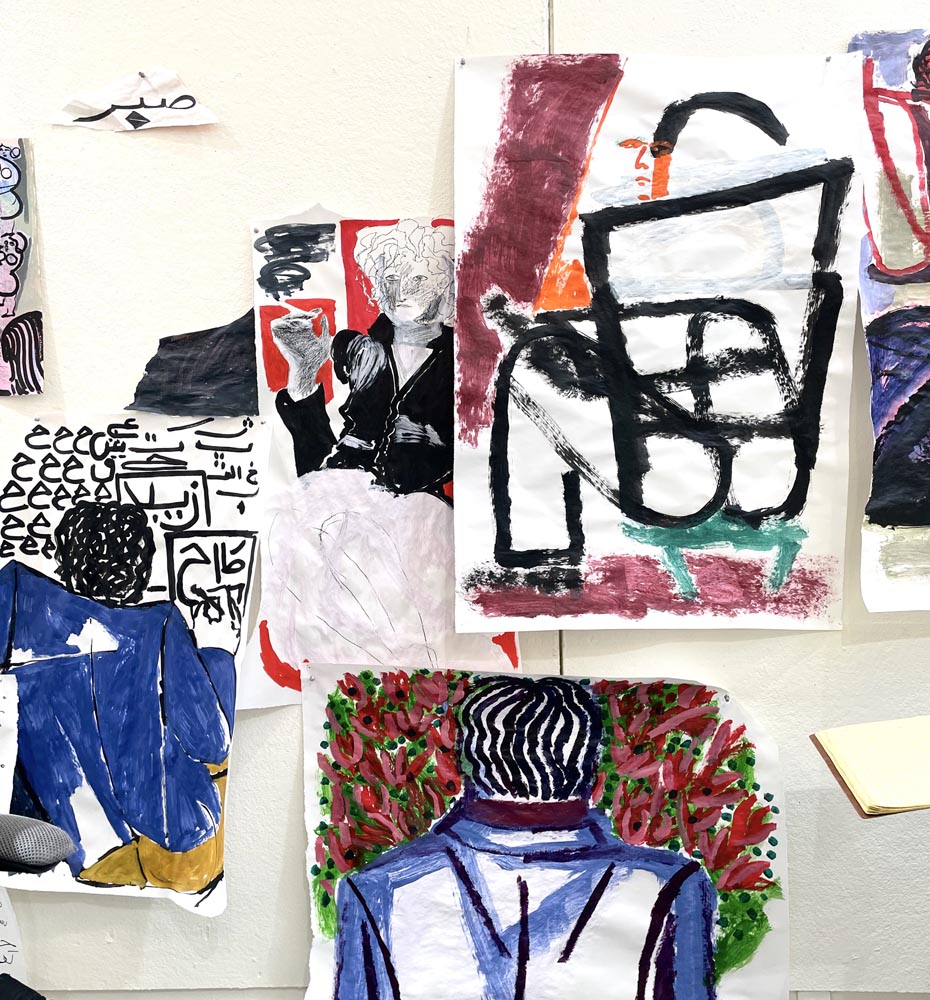
studio wall of drawings , acrylic on paper
How will Innovate Grant contribute to your practice?
The Innovate Grant will allow me to restock on materials and surfaces that I have exhausted after my residency, and maintain my studio practice more comfortably overall.
I renovated the attic of my apartment to be my home studio as a more affordable alternative to a standard studio space. The current studio doesn’t have many straight walls, has no electricity, and extension cords that run all the way down to my apartment. So although I appreciate living the trope of the post-grad young artist in many ways, I do feel that it holds restrictions over my practice.
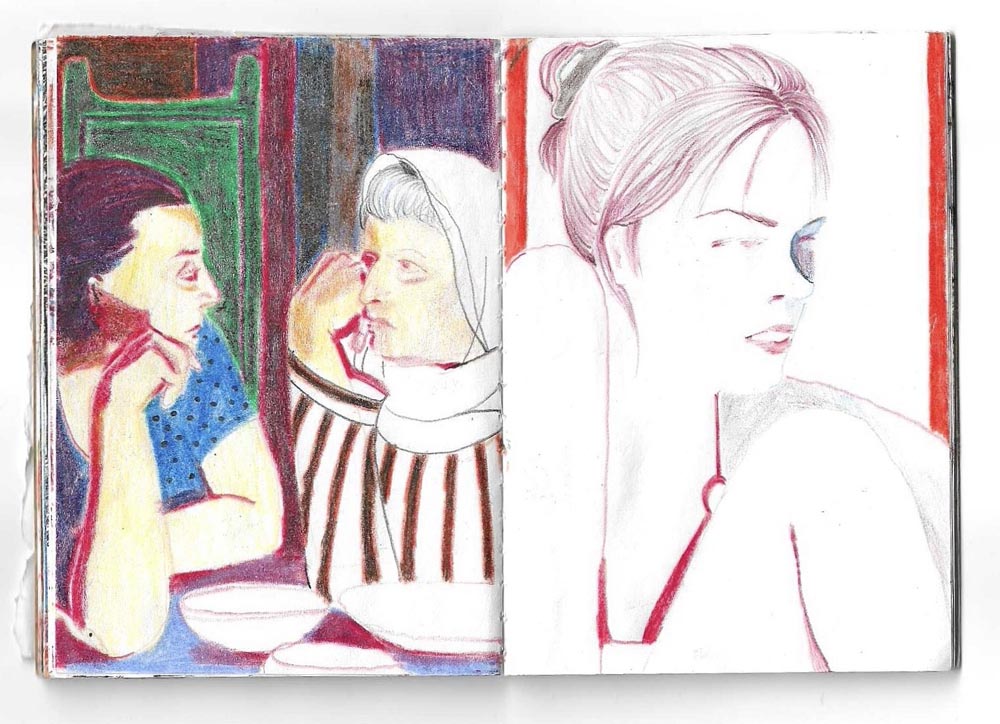
observational drawing, color pencil on paper
Through saving and working, I want to be able to move back to New York City (where I partially grew up) independently. I crave the community, and chaos, and the closeness to my family. I miss the uninterrupted noise, and the constant inspiration and motivation to stay active. My attempt to actualize this plan would have taken much longer if it weren't for the support by Innovate Grant.
With this generous grant, I'm beyond excited to be able to continue making and sharing my work.
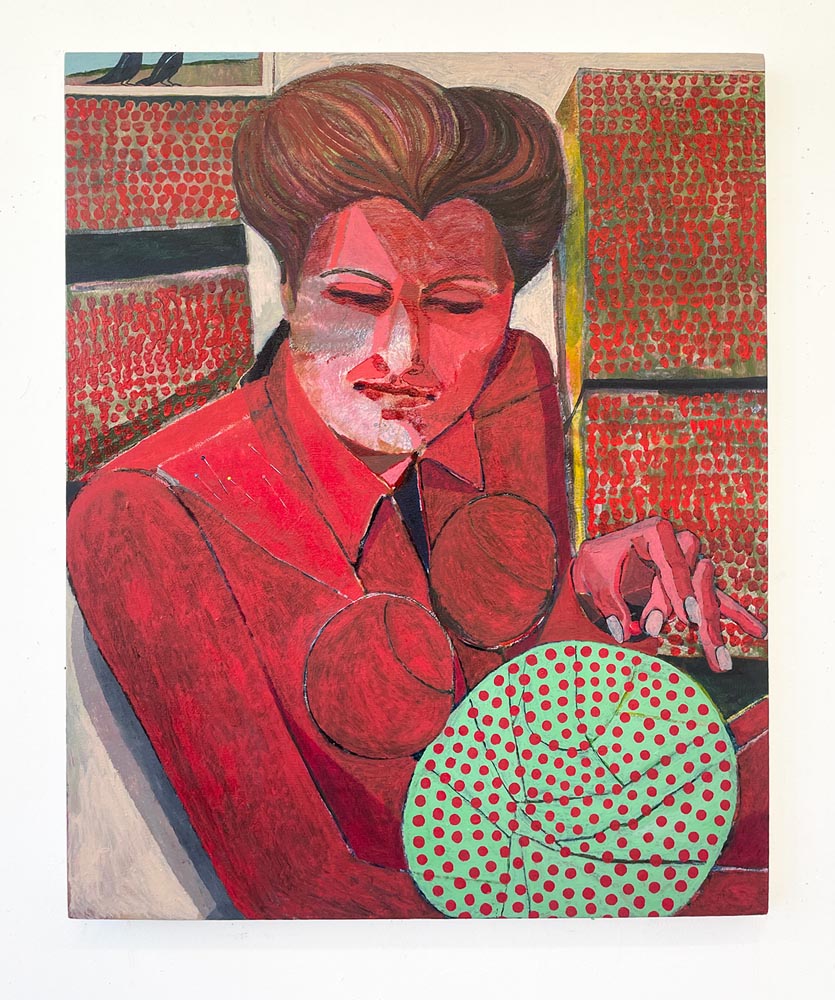
Unititled, 2025, oil paint on canvas, 26 x 32"
What is the best piece of advice you’ve been given?
No subject is too low, and don't go back to studio after dinner.
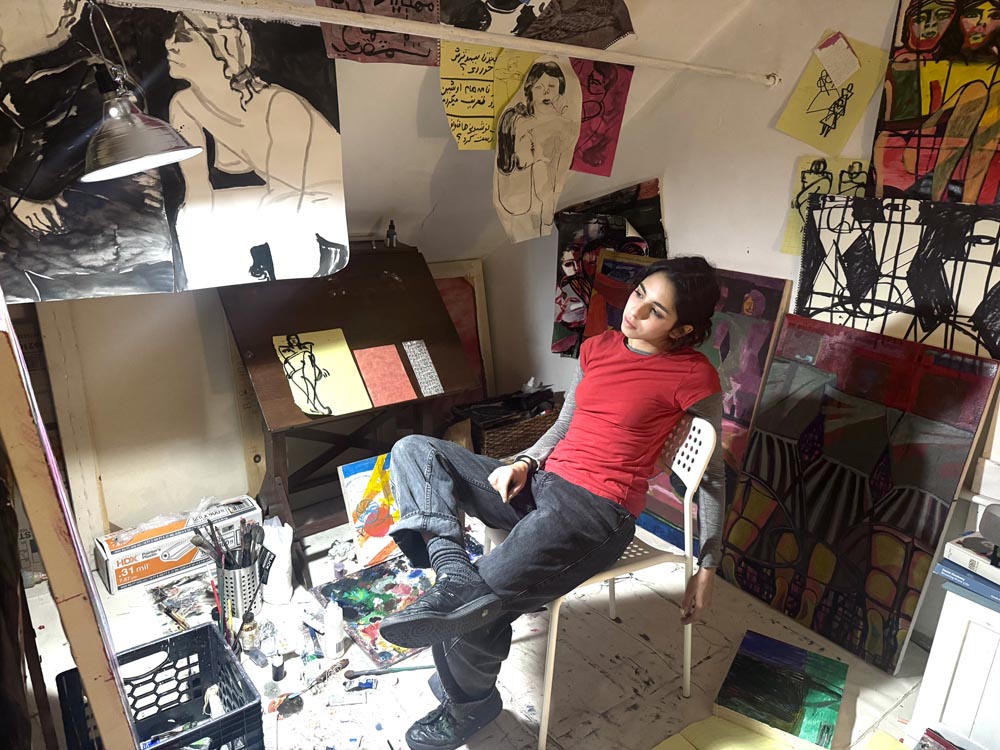
Artist in the studio
Stay up to date with Baran Shafiey
Instagram @baranshafiey