Artist based in Buenos Aires, Argentina
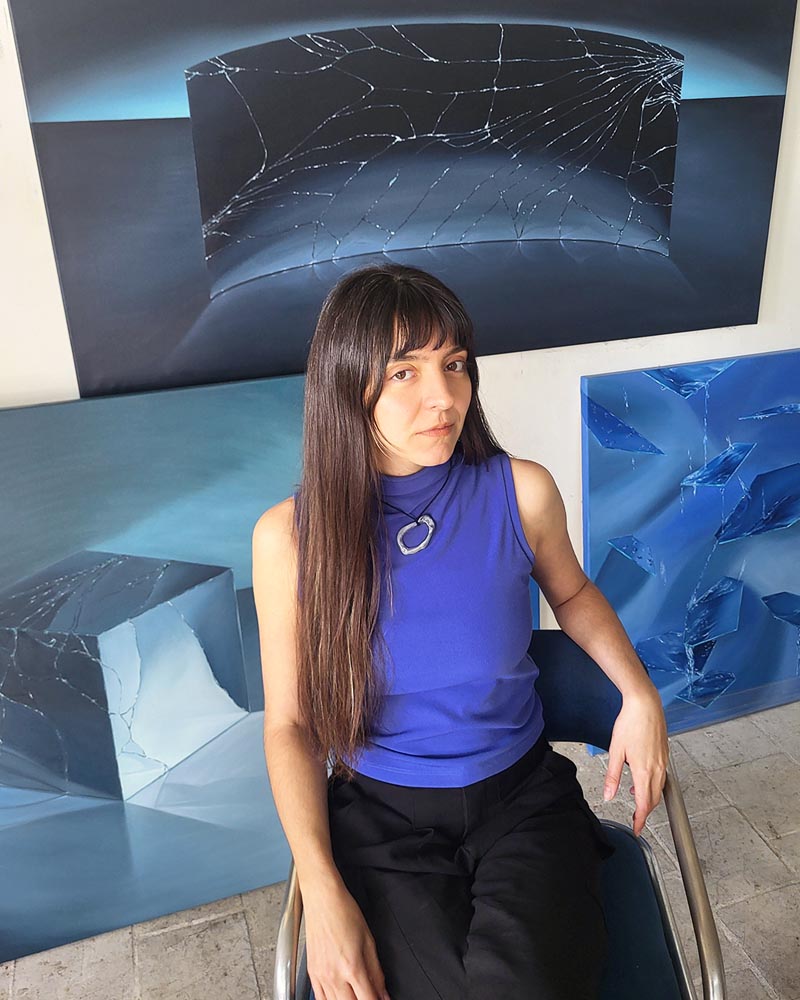
Agustina Fuster
Tell us about yourself, what's your background?
I come from the outskirts of the city and grew up in a non-artist family. However, my parents recognized my ability in painting and drawing early on, and they encouraged me to attend a painting workshop from a very young age. Over time, through different influences in my life—my studies in graphic design, as well as exchanges with friends and colleagues—I began to understand that each artist gradually develops a personal visual language. I later moved to the city of Buenos Aires, which deeply inspired me and opened my mind to new possibilities.
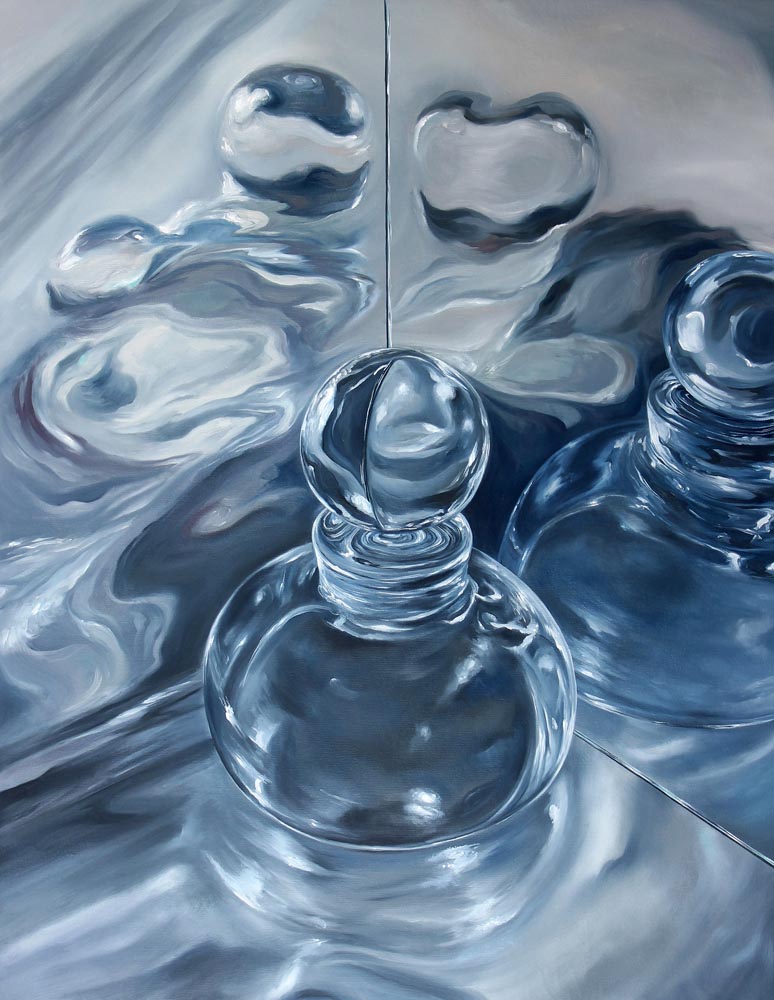
Background and figure, 2024. Oil on canvas, 90 x 70 cm.
A very vibrant place where many artistic disciplines coexist and everything seems to be happening simultaneously. Reading also played a major role in my development. I was strongly influenced by magical realism, where everyday life is often intertwined with subtle elements of magic, and where reality shifts through small thresholds or turning points. Nature, observation, and attentiveness to detail are also key influences in my work. More recently, meditation has become an important part of my practice—not only as a mental state that supports production, but also as a physical and bodily experience that informs how I approach making work and daily life.
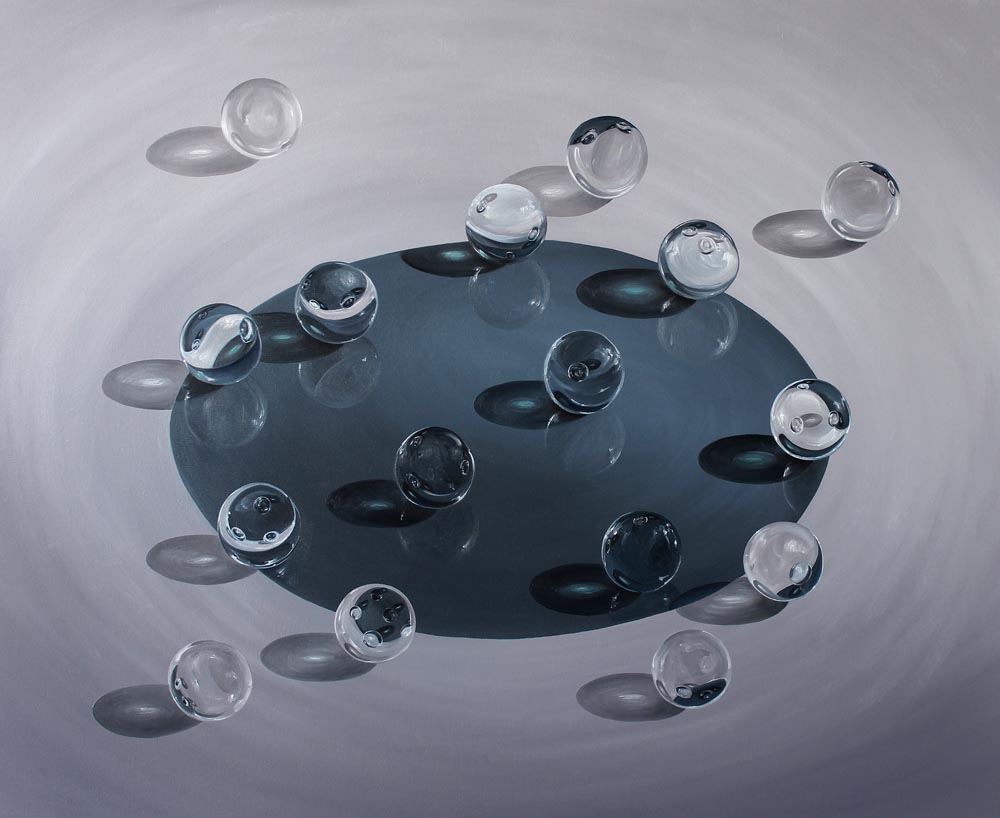
Fifty-three spheres, 2025. Oil on canvas, 90 x 110 cm.
“I was strongly influenced by magical realism, where everyday life is often intertwined with subtle elements of magic, and where reality shifts through small thresholds or turning points. Nature, observation, and attentiveness to detail are also key influences in my work."
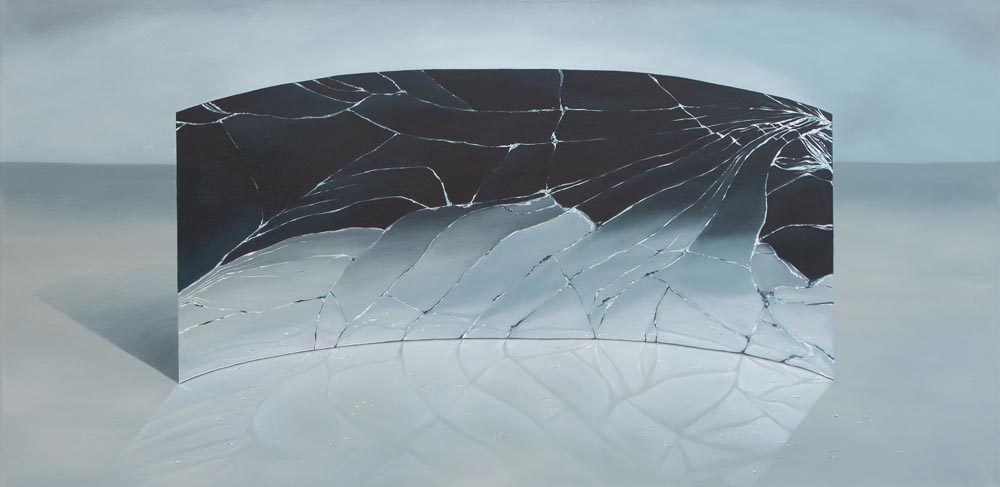
Serie The inner landscape 1, 2024. Oil on canvas, 70 x 140 cm.
What are you currently working on and where did the inspiration for it come from?
My current research emerges from my own experience of the mind and the body, and from the desire to somehow reconfigure that experience into images. I am interested in working with more abstract concepts, such as the expansion of consciousness, the fragmentation of the mind, and the possibility of accessing other, invisible layers of meaning. These ideas come from readings, personal experiences, active listening and a deep attention to my own bodily experience. I seek to transform all of this into images through the use of mirrors, creating an analogy between the inner and the outer world. Fragmentation becomes a way to speak about multiple versions of the self, while water appears as an alchemical element that allows for the transmutation of states.
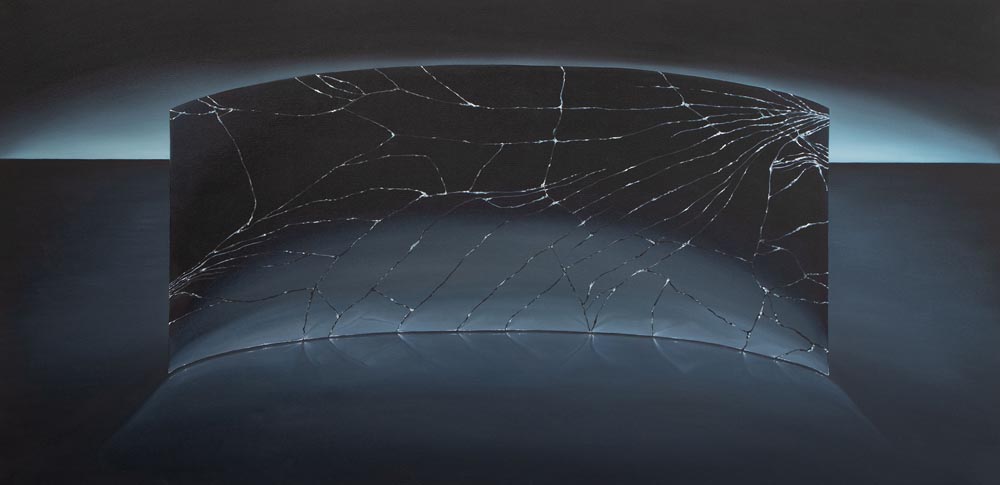
Serie The inner landscape 2, 2024. Oil on canvas, 70 x 140 cm.
Innovation does not only happen in the field of technology — it occurs everyday in a creative practice. What do you do for inspiration?
For some time now, I have been asking myself what the word creativity means to me. As a visual artist, my work involves translating ideas into images, and because of that, I find it essential to take care of the spaces that nurture and make the emergence of these ideas possible. At this moment, creativity means allowing myself those spaces through meditation—spaces of inner and outer contemplation, the possibility of inhabiting emptiness and becoming an observer. In a way, it is about transforming all of this into images. Caring for that space, sustaining it, is creativity for me. I also think of it as an analogy to the act of painting itself: entering another state, another frequency.
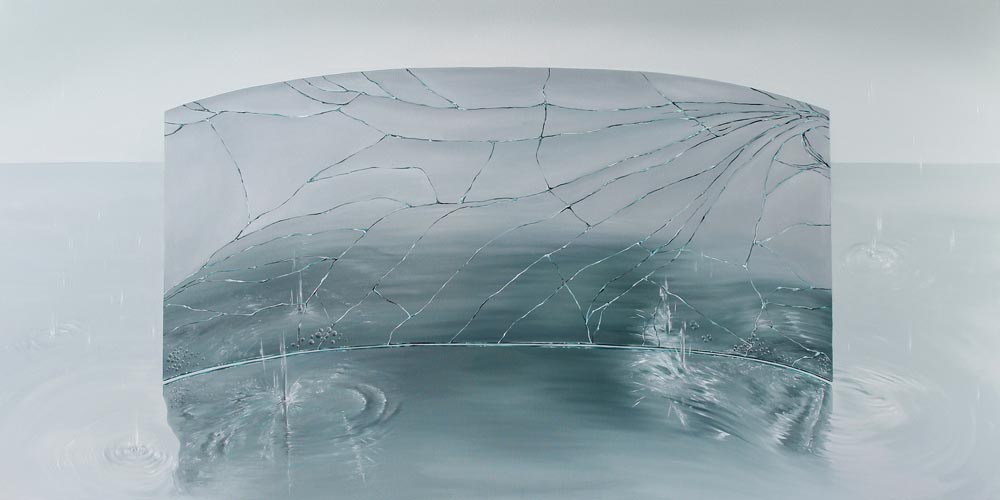
Serie The inner landscape 3, 2024. Oil on canvas, 70 x 140 cm.
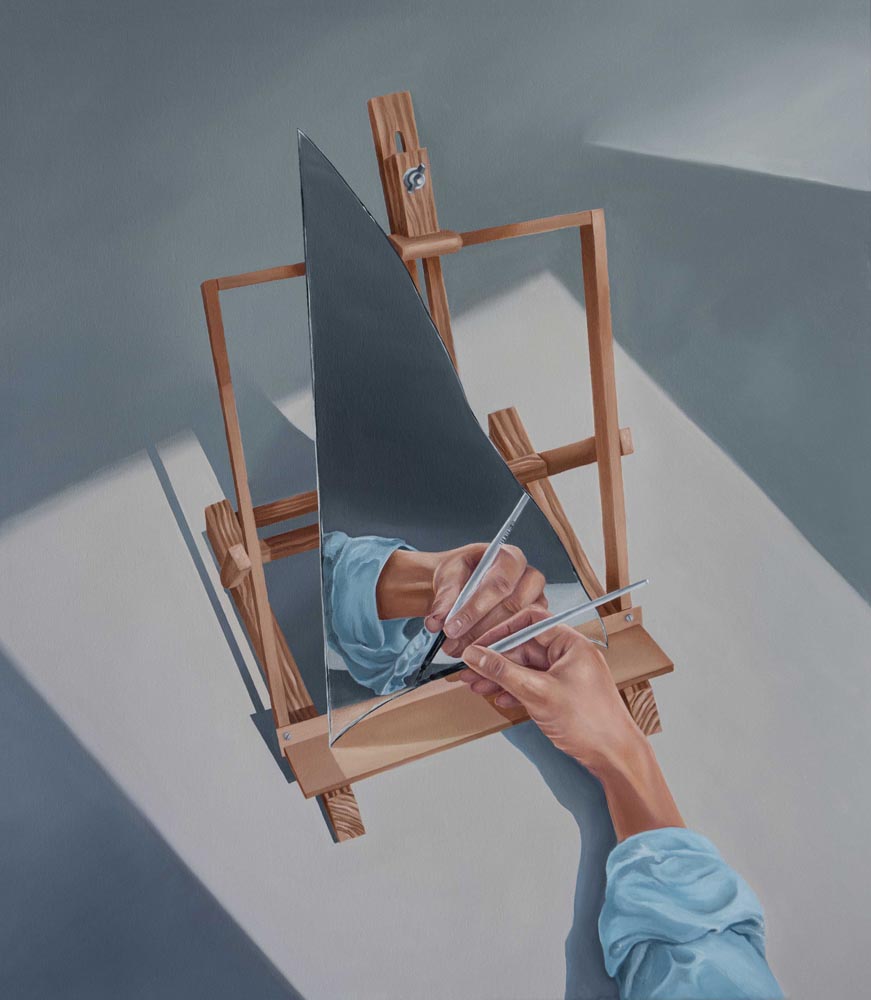
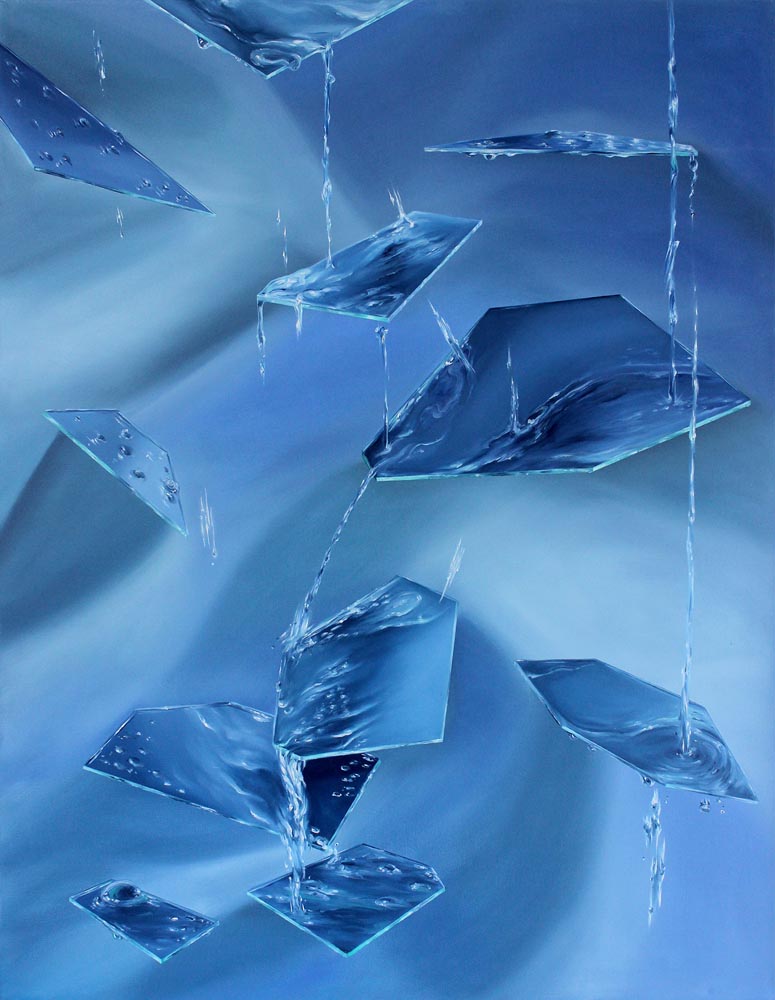
Left: The metaphor, 2024. Oil on canvas, 80x70cm. Right: The principles of matter, 2025. Oil on canvas, 90 x 70 cm.
Where do ideas start for you?
For me, ideas begin with observation. I work from the objects that surround me and from the environments I inhabit, whether they are everyday objects or more recent, elements of nature. Spending time with these objects, and imagining possible compositions and relationships between them. Conceptually, ideas emerge from this process, almost like a puzzle that gradually comes together as I move forward. Observation is the key element that connects everything.
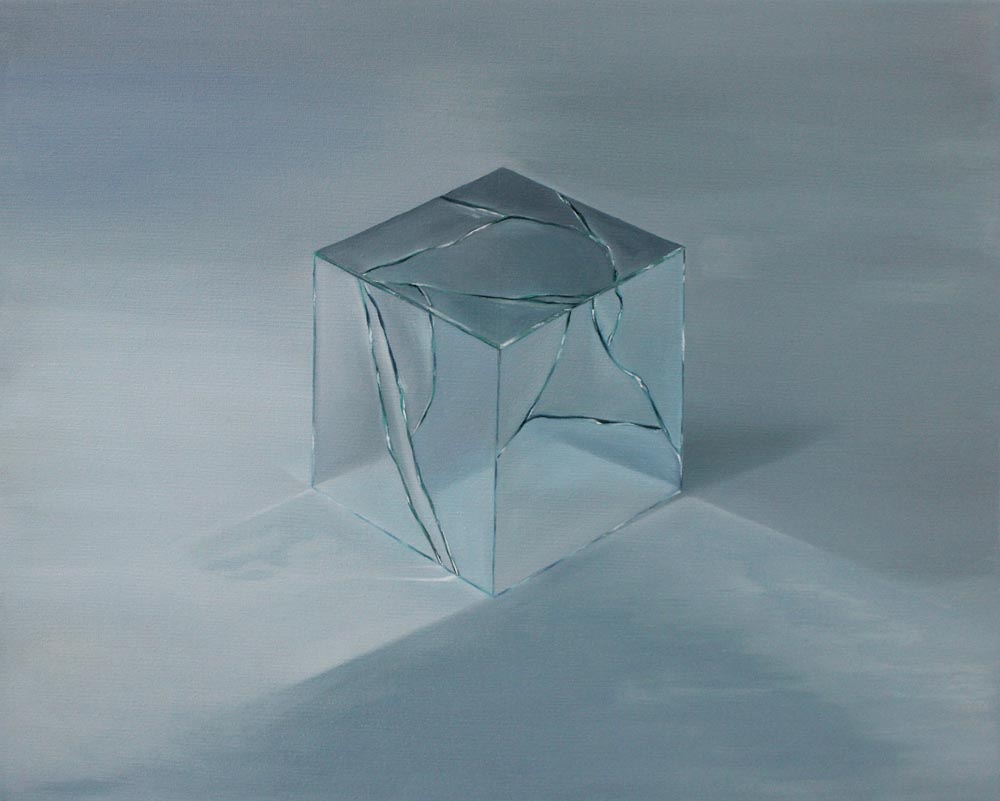
The fragile illusion, 2025. Oil on canvas, 40 x 50 cm.
How do you make your work, does it start with a sketch?
My work begins with photography, since my paintings have a realistic touch and require real references to understand how reflections operate, how images multiply, and how light hits and is projected onto different transparent surfaces, water, and other reflective materials. Using photographs that I take myself, I compose my scenes, which I later translate into the language of painting,
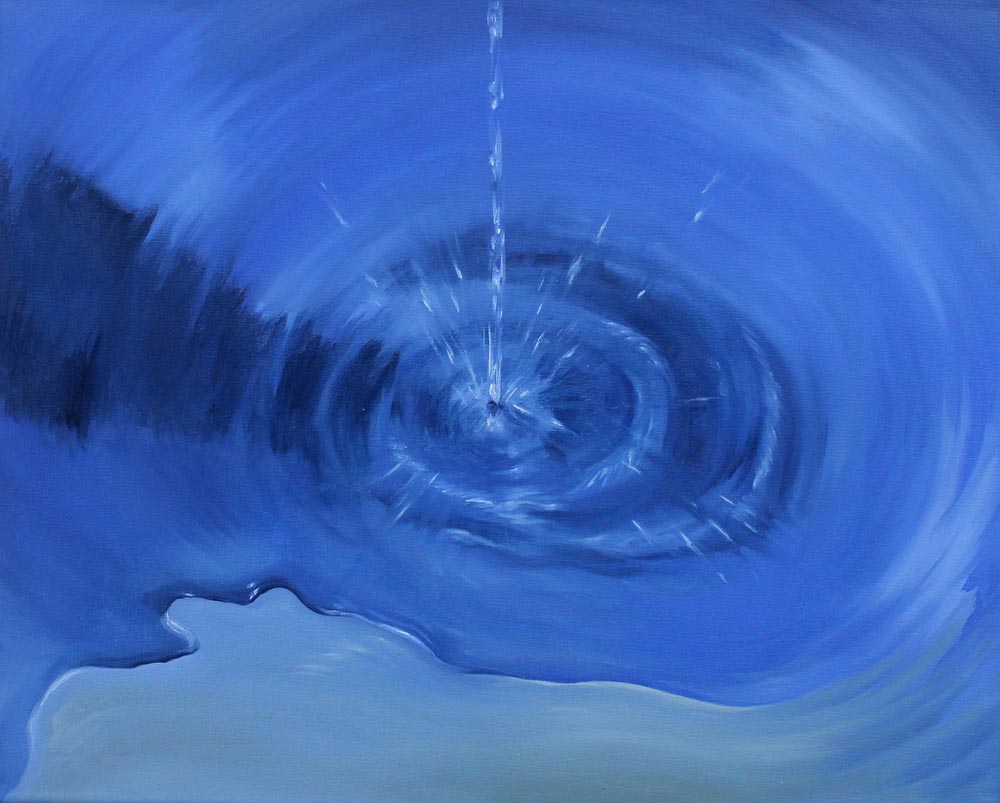
Cause and effect, 2025. Oil on canvas, 40 X 50 cm.
Many artists live by their routines, what does that look like for you?
The time of day I enjoy the most is the morning. I really need to have a routine of exercise and meditation beforehand in order to enter a kind of flow when I start working. On the days when I can do this, I feel my best. After supporting my practice in this way, I like to arrive at the studio and sit down to produce.
For that, I need to coexist with the paintings, the canvases, my mirrors—everything that is already present, happening, and waiting for that moment when I sit down to work. Once the whole setup is in place, I enter very quickly, and that is what I enjoy the most.
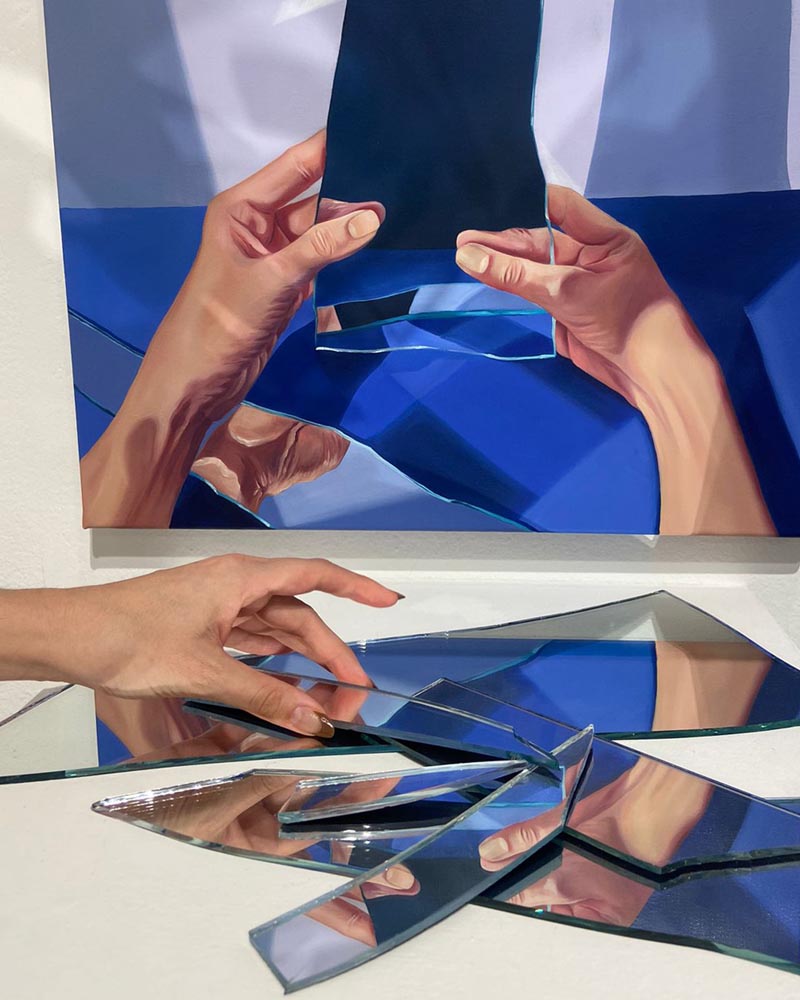
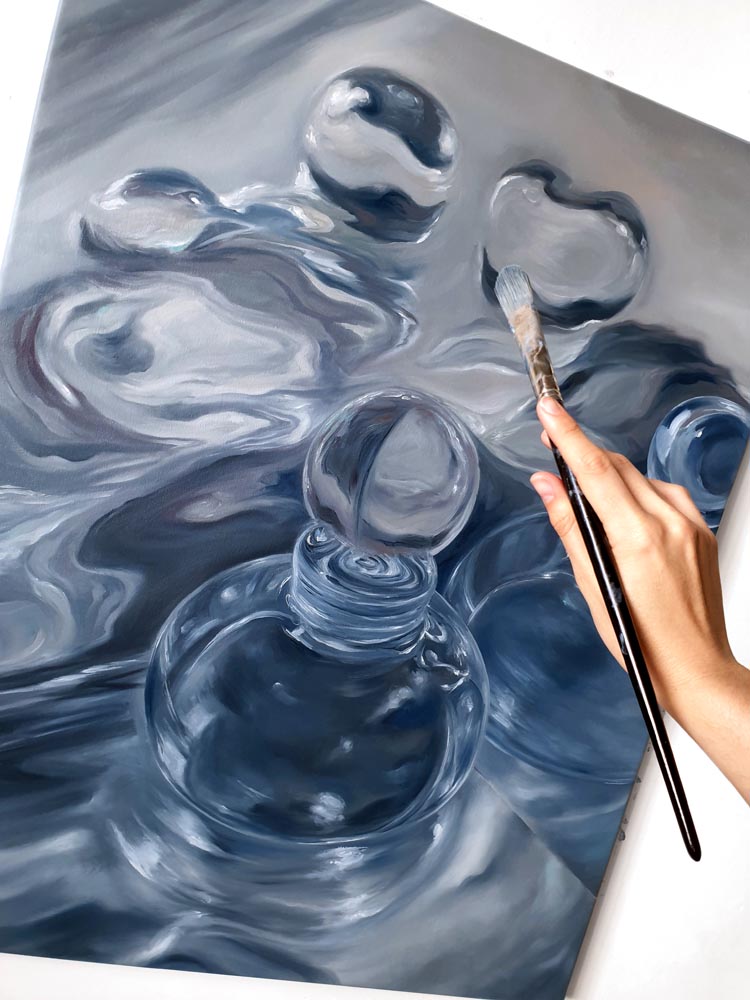
Left: Broken mirrors with painting; Right: Work in progess
Who are your biggest influences?
At this moment, I am deeply influenced by women painters such as Remedios Varo, Leonora Carrington, Frida Kahlo, and Kay Sage. There is something in the magical realism that runs through their paintings that resonates with me completely.
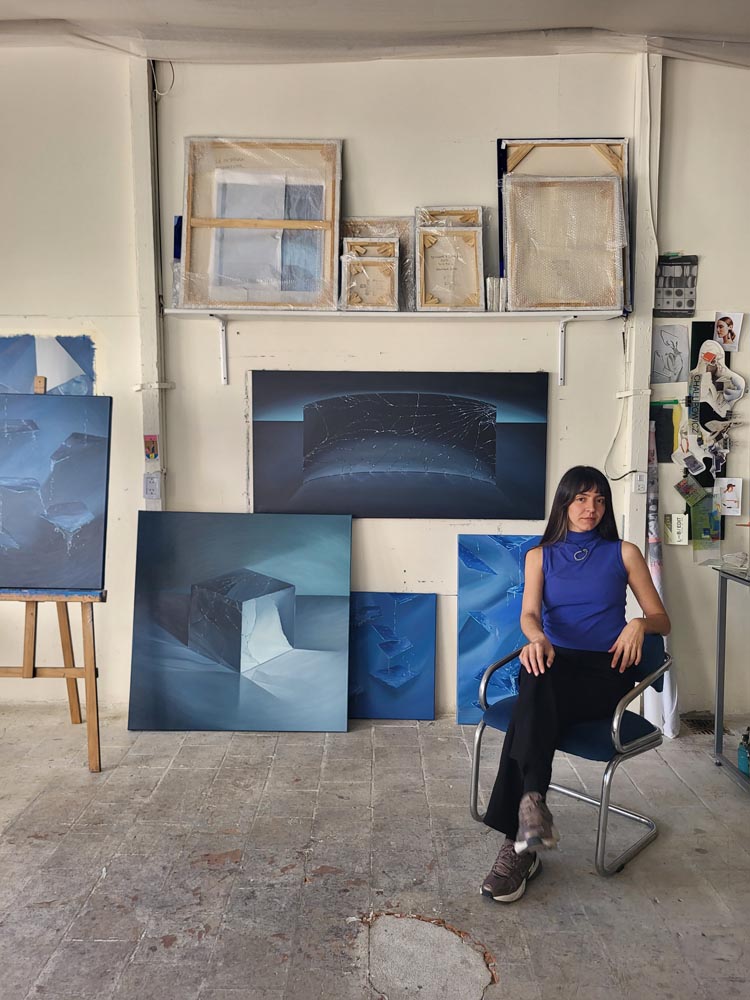
Portrait of the artist
I also feel strongly influenced by a recent trip to Mexico City, where I took part in an artist residency. Mexico, as the country that welcomed many of these artists and where they developed some of their most important bodies of work, has had a profound impact on me. I feel deeply influenced by that scene, by its magical atmosphere, and by its way of understanding life as a duality—something I seek to translate into my own work.
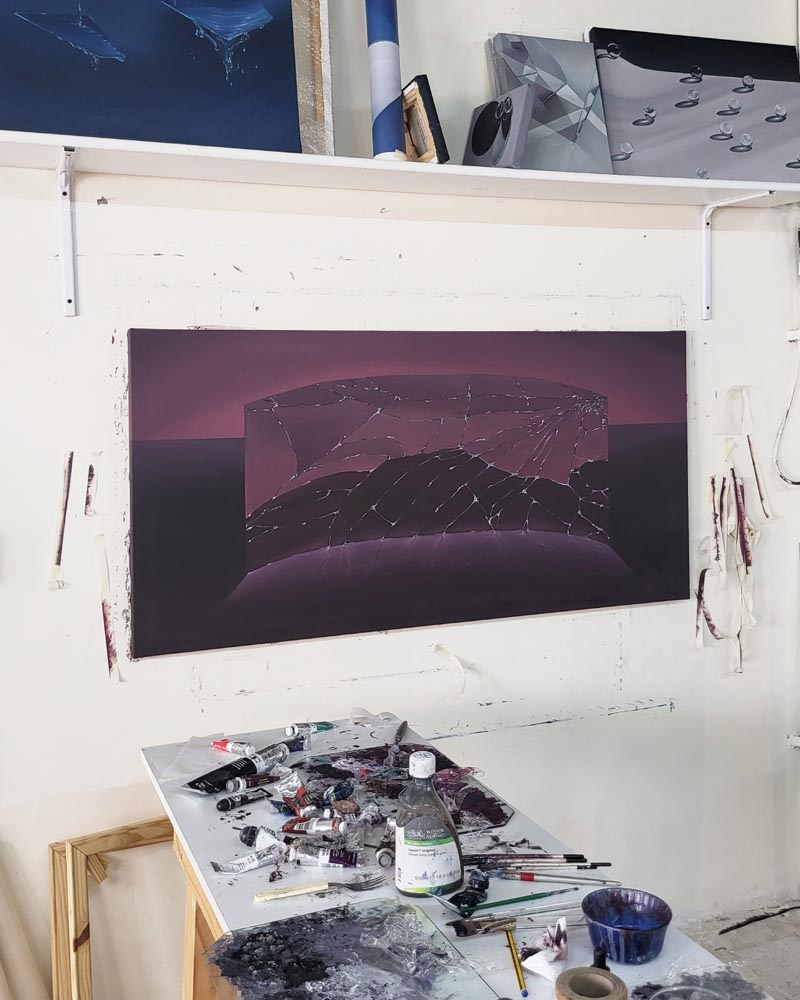
Work in progress, studio view
What is the best piece of advice you’ve been given?
"Patience". Understanding that I didn’t need to rush my creative process. Realizing this allowed my work to evolve at its own pace, and opportunities began to emerge naturally as the work developed. Patience does not mean being passive or disengaged; it means continuing to search, to commit, and to work, while accepting that each project has its own timeline. This understanding helped me relax and focus deeply on production, without constantly anticipating a specific outcome.
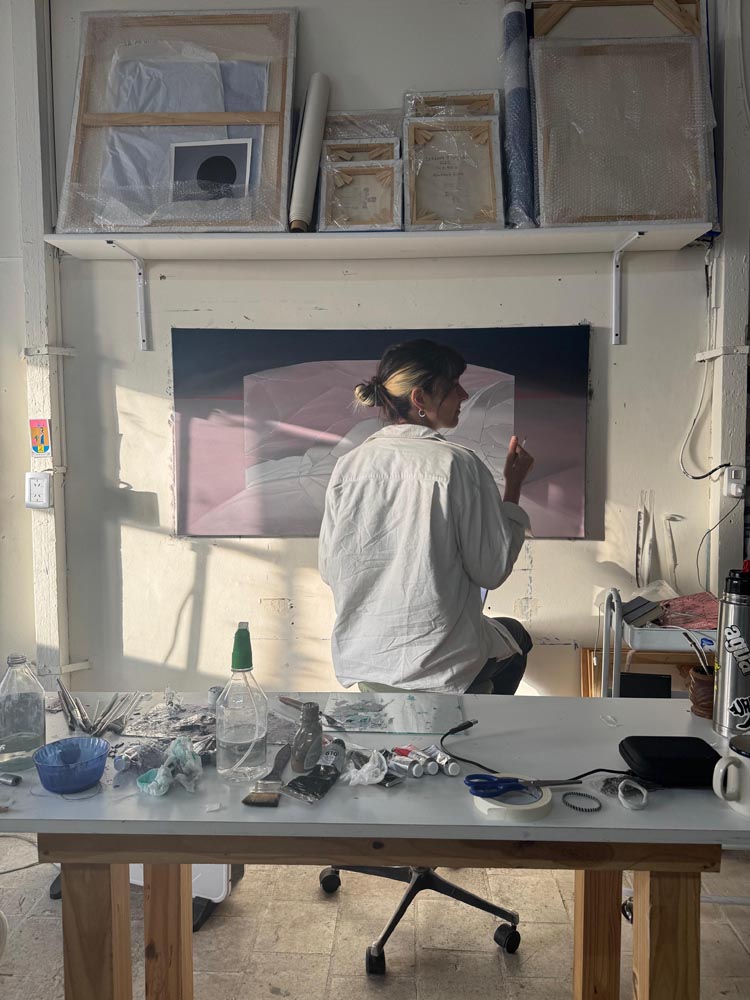
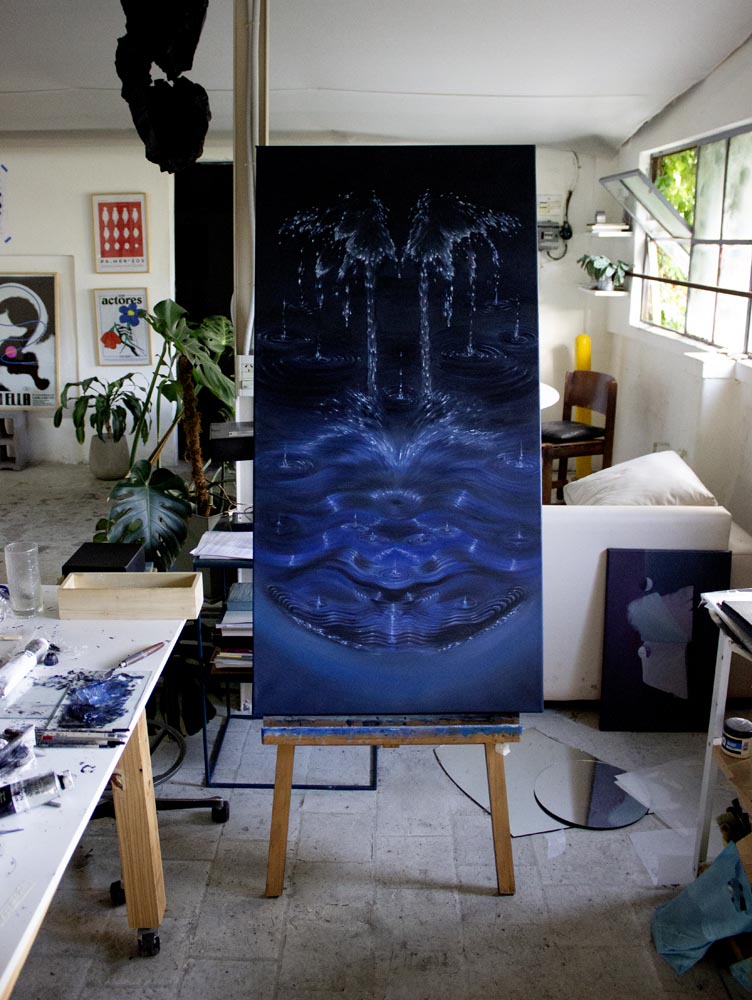
In the studio
What is the best advice you would give to other artists?
The advice I could give is to maintain an active gaze and a mind in a state of constant observation. Ideas have strange ways of appearing, and I believe the artist’s task is to remain permeable to those signals, which can later be transformed into ideas and potential works.
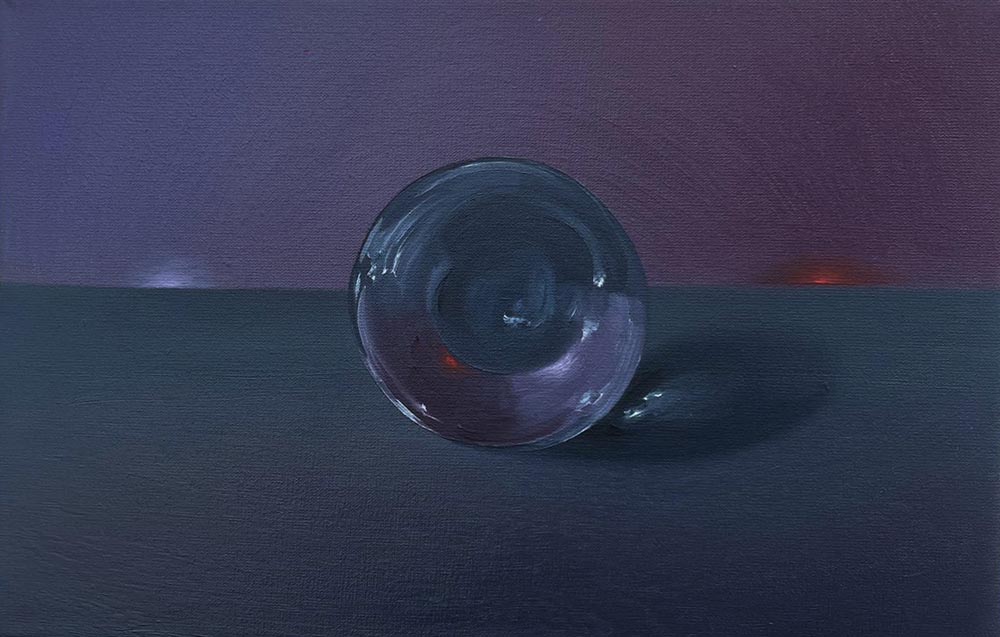
Two sunrises, 2025. Oil on canvas, 20x30cm.
Stay up to date with Agustina Fuster
Website agustinafuster.com
Instagram @agustinafuster