Artist based in Richmond, VA
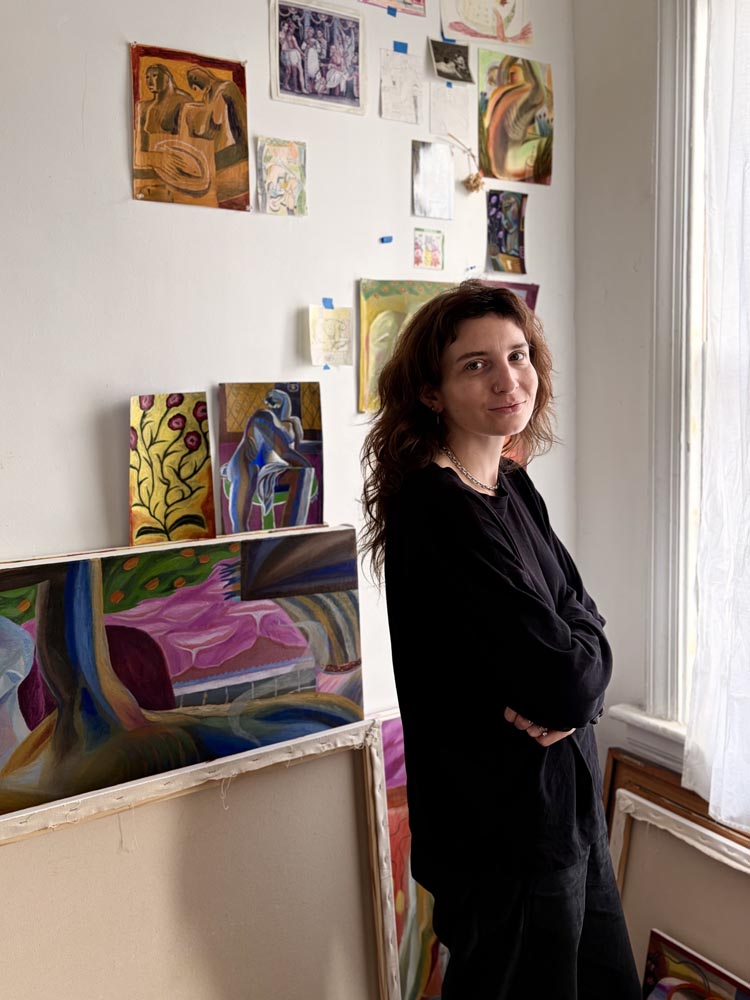
Olivia Sherman, portrait of the artist
Tell us about yourself, what's your background?
I am a painter currently based in Richmond, Virginia. I was born in New York City but only lived there for a few years, my family relocated often when I was a kid. We moved to Chicago, then Georgia, then just outside Philadelphia, the list goes on. Moving so much made the concept of a home base feel pretty fluid rather than geographical. For as long as I can remember I’ve made objects and been drawn to storytelling and myth, which eventually led me to double-major in classics and painting in college.
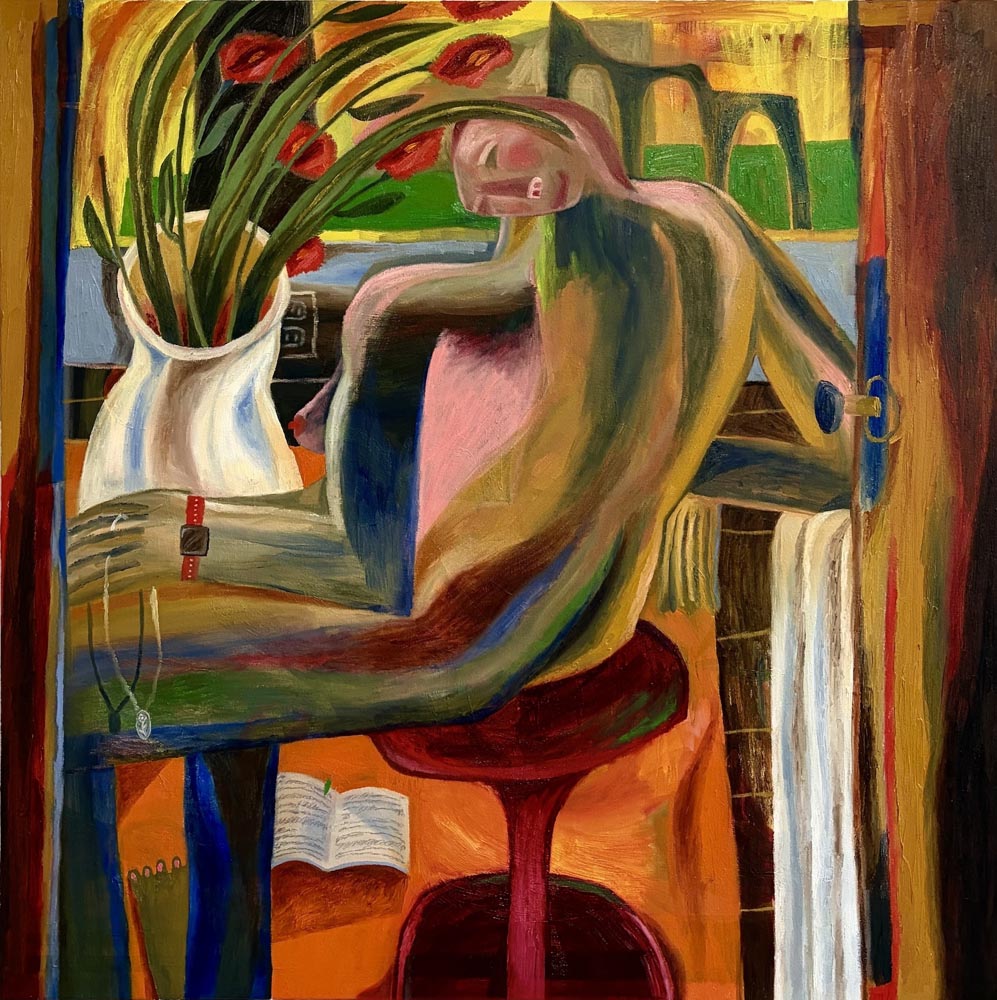
A Stranger, 2026, oil, charcoal, graphite on canvas, 40 x 40 inches
It was only during my final years of undergrad that I really fell in love with painting. I was fortunate to earn a research grant to travel to Rome, Pompeii, and Florence, where I was struck by the uncanny tension of seeing two-thousand-year-old frescoes and sculptures sitting alongside modern advertisements, tour buses, and selfie sticks. It felt like a warped symbiotic relationship and I made so many notes and drawings while I was there. A few years later, I went to graduate school at Tyler School of Art in Philadelphia.
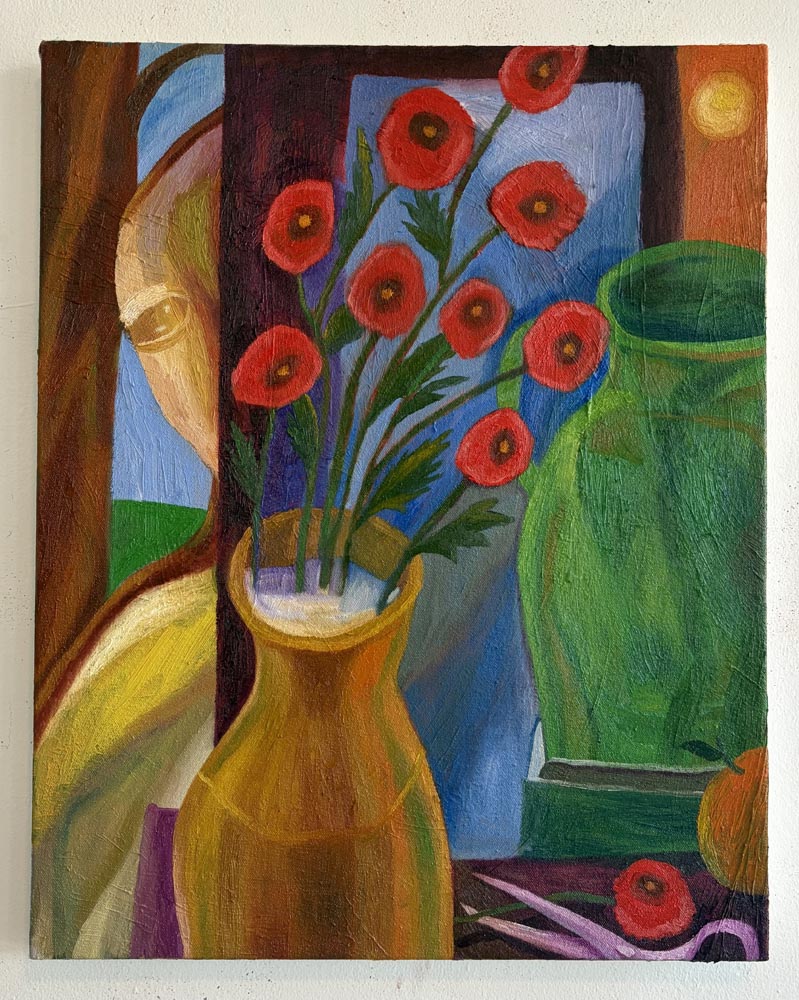
Easy to Forget, 2026, oil on canvas, 20 x 16 inches
“I’m working on a new body of large-scale figurative paintings that explore the tension between belonging, alienation, and ritual. These works reflect on our relationship with the past and the absurdities of navigating the modern world.”
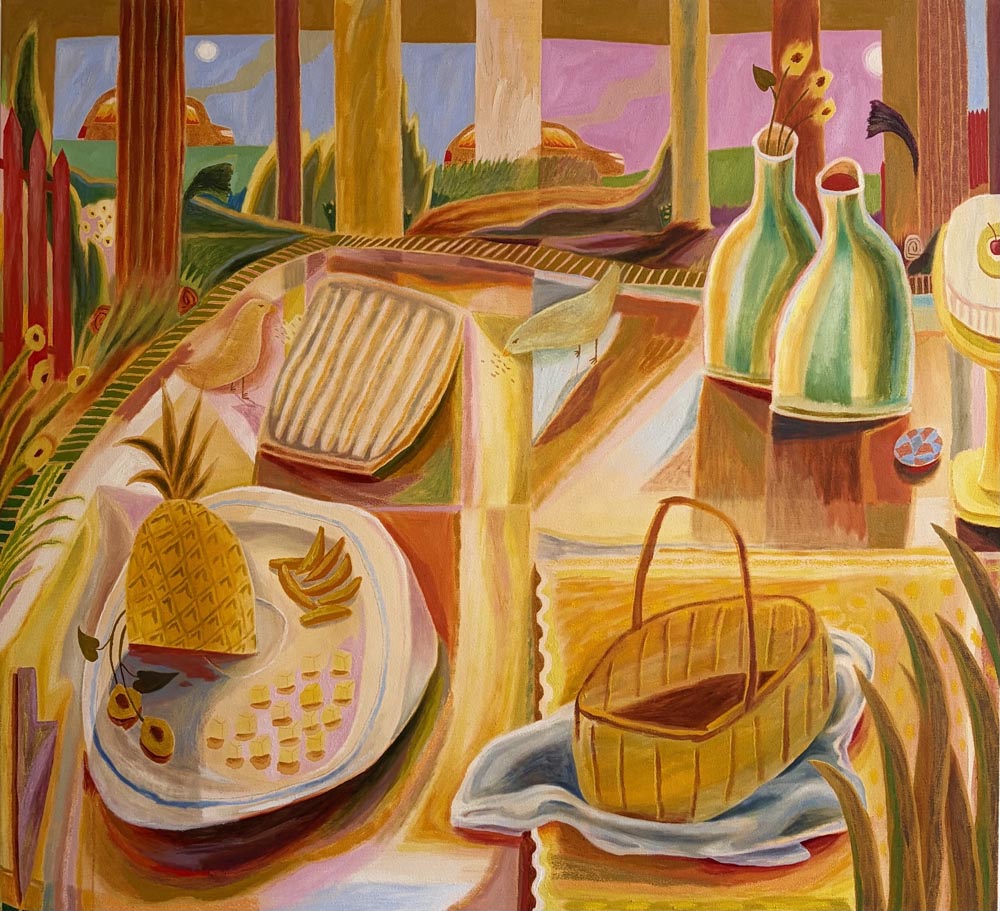
Foursquare, 2026, oil, flashe, acrylic, pastel, colored pencil on canvas, 44 x 48 inches
What are you currently working on and where did the inspiration for it come from?
Right now, I’m working on a new body of large-scale figurative paintings that explore the tension between belonging, alienation, and ritual. These works reflect on our relationship with the past and the absurdities of navigating the modern world. The figures are loosely based on ancient sculptures, slumped or contorted in response to areas of friction or planes of flat color. I’ve only recently returned to working from statuary and have been experimenting with how to incorporate them successfully, which I’m remembering is a fine line to walk.
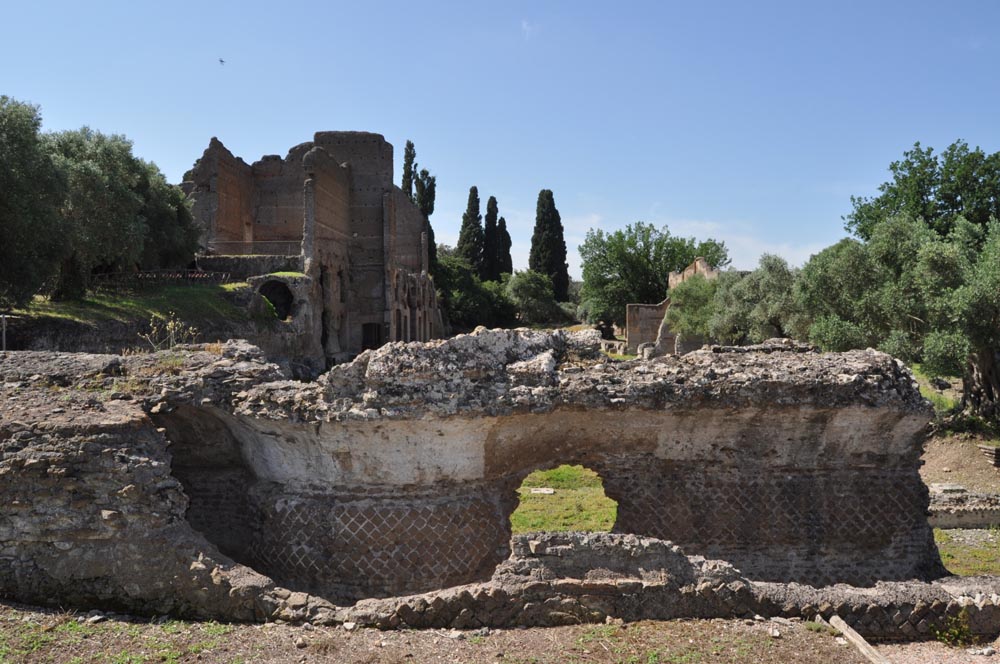
Hadrian's Villa
Right now, I’m particularly excited about the areas of visual discord between ambiguous, unsettled zones within the figure and more graphic pictorial elements. I keep coming back to still life motifs—some inspired by Roman mosaics and frescoes, and others pulled from daily life, from Apple watches and electrical cords to vessels and painted toenails. I’ve recently been mixing batches of color looking at oxidized bronze patinas. I tend to work quickly, so it’s important for me to have colors pre-mixed so I don’t use too much paint straight from the tube.
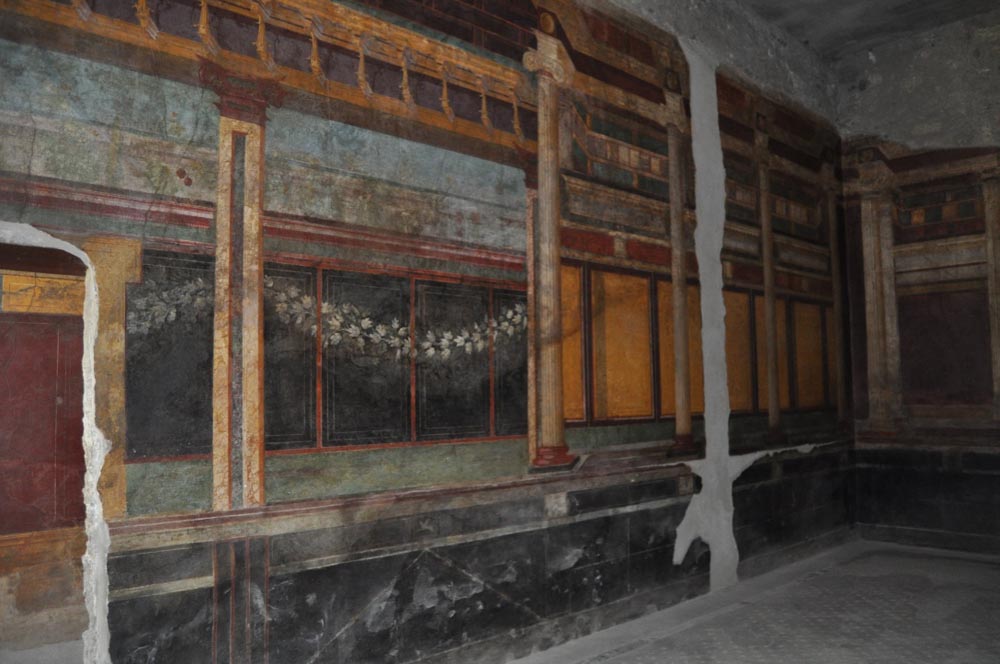
Villa of the Mysteries, Pompeii
Innovation does not only happen in the field of technology, where do you find inspiration?
I find inspiration in the friction I often feel between moving through the world and my desire to connect with others. While my paintings often draw on a historical framework, they are ultimately responses to my own life and become spaces where I try to understand society and my own tendencies.
I also collect mundane, discarded items, from can tabs and rocks to cut up receipts and product labels. I sort them within small boxes in the studio. They feel like artifacts in a way, occasionally finding their way into my paintings. Beyond that, I look at a lot of old art history books and am always fascinated by the varying ways people have created objects across time.
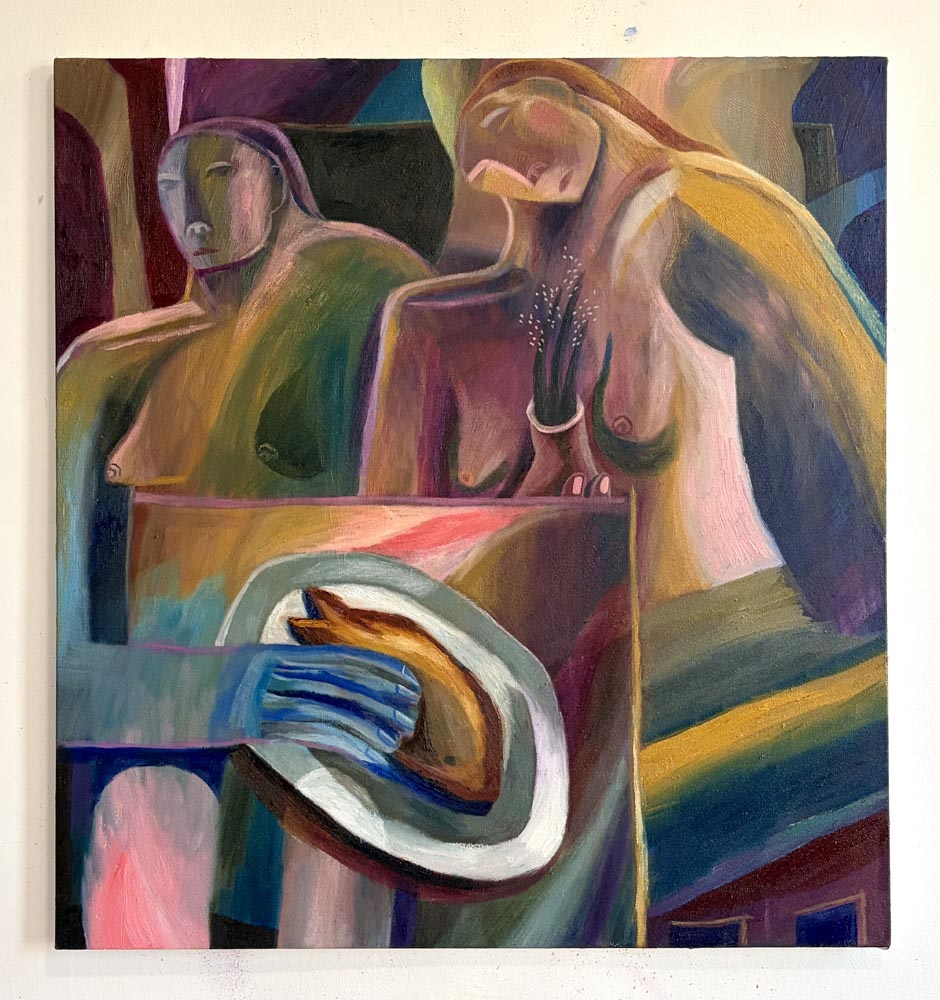
Untitled, 2026, oil on canvas, 32 x 30 inches
Where do ideas start for you?
My studio practice and daily life feel very enmeshed, though the most exciting ideas occur from unexpected moments when I’m painting. Day-to-day, I work part-time cataloguing and writing press releases for an auction house. It’s very analytical and research-based and I get to look at art for hours every day. The detail-oriented nature of the job is a nice contrast from my studio practice, but if I come across something I love or have an idea when I’m working I’ll add it to the notes app on my phone.
How do you make your work, does it start with a sketch?
I usually begin with several small, doodle-like pencil sketches to map out spatial organization or relationships between figures. I’ve kept a meticulous sketchbook practice for most of my life, almost like a diary. The figures and objects I paint originate from this practice and have essentially grown up with me.
My canvases usually begin abstractly, and I’ll block in shapes or compositional zones to establish a push and pull between planes. I often paint over old or unfinished work and try to make room for unexpected leftover textures or ghost shapes to come through into the new piece.
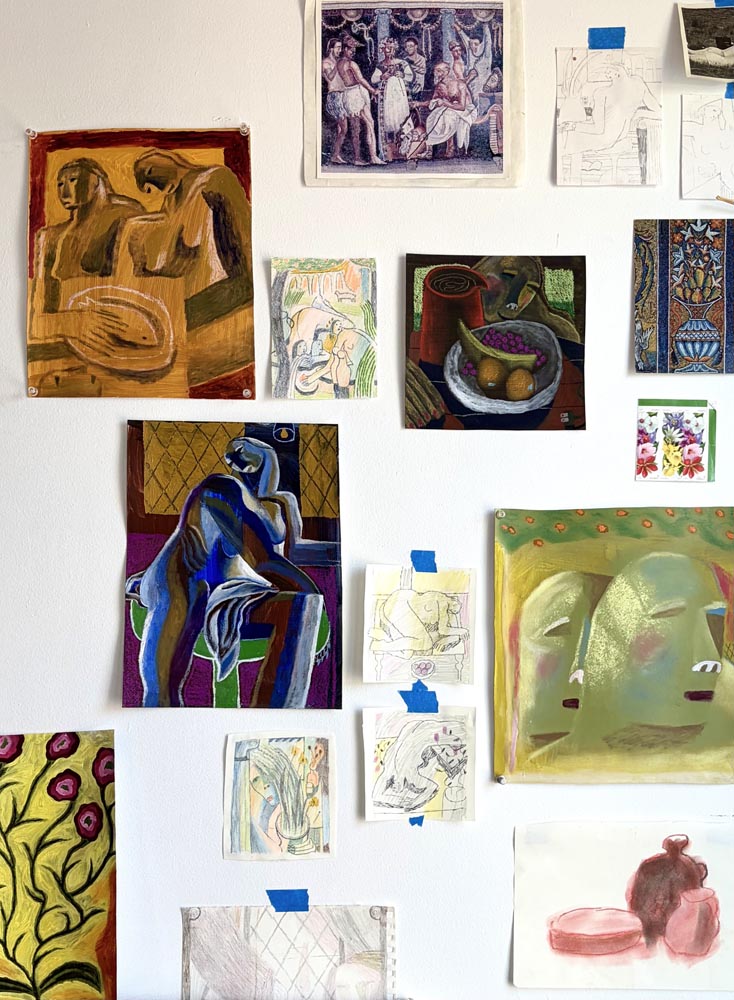
Left: Studio wall
Many artists live by their routines and rituals, what does yours look like?
I keep a home studio and almost always work in the mornings. I typically just jump right into what I’m working on but sometimes will start with drawing or writing. I have a habit of listening to the same song on repeat for days at a time when I’m working, maybe to hold onto a specific feeling. My music taste is all over the place but once a song stops hitting for me, I’ll move on. My two cats are my studio companions each morning. They love to sit and watch the birds on the powerlines when I open up the windows.
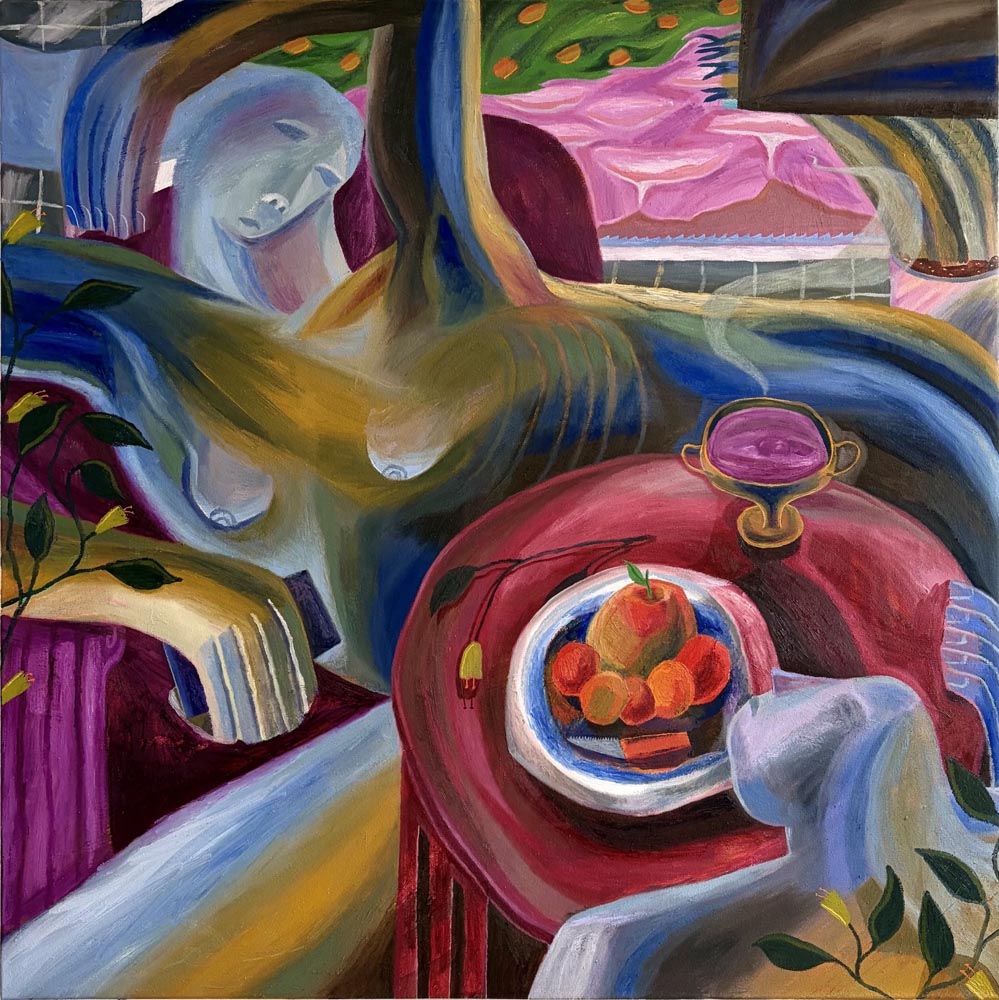
Blue Light, 2026, oil on canvas, 40 x 40 inches
Who are your biggest influences?
I look at Bob Thompson a lot, he’s definitely one of my favorite artists. I love his color sensibility and the way his compositions lock together around his subjects. Also, Edward Hicks, William Blake, David Hockney, Florine Stettheimer, Roman Third-Style and Etruscan wall paintings, Blood on the Tracks by Bob Dylan, Camus, and old cartoons and video games.
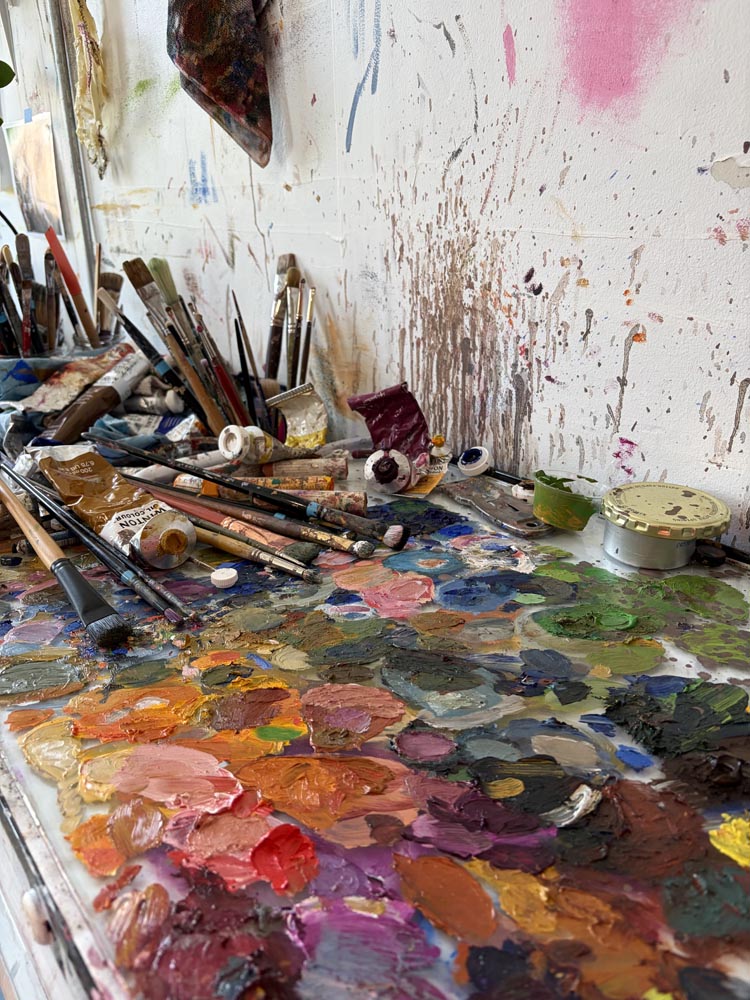
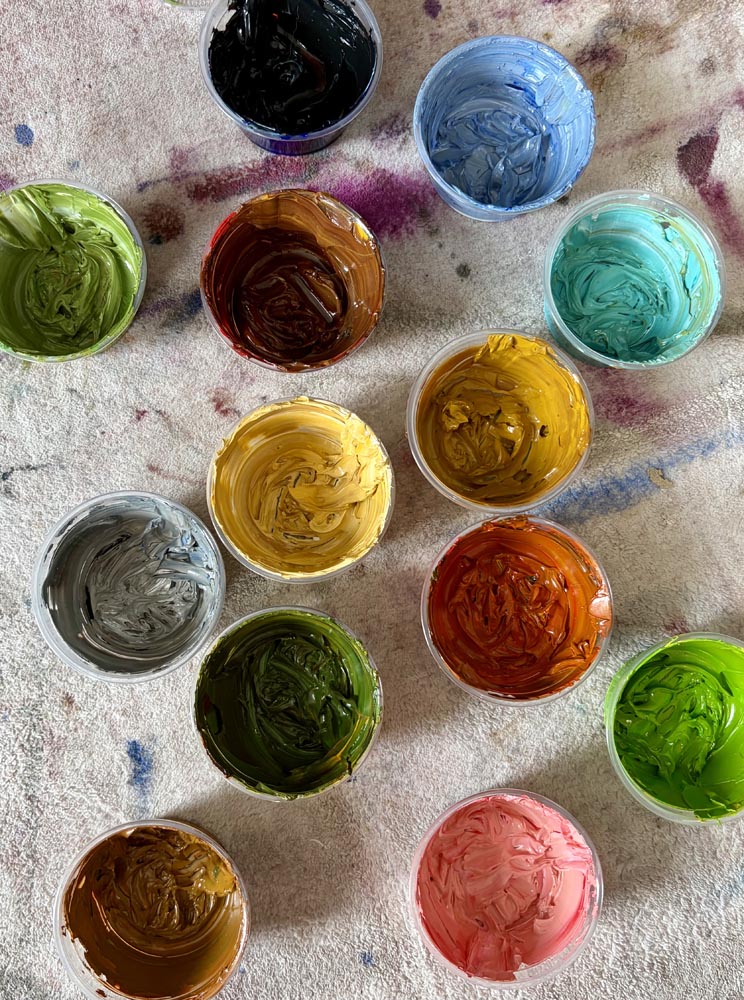
Left: Palette. Right: Mixing patinas
Are there books or films that are an important source of inspiration?
Byung-Chul Han’s writing has shaped my practice and thoughts on society and technology in a big way. Also, Gilles Deleuze’s The Logic of Sensation has stayed with me since college and really shifted my perspective as a painter. I have probably read it 20 times and my copy is falling apart and wildly marked up at this point. I’ve recently been looking a lot at the book Women Artists of Russia’s New Age, there are some great paintings in there.
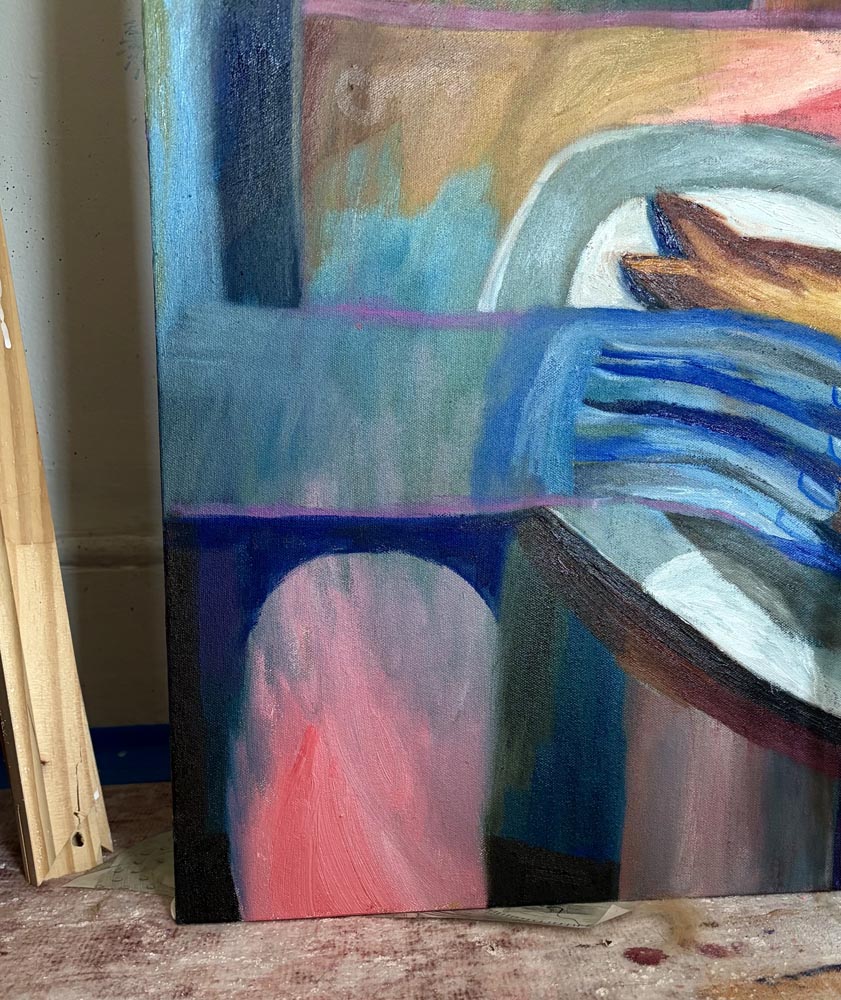
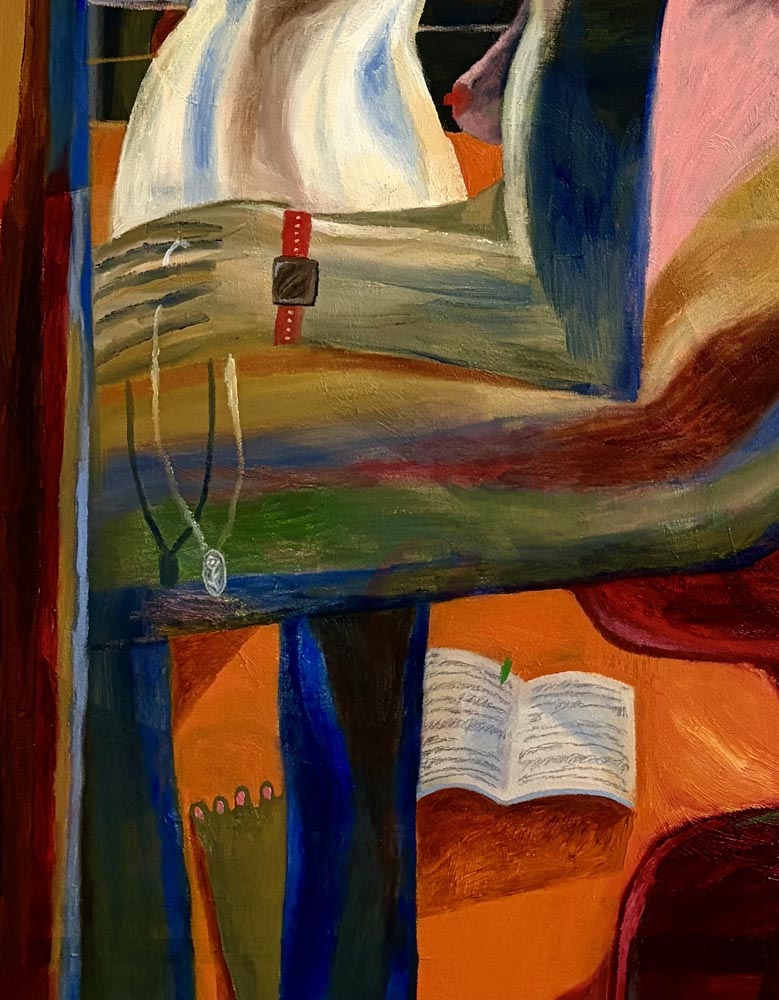
Left: Detail (Untitled). Right: 7 Detail (A Stranger)
What’s the best piece of advice you’ve been given?
Keep learning and keep pushing the work. And focus on your craft without getting too caught up in all the noise is something my husband recently said.
What is the best advice you would give to other artists?
Get into the studio as much as possible without burning yourself out. It’s also important not to get too comfortable – I find that my best work always passes through these awkward middle stages right before something clicks.
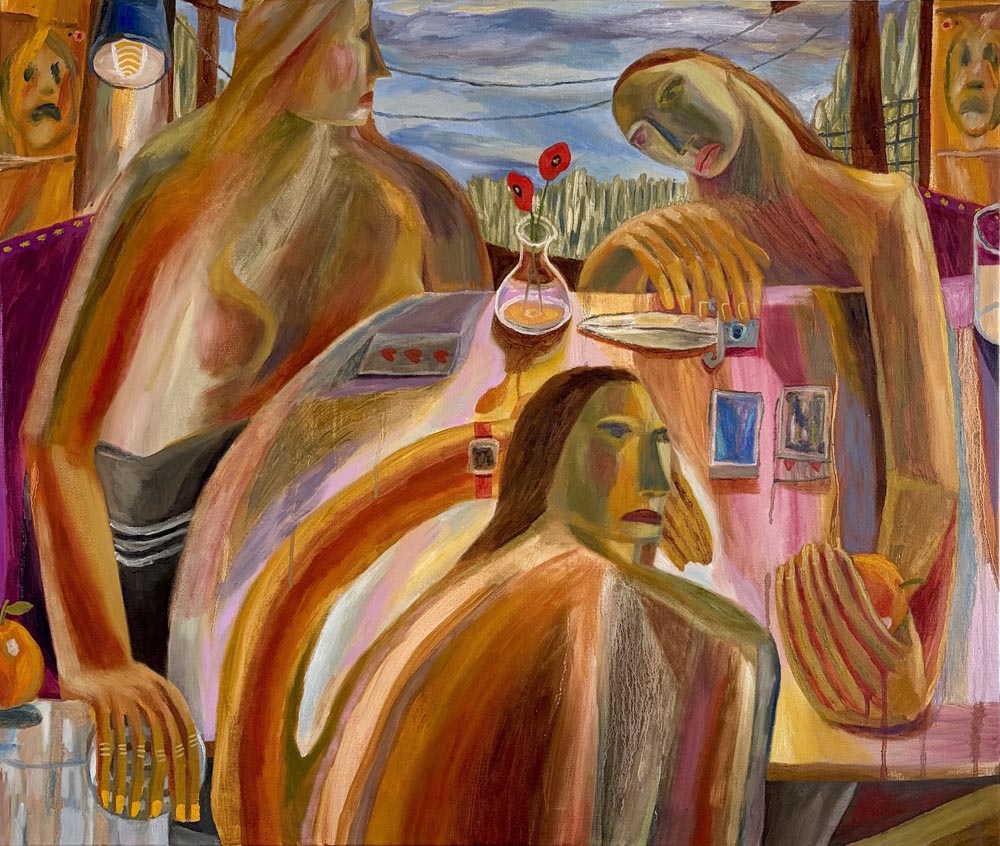
Rummy / Keeping Time, 2026 oil, charcoal, colored pencil, graphite on canvas 34 x 40 inches
Stay up to date with Olivia Sherman
Website oliviashermanstudio.com
Instagram @oliviashermanana