Artist based in Aomori, Japan (back in NY 2027)
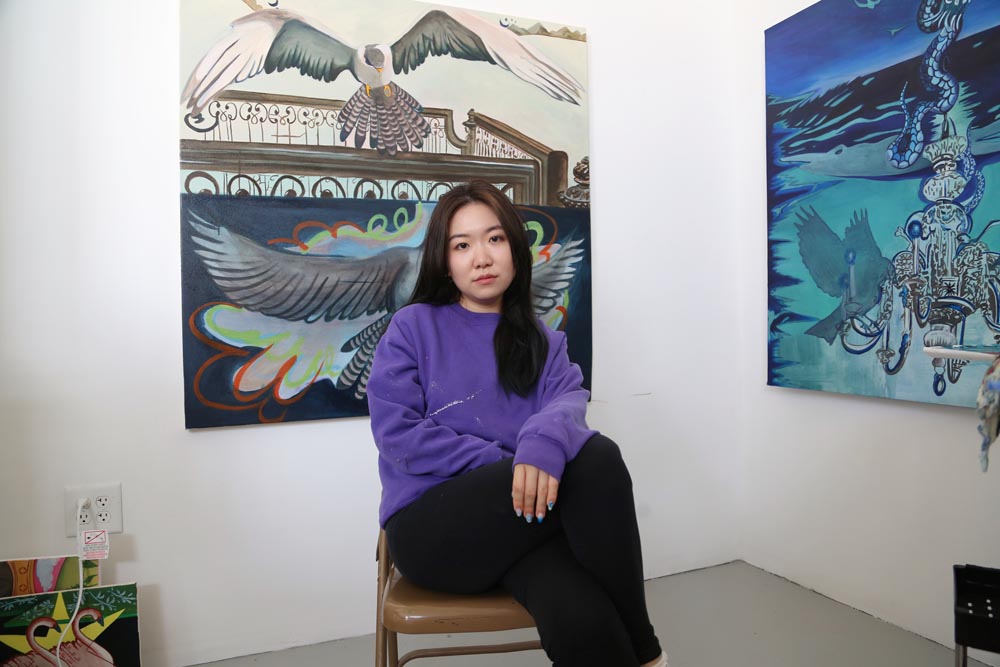
Jingqi Steinhiser
Tell us about yourself, what's your background?
I’m a multidisciplinary visual artist who grew up in Mongolia and currently lives and works in the United States. I’m currently in a long-term residency and research trip in Japan. I received a BFA from the School of the Art Institute of Chicago in 2020 and MFA from the Rhode Island School of Design in 2022. Shaped by movement across cultural, linguistic, and geographic borders, my practice explores migration, memory, and the fragmented formation of identity.
My paintings construct imagined, surreal landscapes that evoke both disorientation and nostalgia. Drawing from mythology, folklore, and historical symbols, I create psychological shelters, spaces for pause and reflection within conditions of cultural in-betweenness. Figures often appear suspended between belonging and displacement, reflecting the instability of identity in a globalized world.
I began making art at a very early age. My mom still keeps a small animated drawing of a rabbit I made when I was three, which is probably the first time I remember wanting to make a mark. While that instinct stayed with me growing up, it wasn’t until high school that I began to seriously pursue painting and consider art as a professional path.
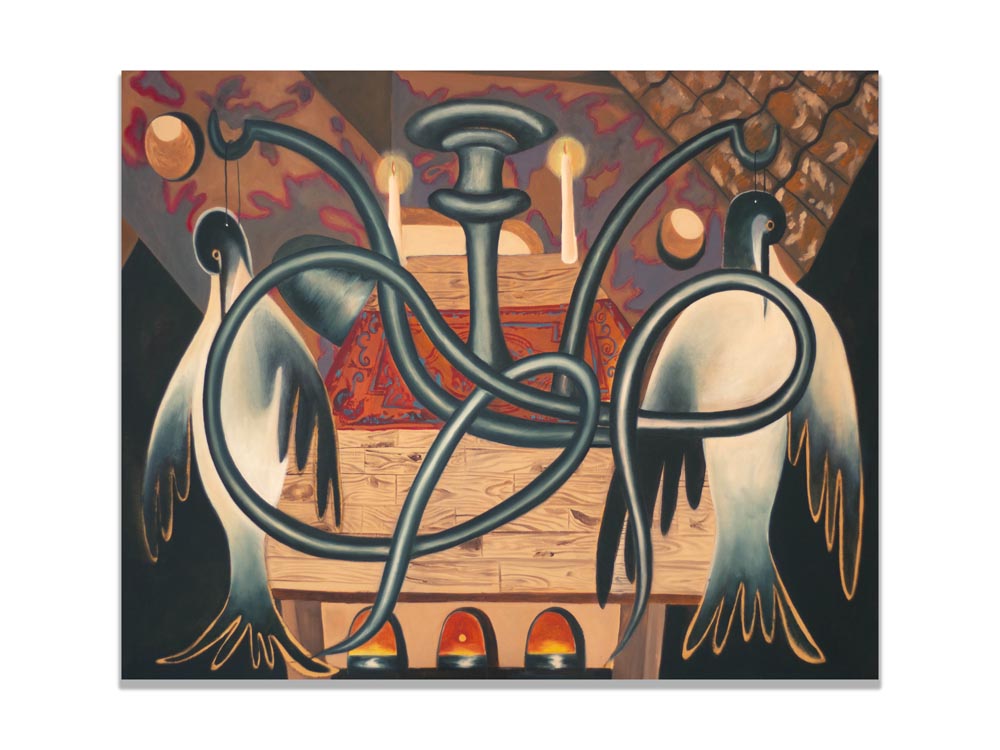
Neither Sight Nor Sound, oil on linen, 40 × 30 inches, 2026
“My paintings bring together these two worlds: the raw, instinctual presence of animals and the constructed, often theatrical quality of staged environments. I aim for the animals to feel natural and alive, while the spaces they inhabit can appear slightly uncanny or surreal.”
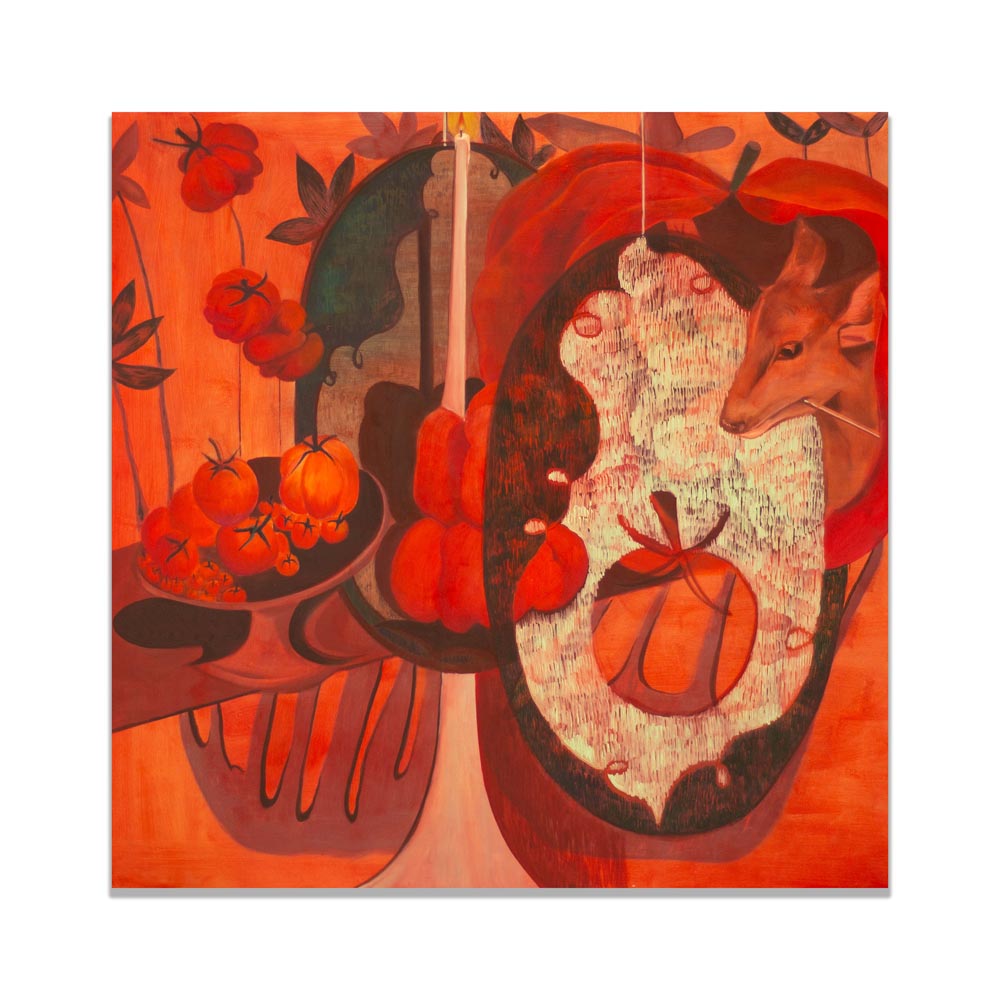
Mirror, Mirror on the Wall, acrylic and oil on linen, 40 × 40 inches, 2026
What are you currently working on and where did the inspiration for it come from?
My inspiration is usually a combination of my experience and imagination built on top of that. Recently, I’ve been reading Gaston Bachelard’s The Poetics of Space, and his idea of the home or shelter as a kind of universe deeply resonates with my practice. Since graduate school, I’ve been researching and investigating concepts of shelter, home, and mental habitat, and these ideas have been returning with a new intensity in my current work. I’m continuing to explore how physical and psychological spaces overlap—how environments can hold memory, emotion, and identity, and how painting can construct or destabilize those inner architectures.
“Home” is often understood as the place to which we belong. Yet when no single place in the world holds both comfort and longing, where can such belonging reside? Perhaps home is no longer anchored in geography, but unfolds within us as an intimate, imagined shelter, a space we carry as we move. In this sense, we are not only inhabitants of home, but its makers; we dwell within a space that is continuously formed through memory, desire, and reverie.
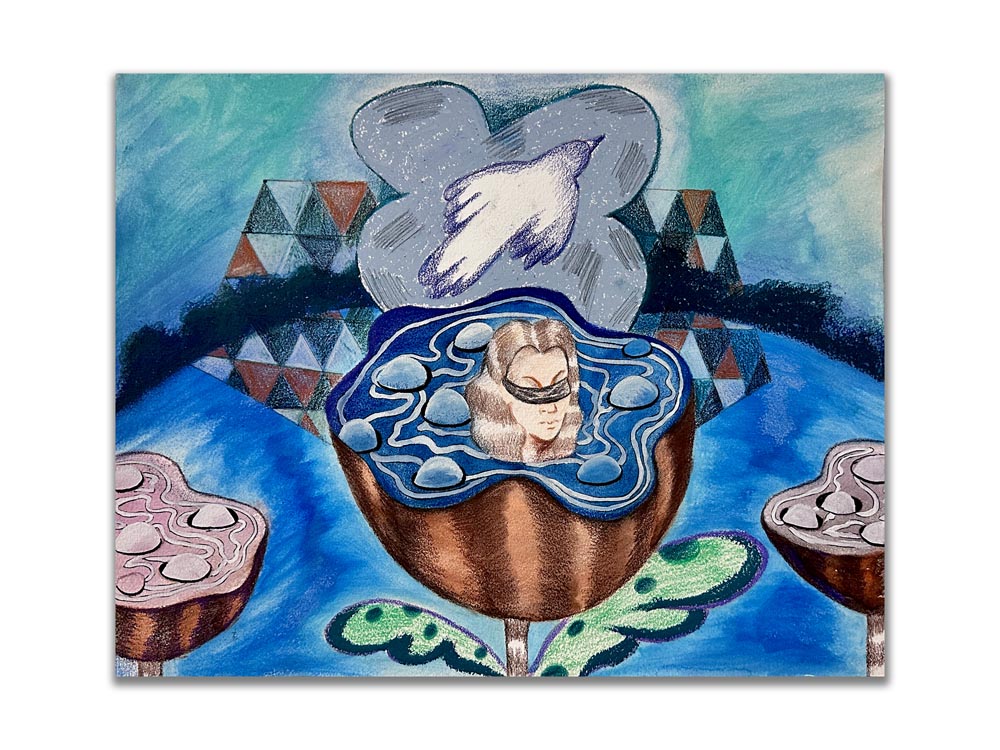
Invisible Lotus, 40.64 x 30.48 cm, mixed media on paper, 16 × 12 inches, 2024
In my recent paintings, houses emerge insistently and in shifting states: interior and exterior collapse into one another; houses tilt, fall, float, dissolve, or rest on clouds; they appear without doors, soaked, erupting, or wrapped in hair. The house is no longer a stable structure, but a living image; one that gathers the dispersed fragments of inner life. It becomes less an object in the world than what Gaston Bachelard describes as a space of daydreaming, where the imagination finds refuge and expands.
Alongside these houses, animals inhabit interior spaces. Drawn from daily encounters, poetry, song, mythology, and ornamental forms, they accumulate into a personal symbolic language. Within the house, they are not simply placed but dwell, moving through rooms, occupying corners, and participating in layered, often ambiguous narratives. They function like figures within a dream, both familiar and estranged, carriers of memory and instinct.
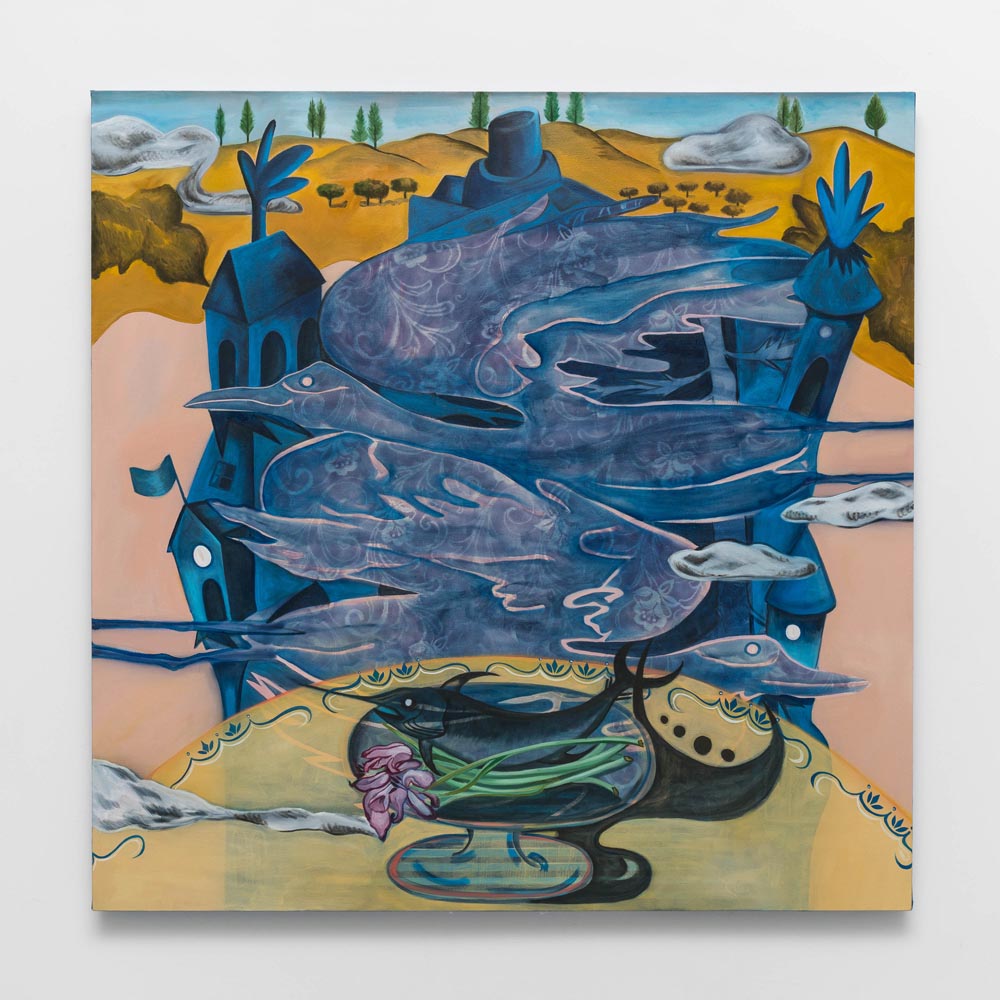
Blue Bird, Flying Fish ,acrylic and oil on canvas, 60 x 60 inches, 2024
The house in these works is not merely an architectural frame but a psychic body. Like a living organism, it possesses an outer surface that meets the world and an inner depth that shelters what is hidden. It recalls Bachelard’s notion of the house as a “topography of intimate being,” where each corner, threshold, and enclosure corresponds to a state of mind. Here, animals, objects, and fragments of story inhabit its interior as thoughts inhabit consciousness.
Yet this house does not protect against the external world in any literal sense. It behaves instead as a moving interior; a vessel of subjectivity that cannot be entered except by the one who imagines it. It is both shelter and cosmos; a small, contained universe that nonetheless opens outward into boundless psychological space.
In this way, the house becomes a form of mental architecture, a site where inner and outer worlds blur. Within it, narratives unfold without fixed order, bodies merge with structures, and imagination reshapes the limits of space. Home, then, is not a place we return to, but a universe we continually build and inhabit from within.
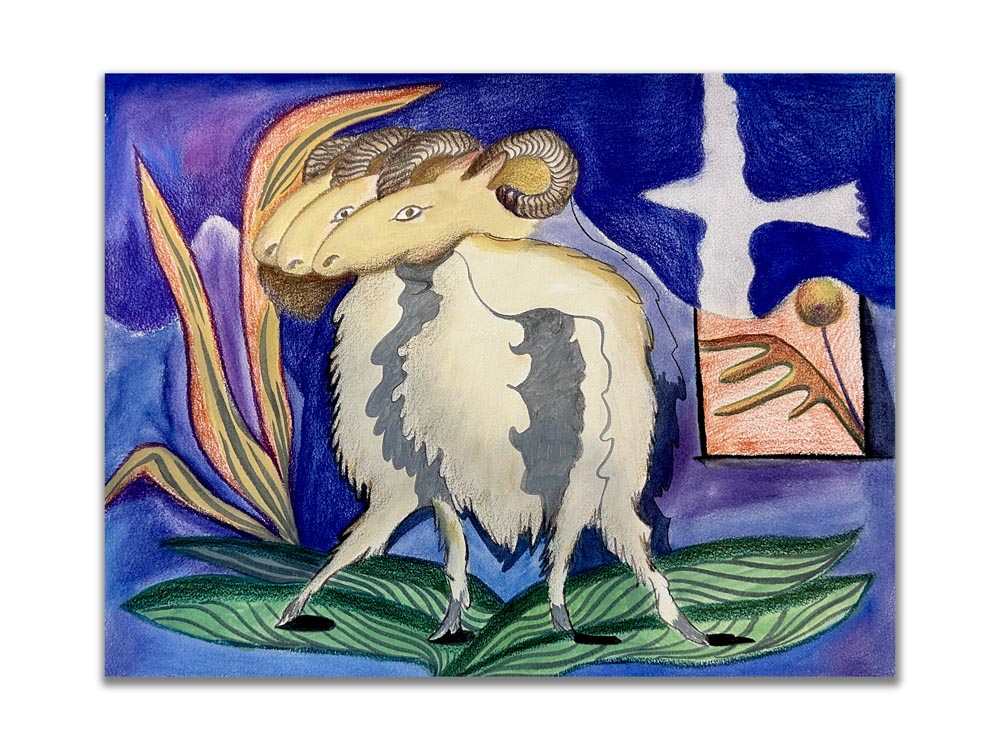
Sheep of Fortune, 40.64 x 30.48 cm, mixed media on paper, 16 × 12 inches, 2024
Innovation does not only happen in the field of technology — it occurs everyday in a creative practice. What do you do for inspiration?
For me, inspiration begins with a heightened sensitivity to the world—I try to open myself fully to what’s around me, absorbing sensations until they become almost overwhelming, then slowly processing and translating them into my work. I carry this awareness into daily habits, constantly making small line sketches wherever I go. These fragments—often abstract structures or small animal forms—return with me to the studio, where they expand into larger drawings and paintings. Before I begin painting, I also write short poems or descriptions of imagined, atmospheric spaces, which help ground the emotional and spatial direction of the work. This process allows me to move between observation, intuition, and reflection, where innovation emerges naturally through repetition, transformation, and accumulation.
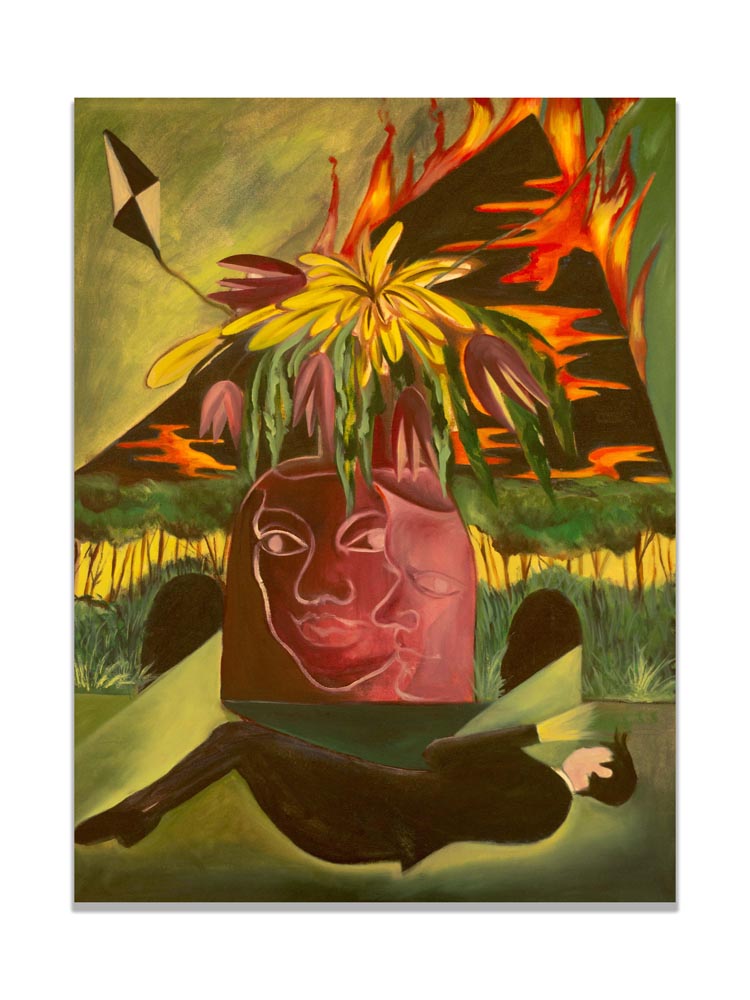
Left: A Serious Murder, acrylic and oil on linen, 30 × 40 inches, 2026
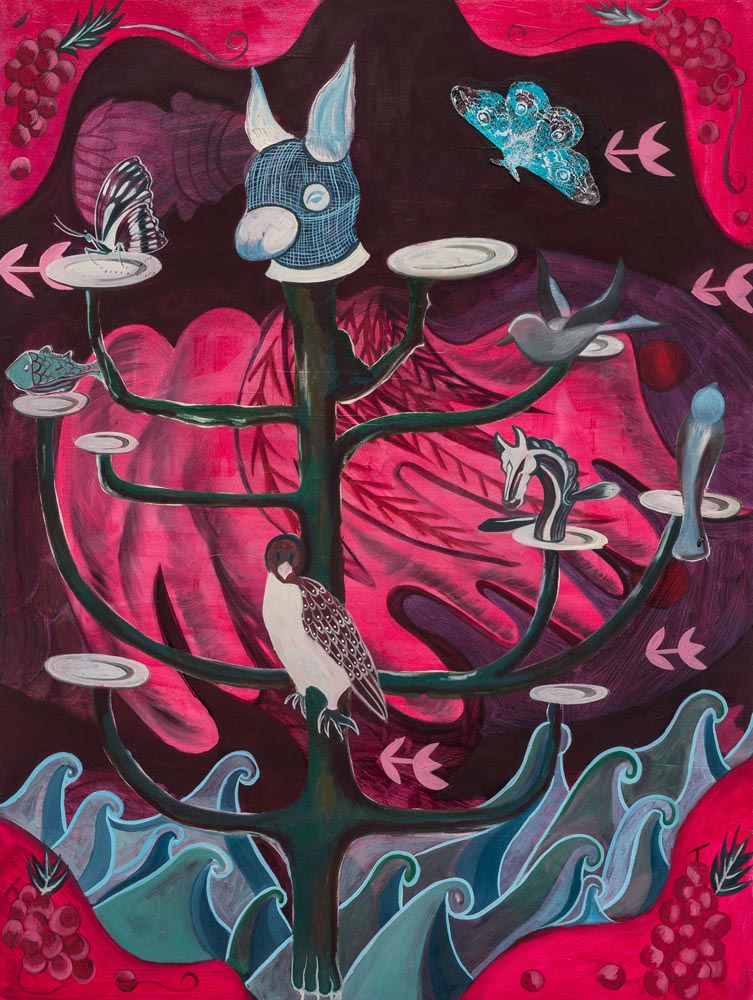
Right: Dusk at Dawn, acrylic, oil and mixed media on canvas, 30 x 40 inches, 2024
Where do ideas start for you?
My practice centers on constructing imagined spaces or habitats where animal and plant symbolism interact, overlap, and shift in meaning. I’m interested in how symbols travel across contexts, linguistic, cultural, and visual, and sometimes play with idiomatic or cross-language expressions, such as how an image or phrase like “white elephant” or “paper tiger” carries layered and sometimes contradictory meanings. These references become part of a growing personal “symbolic dictionary,” where collected images, animal figures, and patterns from everyday life; commercials, packaging, clothing are gathered, categorized, and reinterpreted. In this way, the dictionary and the paintings continuously feed into one another.
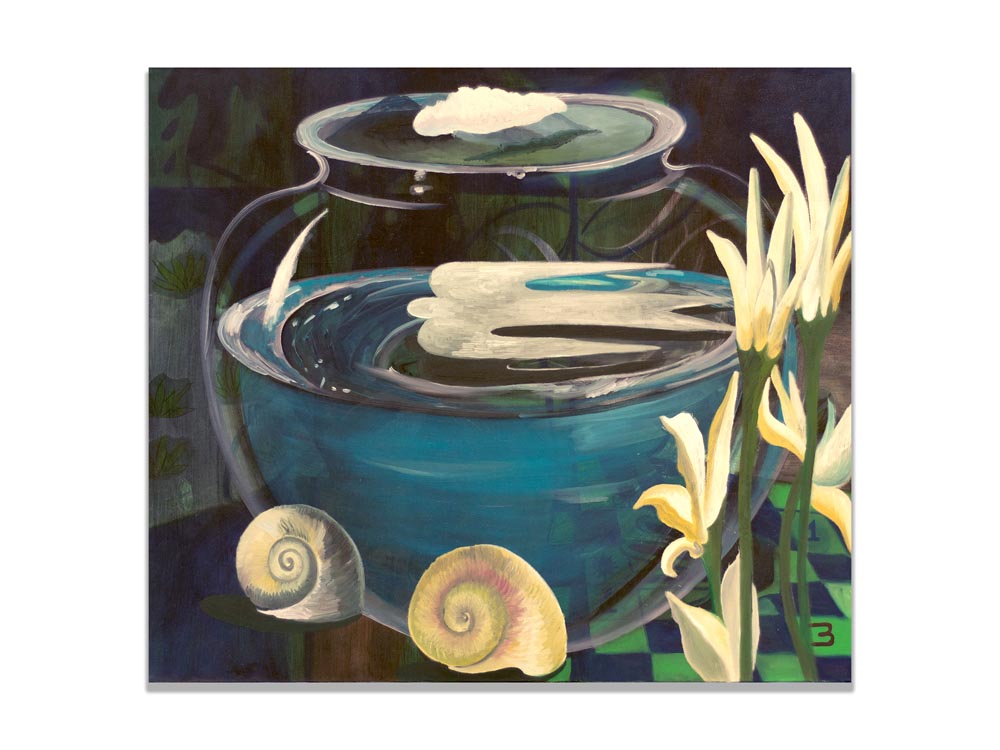
After Rain, 2026, acrylic and oil on canvas, 40 x 44 inches
Ideas for my work begin very much in the world. I am constantly observing and collecting, letting visual and symbolic fragments accumulate over time. In the studio, these fragments are reactivated; animals and forms from the archive are reassembled into new environments, where they take on renewed life and meaning. My process moves between external collection and internal construction, allowing the work to exist somewhere between lived experience and imagined space.
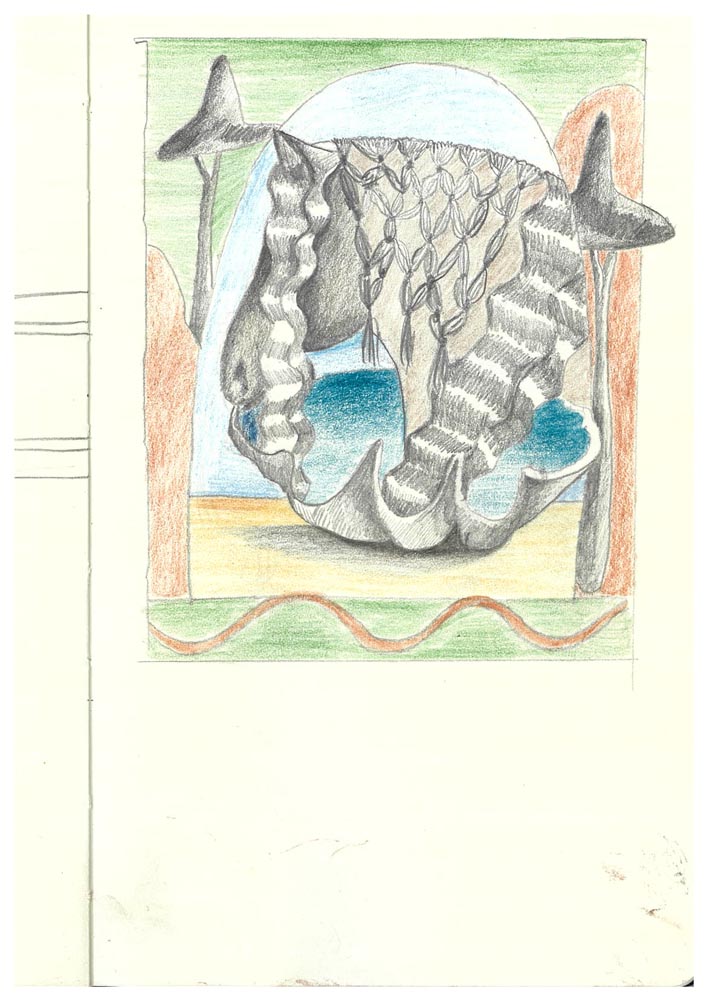
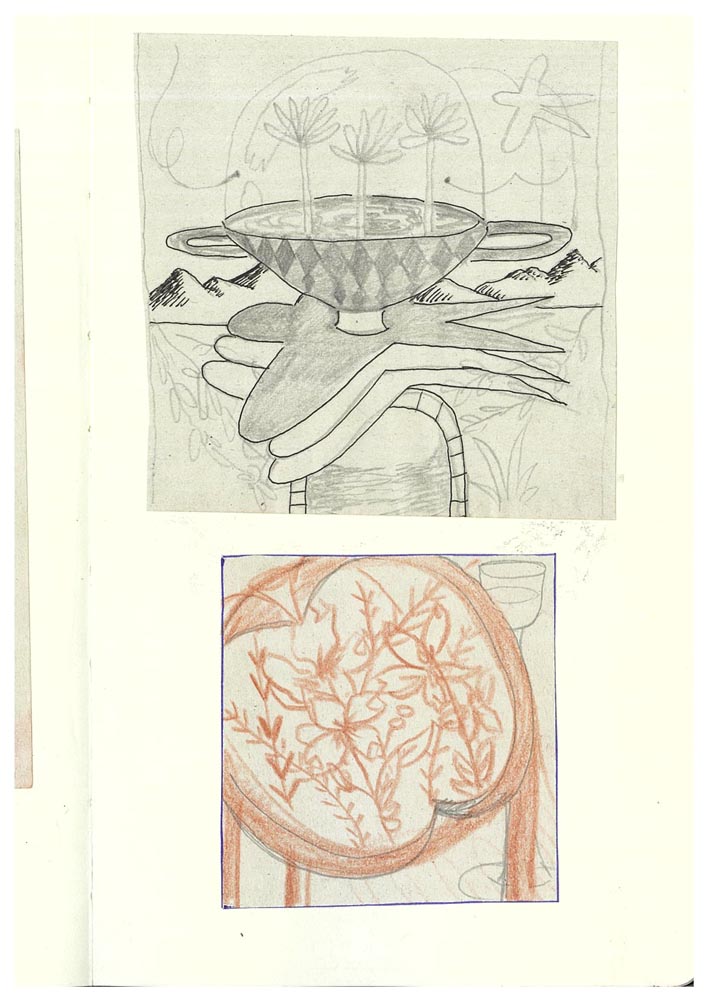
sketchbook pages, 13 x 21 cm, 5 x 8.25 inches, 2023-2026
How do you make your work, does it start with a sketch?
My work doesn’t necessarily begin with a sketch. More often, it starts with a specific object, animal, or a fragment of folklore that holds a certain emotional or symbolic weight. From there, I build narratives around that central element, allowing the composition to develop intuitively. I’m particularly interested in capturing a moment of transition, when something is happening or about to happen, so the paintings often hold a sense of suspended motion, as if the scene is unfolding in real time.
My style is shaped by a combination of influences that trace back to my childhood. I was deeply influenced by cartoons, films, stop-motion animation, and puppet shows, which instilled a sensitivity to staging, character, and constructed environments. At the same time, I spent many summers on the grasslands in Mongolia, surrounded by animals and the cultural practices connected to them, their behaviors, and the ways people live with, use, and even revere them. These experiences left a lasting impression on how I think about animals as both real and symbolic beings.
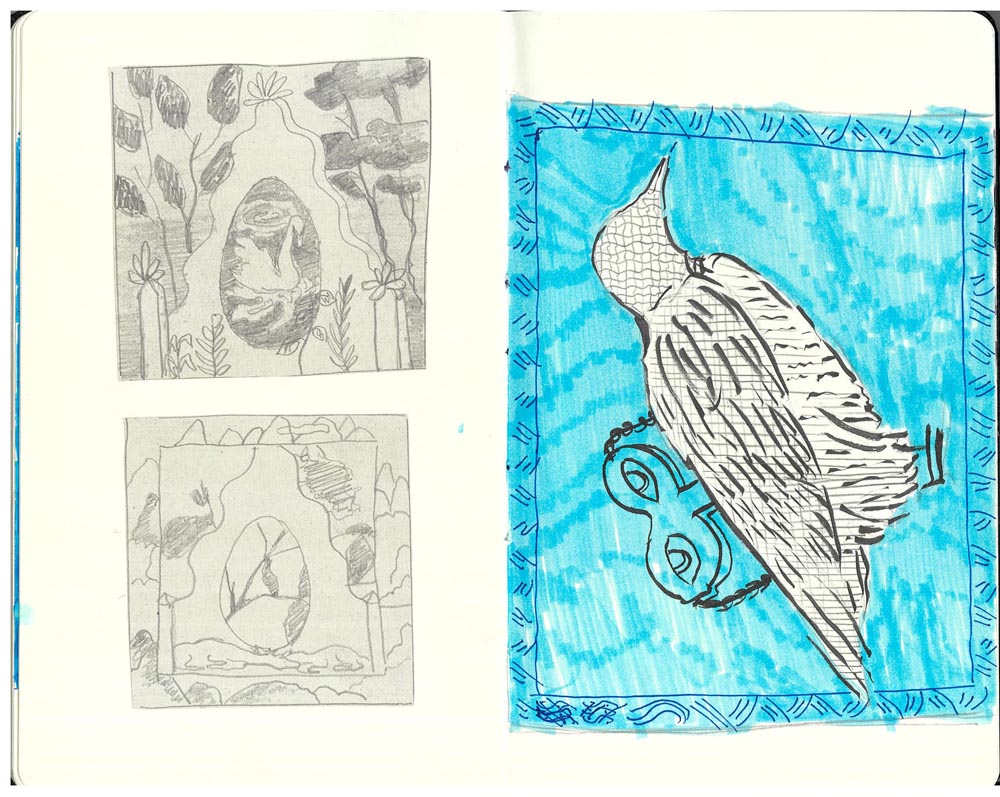
sketchbook pages, 13 x 21 cm, 5 x 8.25 inches, 2023-2026
As a result, my paintings bring together these two worlds: the raw, instinctual presence of animals and the constructed, often theatrical quality of staged environments. I aim for the animals to feel natural and alive, while the spaces they inhabit can appear slightly uncanny or surreal. This tension between the organic and the artificial is central to my practice, and it’s something that has developed gradually as I’ve continued to merge personal memory, observation, and visual storytelling.
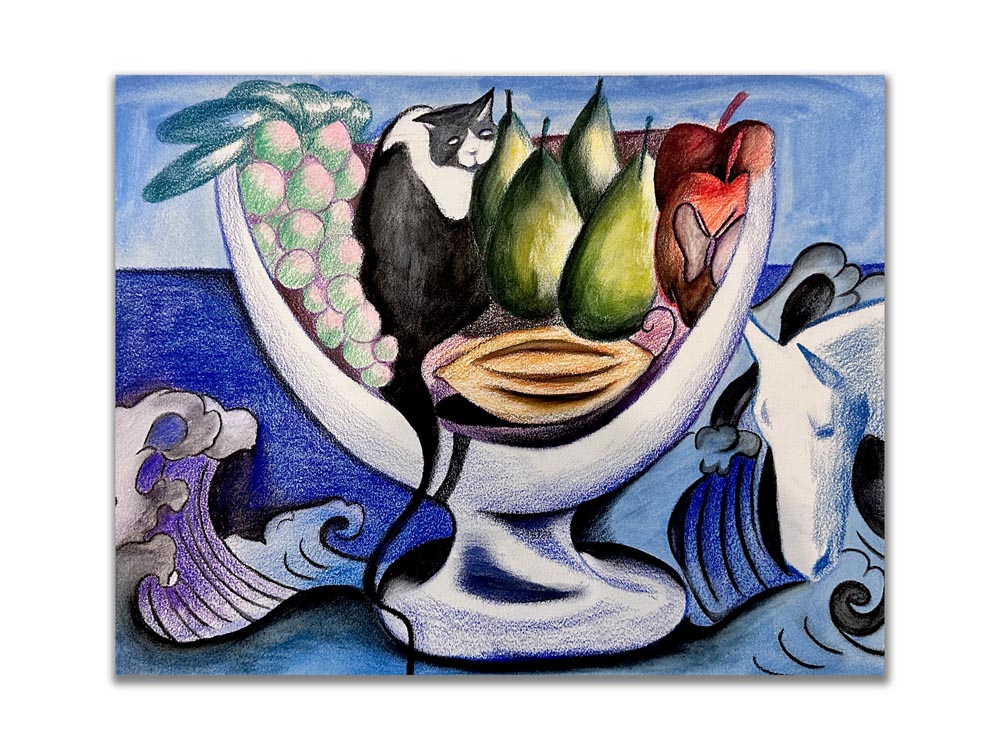
Surging, 40.64 x 30.48 cm, mixed media on paper, 16 × 12 inches, 2024
Many artists live by their routines, what does that look like for you?
Although I surround myself at home with an extensive collection of figures, dolls, and stuffed toys, my studio is intentionally minimal, almost cell-like. I keep the space as free of distraction as possible so I can think clearly and enter a different mental state.
I usually begin the day with a short period of writing, either free writing or a brief poem, which helps me settle into an emotional and conceptual space before painting. From there, I move directly to the wall and begin working. This routine allows me to transition from language into image, and from internal reflection into a more physical, intuitive process.
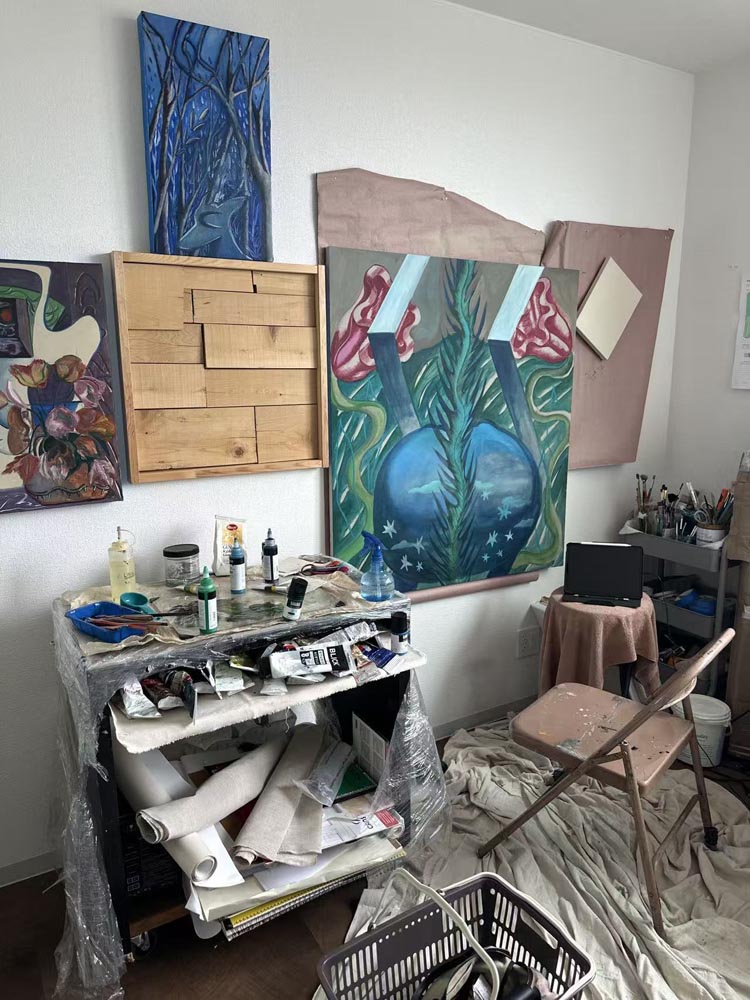
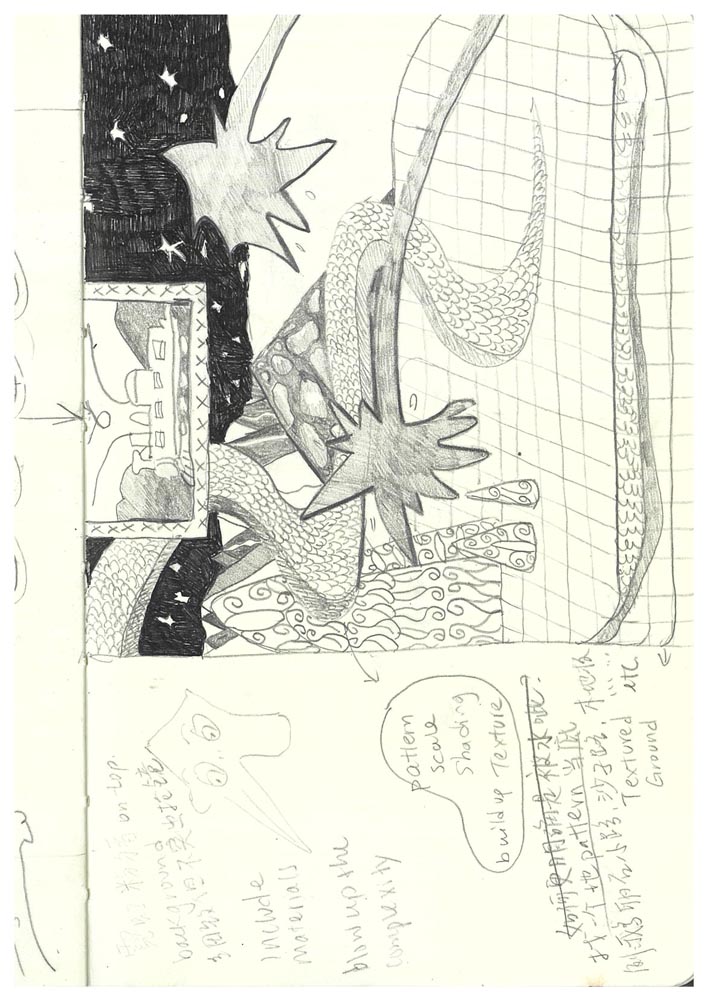
Left: In the studio; Right: sketchbook pages, 13 x 21 cm, 5 x 8.25 inches, 2023-2026
Who are your biggest influences?
My influences come from both contemporary painters and a wide range of visual and cultural sources. Artists like Nicole Eisenman, Philip Guston, and Julie Mehretu have been important to me in terms of how they build complex visual languages and narratives. At the same time, I’m equally influenced by things like old cartoon sketches, Chinese year calendar catalogues with a different drawing on each tear-off page, and traditions such as puppet mask making. These references shape the way I think about form, symbolism, and storytelling, allowing my work to move fluidly between fine art, popular imagery, and cultural artifacts.
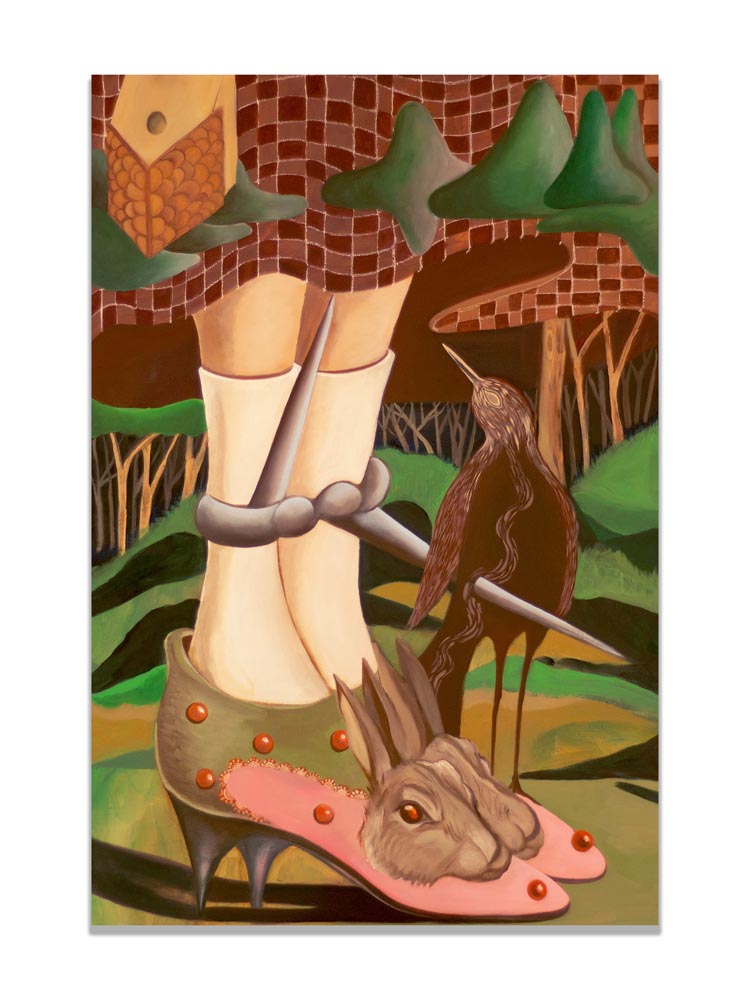
If You'll Excuse Me, oil on linen, 30 × 40 inches, 2026
Are there books or films that are an important source of inspiration?
The Vegetarian — Han Kang
Somewhere Towards the End — Diana Athill
Demian — Hermann Hesse
Steppenwolf — Hermann Hesse
The Book of Laughter and Forgetting — Milan Kundera
Kafka on the Shore — Haruki Murakami
What’s the best piece of advice you’ve been given?
Follow what interests you enough to research and let it influence your painting.
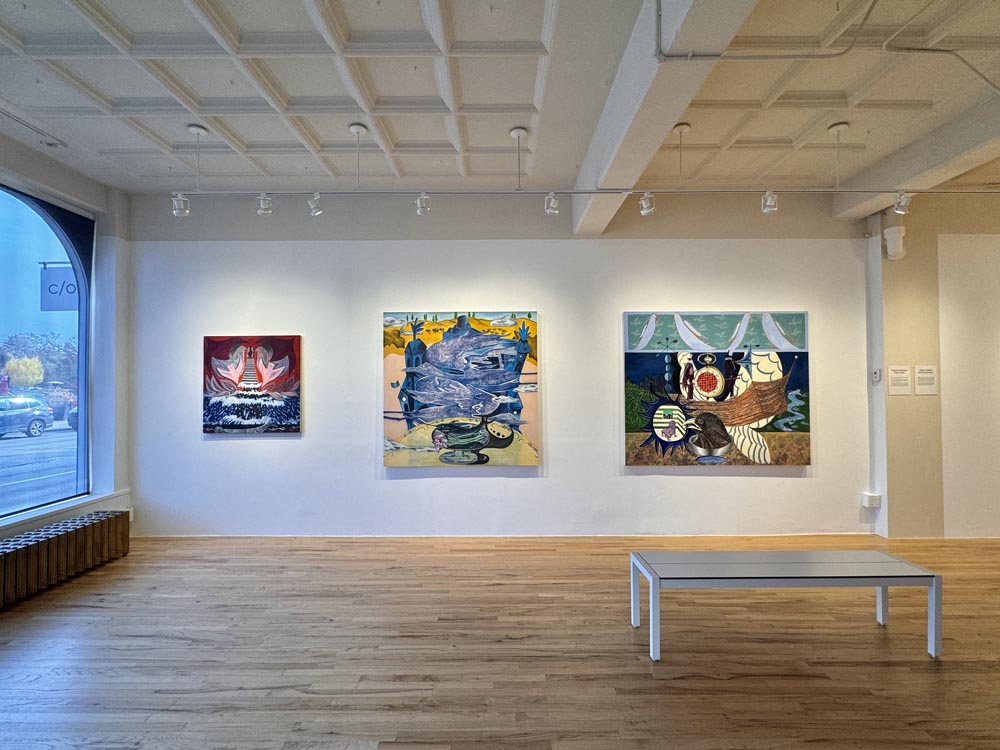
Hollow Castle, Care of Gallery, Chicago, IL, photo credit: artist
What is the best advice you would give to other artists?
Whenever you feel lost, in pain, or out of ideas, at your lowest, go outside. Watch the snow fall, watch a crow dive from a utility pole. Then return to your work and let it all out.
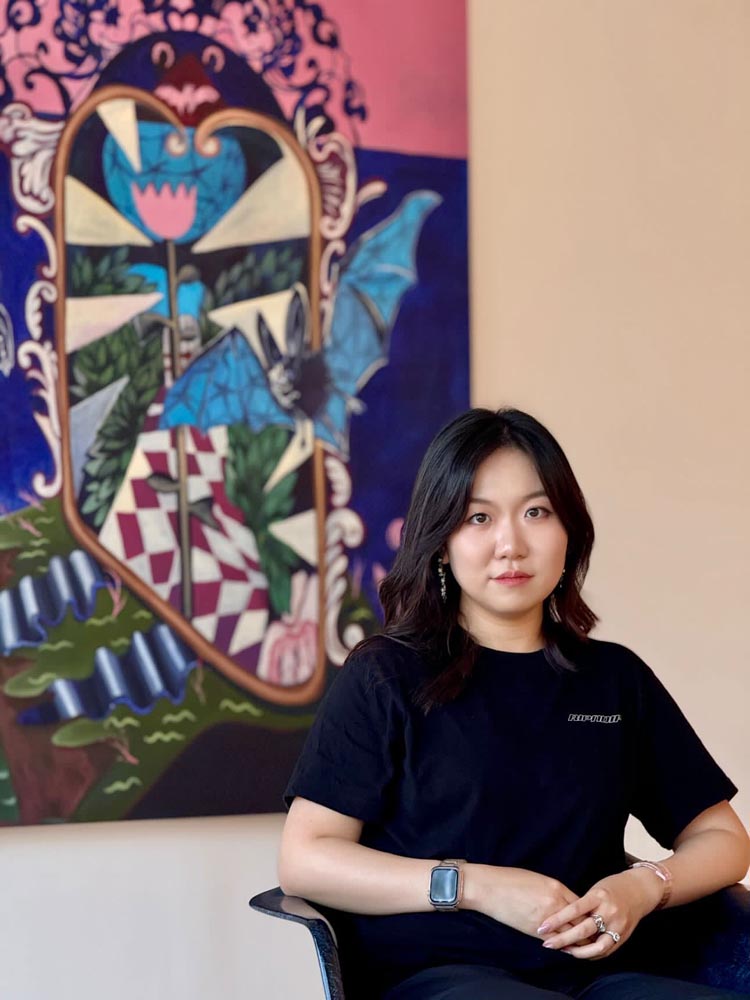
Jingqi Steinhiser in the studio
Stay up to date with Jingqi Steinhiser
Website jingqisteinhiser.com
Instagram @jingqi_wang_steinhiser